
Livraison le jour même ou le lendemain

Qualité garantie

Débloquez vos offres de bienvenue: Livraison GRATUITE | Jusqu'à -80 % | 30 jours d'essai gratuits à JoyPlus
Téléchargez l'application
A damp step, a varnished staircase or an outdoor ramp can become slippery in seconds. Non-slip tape offers a simple, easy-to-fit solution, but not all types are suitable for every situation. Before you order, check the grip, compatibility with the surface and resistance to the conditions the tape will face.
A gritty tape may feel very grippy to the touch, but it won't stay effective if its adhesive peels off quickly. Dust, grease, porosity and uneven surfaces all significantly reduce its hold. A self-adhesive non-slip tape therefore requires careful preparation and a sufficiently stable surface.
A tape that's too narrow won't cover the full standing area of a step. On the other hand, a tape that's too wide may overlap onto an uneven section or hinder water drainage. 25 mm, 50 mm and multi-metre rolls suit different needs: measure each step before you decide.
An outdoor non-slip adhesive tape must withstand moisture, temperature changes and heavy foot traffic. However, a "waterproof" or "all-season" claim doesn't let you off checking the application conditions. Applying it to a wet, cold or dusty surface can compromise the bond from the start.
The abrasive surface is the first thing to look at. Some models use a mineral texture, such as quartz, while others rely on a structured plastic film. The TAPEBEAR roll boasts an 80-grit quartz sand texture, designed to provide a heavily textured surface on steps, ramps and ladders.
For everyday household use, a well-defined texture is generally fine for stairs and thresholds. In a bathroom, on a boat or in an area where you walk barefoot, however, check that the abrasiveness is suitable for the intended use.
A waterproof non-slip tape must be applied to a clean, dry, grease-free surface. Painted wood, metal, plastic, glass, ceramic and concrete all have different adhesive properties. Product listings may claim compatibility with several materials, but a test on a small area is still recommended for unusual surfaces.
Application is usually as follows:
Avoid unstable, heavily textured or already cracked surfaces. If an edge starts to lift, it's best to replace that section rather than let it become a trip hazard.
A black non-slip tape blends discreetly into most steps. A black and yellow model draws more attention to a hazard area, which can be useful in a workshop, on a ramp or in a professional setting. Clear non-slip tape, meanwhile, preserves the look of a wooden, glass or tiled staircase.
Phosphorescent non-slip tape improves visibility in the dark after being exposed to light. It does not replace permanent lighting and should not be considered a regulatory evacuation or safety marking device. In a public building or workplace, check the safety requirements that apply to your installation.
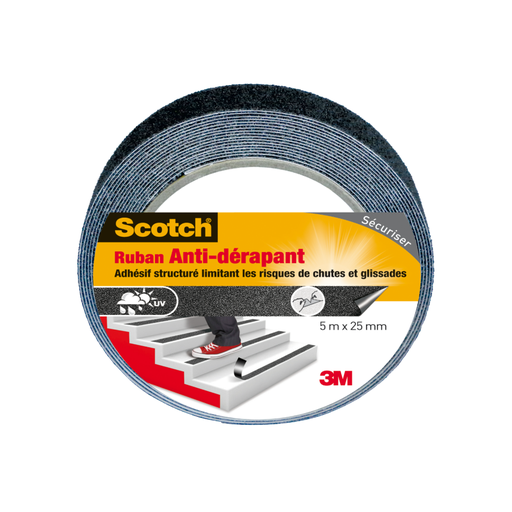
Why this choice suits this profile: Its 5 m × 25 mm format is ideal for small repairs, a few steps or a household ladder. The listing states it's self-adhesive and can be cut by hand.
The stated width lets you accurately assess the coverage needed, rather than choosing a roll based on appearance alone.
Flexible plastic film, textured surface, stated water resistance and indoor/outdoor use.
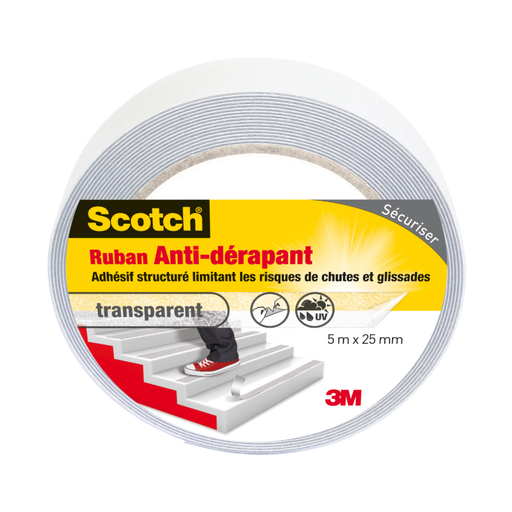
Why this choice suits this profile: Its clear finish is ideal for homeowners and managers who want to secure a staircase or ramp without significantly altering its appearance.
The listing recommends cleaning and drying the surface, avoiding very uneven areas and applying the tape at above 10 °C.
Clear appearance, 5 m × 25 mm format and stated suitability for both indoor and outdoor use.
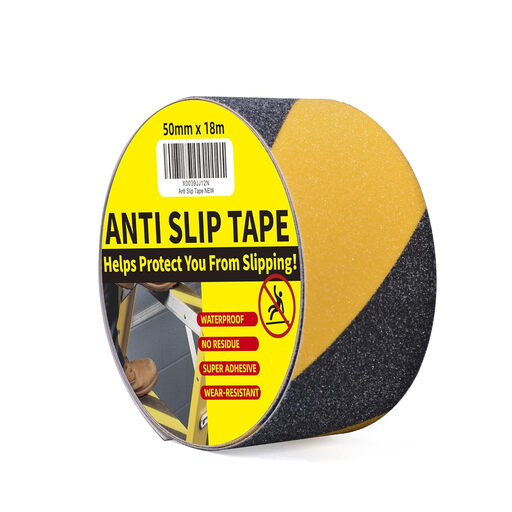
Why this choice suits this profile: Its 18 m × 50 mm roll can cover several steps, ramps, ladders or walkways in a workshop, commercial space or home.
The width, length and contrasting pattern are clearly stated, making it easy to calculate requirements and improve visibility of the treated area.
80-grit quartz texture, adhesive stated to be weather-resistant and compatibility claimed with wood, metal, glass and ceramic.
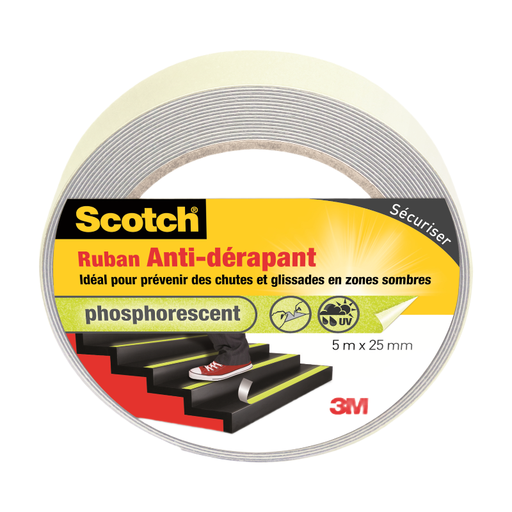
Why this choice suits this profile: This 5 m × 25 mm format is designed for steps, wet rooms, kitchens and small walkways where extra visibility can be helpful.
The phosphorescent effect is presented as a visibility aid, but it does not replace a lamp or suitable regulatory lighting.
Structured surface, self-adhesive application and stated suitability for both indoor and outdoor use.
We've compiled a comprehensive, real-time selection of products that meet these demanding criteria and European safety standards.
Clean and dry each step, then cut a length slightly shorter than the usable width. Place the tape near the leading edge of the step, without covering any water drainage points. Press firmly over the entire surface and check the edges after application.
The lifespan depends on foot traffic, moisture, cleaning products, the surface and the quality of the application. Inspect the edges and texture regularly. If you notice lifting, significant wear or loss of grip, replace the affected section.
Go for a model whose listing explicitly states indoor/outdoor use, water or weather resistance, and compatibility with your surface. In a dark area, phosphorescent tape can improve visibility. A contrasting pattern will more effectively highlight a step in a professional environment.