
Livraison le jour même ou le lendemain

Qualité garantie

Débloquez vos offres de bienvenue: Livraison GRATUITE | Jusqu'à -80 % | 30 jours d'essai gratuits à JoyPlus
Téléchargez l'application
A sponge might seem like a simple purchase, but the wrong choice soon shows itself: marks on your hob, fibres that shed, lingering odours, or an abrasive side that's too harsh for non-stick coatings. To avoid disappointing buys, it's best not to rely solely on promises like "powerful", "long-lasting" or "antibacterial".
Here are the key factors to consider before choosing your non-scratch scouring sponges from Spontex, along with a selection tailored to different household needs.
A sponge marketed as anti-scratch isn't necessarily safe for every material. The pressure you apply, the presence of grit or grease residue, and the condition of the surface itself can all affect the result.
For a non-stick pan, a ceramic hob or a glossy surface, choose a sponge with a side designed for delicate surfaces and always test it on an inconspicuous area first. Some Spontex references even state that their scouring side should not be used on fragile surfaces.
A long-lasting sponge doesn't stay clean by magic. If it's rinsed poorly, kept damp, or used alternately for washing up and cleaning the bathroom, it will become dirty quickly.
The ability to wash it in the machine can make a real difference. However, you must follow the temperature recommended by the manufacturer: some references can be washed at 40 °C, while the Long Duration model is rated for washing at 70 °C.
A kitchen sponge is fine for plates, worktops and everyday spills. It isn't necessarily the most effective against limescale in the bathroom or heavily encrusted deposits.
To avoid mixing uses, it's best to have:
The fibre structure matters more than its colour. The models selected below are based on different designs: non-scratch fibres, a microfibre side, reinforced texture or a soft coating.
For delicate crockery, look for the words "non-scratch" or "non rayante", then check the usage restrictions. Even a surface described as non-abrasive deserves a test on a small area, especially if the coating is old or already marked.
Several Spontex sponges featured here have a plant-based part made from cotton, wood pulp and flax. This material helps absorb water and create lather.
A microfibre sponge can complement this absorbent part: it's mainly used for wiping away marks and cleaning surfaces with less product. In the kitchen, combining an absorbent part with a scouring side lets you tackle both spilled liquids and stubborn dirt.
Rinse the sponge before its first use, and then thoroughly after each use. Squeeze it out and leave it to air dry. Spontex references generally recommend replacing it about every two months, or sooner if it becomes misshapen, crumbles or develops a persistent odour.
A machine-washable sponge should be placed in a mesh bag or suitable cloth to prevent it from getting stuck. Washing doesn't replace daily rinsing.
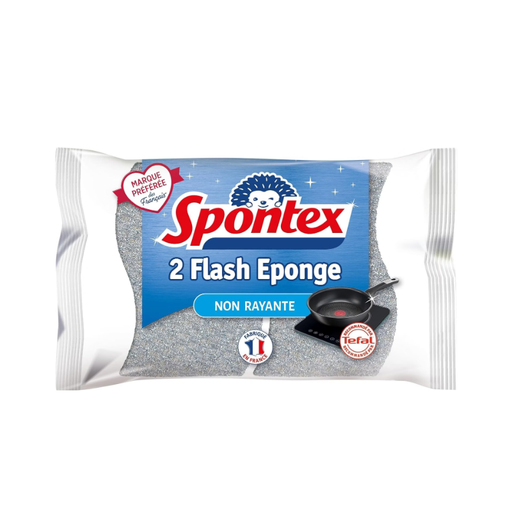
Why this choice suits this profile: This pack of two sponges is suitable for everyday washing-up, particularly for pans, saucepans and hobs as mentioned in the product description.
The silver scouring side is described as non-scratch and easy to rinse. A preliminary test on sensitive surfaces is still recommended.
Two sponges, a plant-based absorbent part and machine washable at 40 °C.
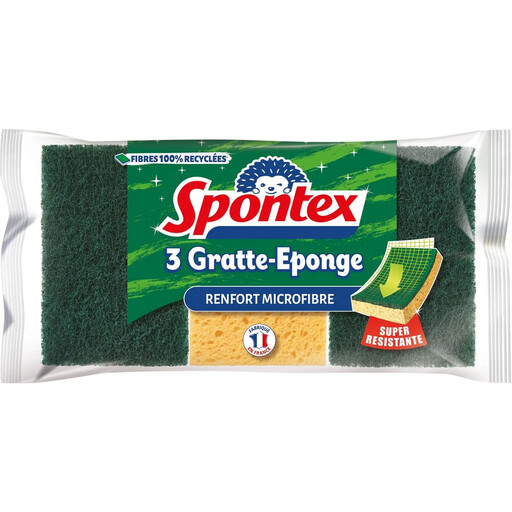
Why this choice suits this profile: Its dual function is ideal for households that want to switch between wiping, absorbing and cleaning dirt without constantly changing tools.
The product description distinguishes between using the microfibre side on delicate surfaces and the scouring side on stubborn deposits.
Pack of three sponges, microfibre side, absorbent part and scouring texture described as non-scratch.
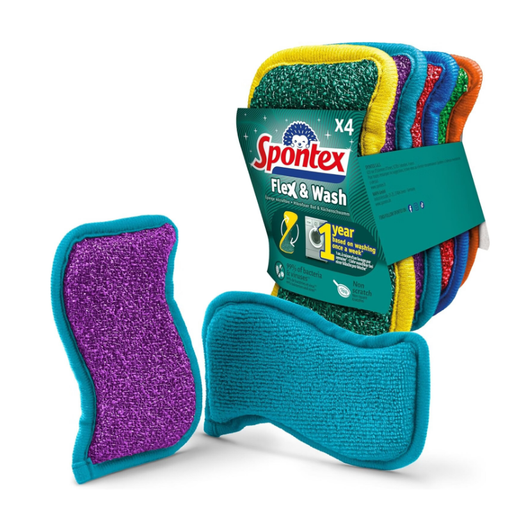
Why this choice suits this profile: This pack is aimed at people who clean frequently and want a machine-washable, flexible sponge that can be used in several rooms.
Its care instructions are clearly defined: the product description states it can be machine washed for up to 52 cycles, rather than relying on a simple promise of durability.
Four sponges, a flexible S-shape, a microfibre side and a non-scratch scouring side made partly from recycled fibres.
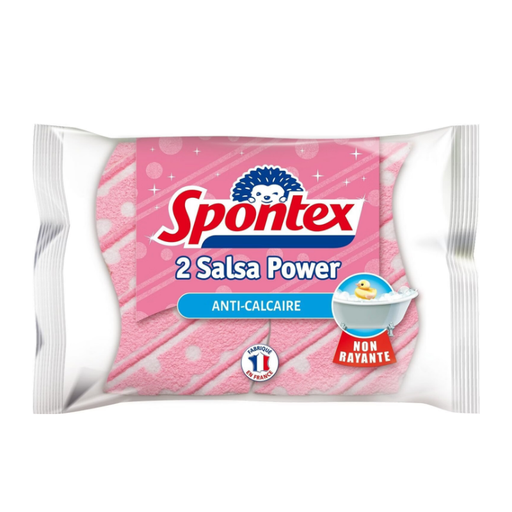
Why this choice suits this profile: This reference is designed for taps, shower screens, baths, basins and mirrors. Its shape helps you reach difficult areas.
It avoids reusing a washing-up sponge for the bathroom, and its description states it is suitable for non-scratch cleaning of bathroom surfaces.
Reinforced action against limescale according to the product description, two sponges and machine washable at 40 °C.
We've put together a comprehensive list, updated in real time, of products that meet these demanding selection criteria and European safety standards.
Some references are described as suitable for pans and delicate hobs, but always check the instructions for the model you choose. Apply moderate pressure, remove any abrasive particles and test on an inconspicuous area. Very fragile surfaces may require a simple microfibre sponge with no scouring side.
It depends on how often you use it and how you care for it. The product descriptions for the Spontex models featured here generally recommend replacing them after about two months. Change it sooner if it frays, becomes misshapen or retains an odour despite washing.
It can extend the time between replacements, provided the sponge is genuinely designed for machine washing and the recommended temperature is followed. A reference washable at 40 °C should not be treated like a model rated for 70 °C. Before choosing a pack, compare the number of pieces, the care instructions and your daily habits.