
Livraison le jour même ou le lendemain

Qualité garantie

Débloquez vos offres de bienvenue: Livraison GRATUITE | Jusqu'à -80 % | 30 jours d'essai gratuits à JoyPlus
Téléchargez l'application
Buying non-alcoholic soft drinks for home, the office, a meal or a party may seem fairly straightforward. However, with fizzy drinks, sparkling water, flavoured water and fruit drinks to choose from, the differences can quickly affect your budget, sugar intake and enjoyment.
Packaging often highlights a fashionable flavour, a “light” recipe or an ingredient presented as a mark of quality. To avoid any unpleasant surprises, take the time to check the nutritional information, the actual volume supplied and the type of packaging.
A drink flavoured with orange, grape or lychee is not necessarily a juice. Some recipes contain a small amount of juice from concentrate, while others rely mainly on flavourings. To find out exactly what you are buying, check the ingredients list and the fruit percentage shown on the label.
A sugar-free drink may contain sweeteners and still have a very pronounced flavour. Conversely, a drink presented as low in calories may still provide several grams of sugar per 100 ml. Compare the “carbohydrates, of which sugars” line per 100 ml, then work out how much this represents for the amount you are actually going to drink.
A 330 ml can is well suited to individual consumption, while a 1.5 or 2-litre bottle is more practical for a meal shared with several people. Once opened, some drinks need to be kept in the fridge and consumed quickly. Cans, individual bottles and flexible pouches do not meet the same needs.
When comparing two offers, look at the total volume rather than simply the number of units:
Also remember to check the packaging material, storage conditions and whether the bottle or pouch can be resealed.
Nutritional values are generally provided per 100 ml. To find out how much a 330 ml can provides, multiply these figures by 3.3. For example, a drink containing 4.5 g of sugar per 100 ml provides approximately 14.9 g in a full can.
Some recipes combine sugar and sweeteners, while others replace sugar completely. If you are sensitive to certain ingredients, read the label carefully, particularly to check whether it contains aspartame and the statement regarding the source of phenylalanine.
Sparkling waters offer a more neutral sensation, while lemonades, fruit-flavoured fizzy drinks and other carbonated drinks use more pronounced flavours. The level of carbonation also varies: the bubbles may be subtle or particularly lively. At the table, a lemon or citrus recipe pairs easily with meals. For a party, tropical flavours and fruit drinks add greater variety.
Finally, check the list of additives, declared allergens and country of origin. The packaging you receive remains the definitive reference, especially if the information shown online does not exactly match the product delivered.
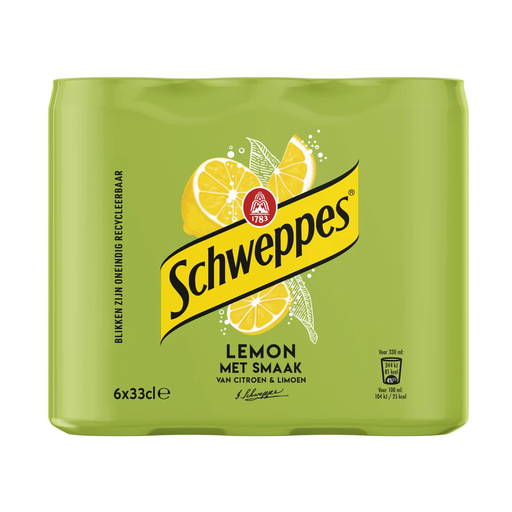
Why this choice suits this profile : This six-pack of 330 ml cans lets you try a lemon-flavoured lemonade in an individual format, without having to buy a large bottle.
The volume of each can is clearly stated, and the product details list 4.2 g of sugar per 100 ml. The presence of sweeteners, including aspartame, is also indicated.
Six 330 ml cans, lemon juice from concentrate at 2%, best served chilled.
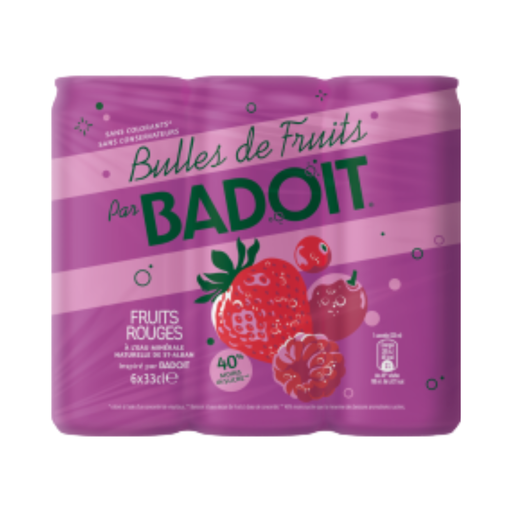
Why this choice suits this profile : This product combines natural mineral water, red berry flavours and fine bubbles in a format designed to be served well chilled at the table.
The drink category is clear: this is flavoured, carbonated natural mineral water, not a product sold as fruit juice.
Pack of six 33 cl bottles, natural mineral water and red berry flavours listed in the ingredients.
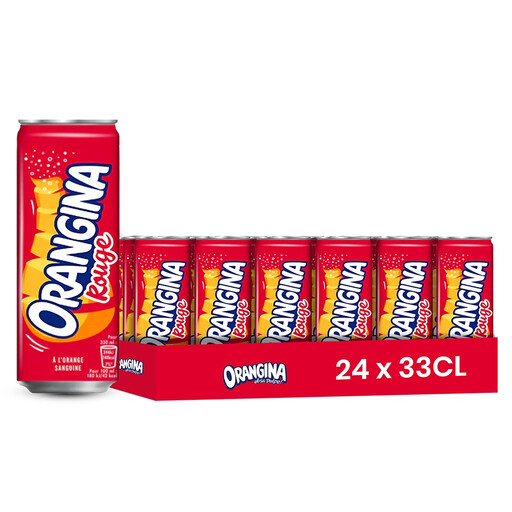
Why this choice suits this profile : With 24 cans, this pack is aimed at families, offices, restaurants and event organisers who want to have plenty of individual drinks to hand.
The packaging and total volume are clearly stated: 24 × 330 ml, or 7.92 litres. The product details indicate approximately 5 kcal and 1.3 g of sugar per 100 ml.
Cans that are easy to distribute, a combination of orange and red berry flavours, and fruit juice from concentrate listed in the ingredients.
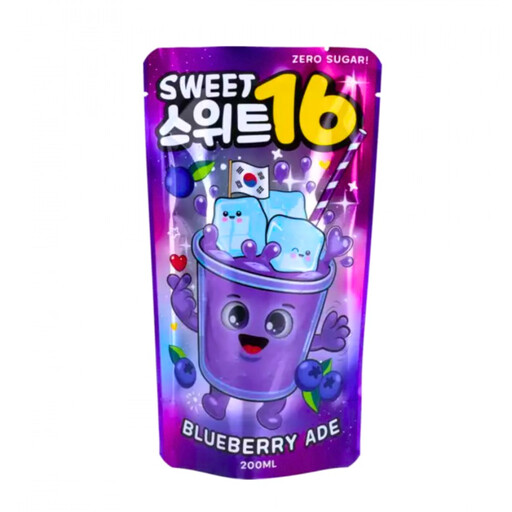
Why this choice suits this profile : Its convenient 200 ml pouch format and sugar-free recipe make it suitable for drinks on the go, events or serving with ice cubes.
The sugar-free claim is supported by figures: according to the product details, it contains 0 g of sugar and 1 kcal per 100 ml. However, the presence of sweeteners and colourings should still be checked on the packaging.
200 ml pouch, blueberry flavour, preparation to be poured over ice cubes and storage at room temperature before opening.
Flavoured water is generally made with water, plus flavourings and, in some cases, juice, sugar or sweeteners. A fruit-flavoured fizzy drink is a carbonated drink whose fruity taste may come from juice, concentrates or simply flavourings. The ingredients list will tell you exactly what it contains.
For an event, packs of 24 x 330 ml cans allow each guest to be served individually while remaining easy to store. For a sit-down meal, 1.5-litre bottles can reduce the number of containers that need to be opened. Make sure you have enough space in the fridge and serve the drinks well chilled when recommended in the product details.
No. A recipe described as sugar-free may have a low energy value, but only the nutritional table can confirm this. Some drinks also contain sweeteners, flavourings or concentrates. Compare the values per 100 ml, as well as the quantity corresponding to the serving you will actually consume.