
Livraison le jour même ou le lendemain

Qualité garantie

Débloquez vos offres de bienvenue: Livraison GRATUITE | Jusqu'à -80 % | 30 jours d'essai gratuits à JoyPlus
Téléchargez l'application
Non-alcoholic drinks don’t all serve the same purpose: accompanying a meal, occasionally replacing an alcoholic drink, refreshing the whole family, or stocking up for a party. With so many different packs and marketing claims, the choice isn’t always straightforward. A label like “alcohol-free”, “vitamin-enriched” or “with fruit” isn’t enough to tell you whether the product really suits your needs.
Here are the key factors to check before ordering a non-alcoholic malt drink, a fruit drink, an iced tea, a plant-based drink or a multipack.
An alcohol-free drink can still contain sugar, glucose-fructose syrup, or the naturally occurring sugars found in juices. The “alcohol-free” label only tells you there’s no alcohol in it – it says nothing about the nutritional content.
To compare two products, start by looking at the values per 100 ml, then work out how much you’ll actually drink. A 75 cl or 2-litre bottle can easily contain several servings. A fruit drink, a fruity soda or a tropical beverage can therefore deliver far more carbohydrates than a small can.
A vitamin-enriched drink may have added vitamins, but that doesn’t automatically make it a nutritionally complete product. You need to check the amounts in the nutrition table and the ingredients list.
The same goes for the word “natural”: it doesn’t guarantee low calories or the absence of sugar. For a ginger drink, a kombucha or a fruit juice, check the proportion of juice, whether sweeteners are present, the sugar content and the storage instructions.
Buying in bulk can sometimes lower the price per litre, but you still need space to store the bottles and to drink them within the recommended time. Once opened, some products must be kept in the fridge and consumed within two to five days.
Glass bottles also need more care during transport and storage. Individual cans are handy for meals on the go, but they create more packaging per litre.
Start with the ingredients list. For a non-alcoholic malt drink, check in particular for barley and gluten. VITAMALT Classic, for example, contains malt and barley. Anyone with allergies or intolerances must read the full label before ordering.
For a plant-based drink, identify the main ingredient: almond, soya, oat or another base. Soya is one of the allergens that must be clearly declared. An almond drink should also be avoided if you have a nut allergy.
Compare at least:
Values aren’t always directly comparable from one category to another. A plant-based drink designed for coffee isn’t used the same way as a fruity soda or a fruit juice. As for drinks labelled “no added sugar”, they can still contain the naturally occurring sugars from the juices. So read the nutrition table as a whole.
Choose the container based on the occasion and the number of people:
VITAMALT Classic, for instance, is sold in a carton of 24 glass bottles of 330 ml, while Oasis Tropical comes in a pack of 6 cans of 33 cl. These two formats clearly meet very different logistical needs.
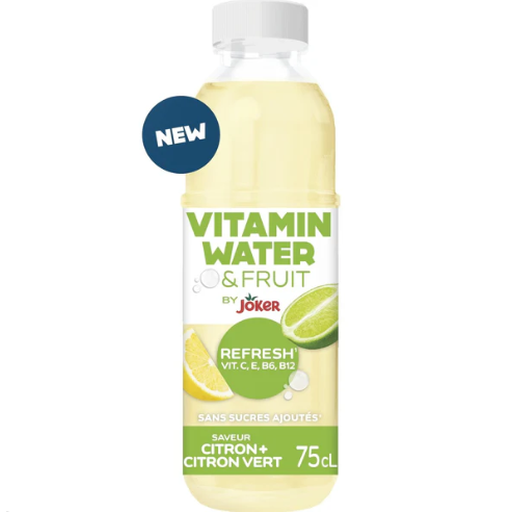
Why this choice suits this profile: At 75 cl, this bottle is ideal for anyone wanting to try a fruit drink without committing to a large multipack straight away. The product page shows 20% fruit and 13 kcal per 100 ml.
The “no added sugar” claim should be read alongside the 2.9 g of sugar per 100 ml shown on the product page. This choice is therefore based on concrete data rather than a simple marketing promise.
A lemon and lime flavour, plus vitamins C, B6, B12 and folates as listed on the product page. No major allergens are declared.
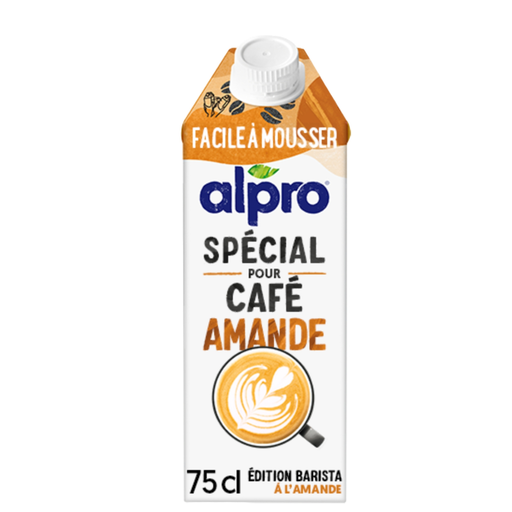
Why this choice suits this profile: This plant-based drink has been designed to go with coffee and for creating frothy preparations. Its 75 cl format fits easily into a daily routine, without forcing you to open a large carton.
The product page states an almond content of 2.5% and 2.5 g of sugar per 100 g. This lets you check the recipe, rather than automatically assuming “plant-based” means “sugar-free”.
Lactose-free according to the description, 25 kcal per 100 g and 0.12 g of calcium per 100 g.
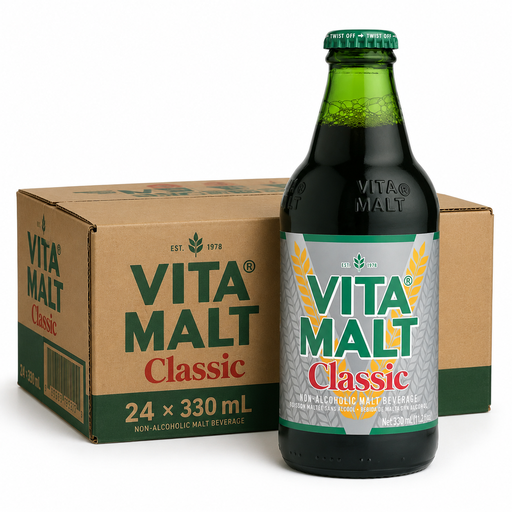
Why this choice suits this profile: The carton of 24 bottles of 330 ml is ideal for households, community groups and meal organisers who want to serve a non-alcoholic malt drink in individual portions.
The total volume and type of container are clearly stated. The product page also lists barley as an allergen, which prevents you from choosing a malt drink without checking for gluten.
Notes of barley malt, hops and caramel, with 67 kcal and 14 g of sugar per 100 ml according to the information provided.
No. Their energy content depends entirely on the recipe. A malt drink, a fruit juice or a sweetened ginger drink can be higher in calories than a flavoured water. Check the values per 100 ml and take into account the amount you actually drink.
Follow the instructions on the packaging. Many non-alcoholic drinks need to be kept in the fridge once opened. Depending on the product, the shelf life can vary from two to five days. Seal the bottle properly and avoid leaving it at room temperature for too long.
For a party, multipacks of small cans or bottles make serving easier and help you work out portions more simply. For everyday use, a 75 cl to 1-litre bottle reduces the amount of handling. If tastes differ from person to person, you can combine a fruity drink, a plant-based drink and an iced tea to offer variety without buying too much of any one product.