
Livraison le jour même ou le lendemain

Qualité garantie

Débloquez vos offres de bienvenue: Livraison GRATUITE | Jusqu'à -80 % | 30 jours d'essai gratuits à JoyPlus
Téléchargez l'application
Whether it's to tune out the noise on public transport, focus in an open-plan office, or simply enjoy your music in peace, noise-cancelling wireless headphones have become an everyday essential. But in a market saturated with marketing promises, making the right choice can quickly become a headache. Before you invest, it's crucial to know the pitfalls to avoid in order to find the model that's truly right for you.
As an audio expert for Joybuy, my role is to help you see things more clearly. Let's review the common traps to sidestep and the criteria that really matter.
Marketing often highlights impressive features, but the real-world experience is often quite different. Here are three points to watch closely.
To make the right choice, focus on the technical specifications that truly matter in daily use.
The performance of noise cancellation is often expressed in decibels (dB). A value of -35 dB, for example, indicates a significant reduction in ambient noise. More advanced models offer adaptive ANC, which automatically adjusts the level of cancellation based on your sound environment (street, office, transport). This is a real advantage for optimal comfort in any situation.
For battery life, there are two numbers to watch: the earbuds' own battery life and the total life with the charging case. For heavy use, long battery life (over 6 hours with ANC for the earbuds) is the minimum. A USB-C port and fast charging have also become the standard in 2026. On the connectivity side, Bluetooth 5.2 or higher ensures a stable connection and low latency, while multipoint connection allows you to pair the headphones with two devices simultaneously (like a computer and a smartphone).
The choice of form factor depends on your primary activity:
Finally, features like a high-quality headset with a microphone (often equipped with multiple mics and noise-reduction algorithms for voice) or translator earbuds can make a real difference depending on your needs.
Rather than searching for a one-size-fits-all solution, it's better to find the model perfectly suited to your use case. Here is a selection of products tailored for distinct profiles.
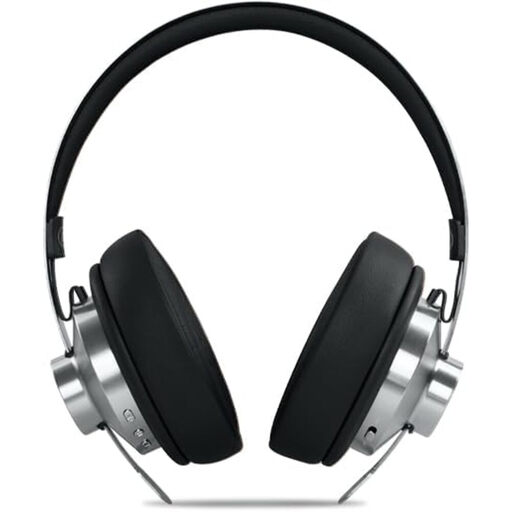
Why it's the right choice: Ideal for commuters and professionals in open-plan offices looking for sustained isolation. Their over-ear design and corduroy velvet earcups ensure long-lasting comfort, essential for getting through a full workday or a long-haul flight.
This model directly tackles the trap of inflated battery life claims. It promises up to 66 hours of listening on a single charge, a performance that remains excellent even with ANC constantly activated.
Its record-breaking battery life puts it in a class of its own. The noise cancellation of up to -35 dB is effective against constant background noise. The dual connectivity (Bluetooth and wired) is a real bonus.
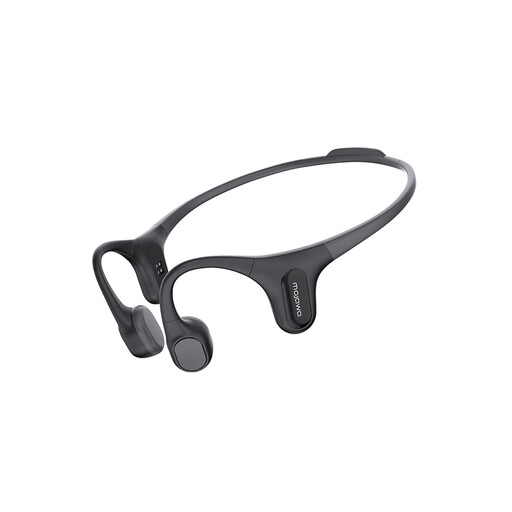
Why it's the right choice: Designed for athletes who refuse to compromise between safety and performance. The bone conduction technology leaves your ears open to stay aware of traffic, while its IP68 certification makes it suitable for swimming.
It brilliantly sidesteps the "unsuitable form factor" trap. Instead of isolating you, it offers an open-ear solution for maximum safety. Its built-in 32GB MP3 player lets you work out light, without your smartphone, and therefore without worrying about Bluetooth dropouts.
Its IP68 certification makes it fully submersible, a rare feature. This dual functionality (Bluetooth + MP3 player) gives it unparalleled versatility for all sports, including water-based ones.
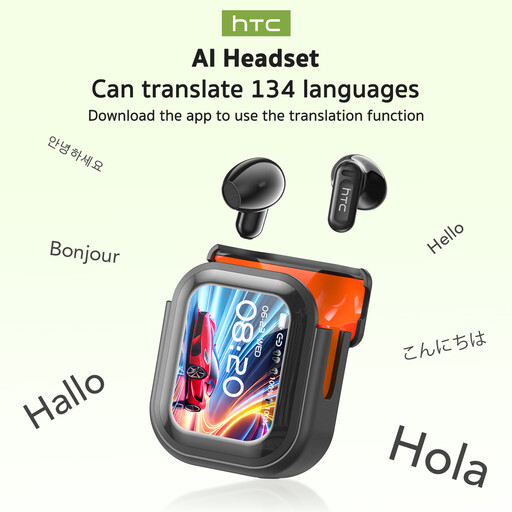
Why it's the right choice: The perfect tool for frequent flyers and professionals working in an international context. These earbuds go beyond music by integrating a real-time translation feature for 135 languages via a dedicated app.
This model avoids the generic product trap by focusing on a standout feature. The ANC here is adaptive, with scene modes (airplane, subway) that target specific noises, thus bypassing the problem of "one-size-fits-all" ANC that is ultimately ineffective.
The AI translation function is its star feature. The LED touchscreen on the case is a welcome innovation for controlling functions without taking out your smartphone. The advertised noise reduction of up to -50 dB is particularly impressive.
Discover our full selection of products that meet our demanding selection criteria and current safety standards.
No, ANC technology is not inherently dangerous. It works by emitting an inverted sound wave (an "anti-noise") that cancels out ambient noise before it reaches your eardrum. It does not create additional pressure. The main risk to your hearing remains listening at excessively high volumes for long periods. Paradoxically, by reducing background noise, ANC often allows you to listen to your music at a lower, and therefore safer, volume.
Passive noise isolation is a physical barrier. It's achieved through the design of the headphones themselves: over-ear headphones that completely cover the ear or in-ear tips that create a tight seal in the ear canal. It is more effective against high-pitched sounds. Active noise cancellation (ANC) is an electronic technology that primarily targets low, repetitive sounds (engines, ventilation). The best models intelligently combine both.
This is strongly discouraged. The IP (Ingress Protection) rating indicates a device's resistance to dust and water. For sports, sweat can damage unprotected earbuds. It's better to opt for a model with at least an IPX4 rating, which guarantees resistance to splashes and sweat. For swimming, an IPX7 or IPX8 rating is essential.