
Livraison le jour même ou le lendemain

Qualité garantie

Débloquez vos offres de bienvenue: Livraison GRATUITE | Jusqu'à -80 % | 30 jours d'essai gratuits à JoyPlus
Téléchargez l'application
Navigating the headphone market can be overwhelming. Between the technical jargon and marketing promises, it's easy to make the wrong choice. A pair of active noise-cancelling headphones is an invaluable ally for your comfort and focus, whether you're travelling, at the office, or at home. But beware: overrated features or well-hidden flaws can turn a great deal into a bitter disappointment.
To help you see things more clearly, our editorial team has broken down the three most common pitfalls and the criteria that truly matter for choosing a model that won't let you down.
Many entry-level models boast "noise reduction" that is actually just passive isolation. This is achieved with dense earcups that physically block a portion of the sound. True active noise cancellation (ANC), on the other hand, relies on much more complex technology: microphones capture ambient noise and generate an opposing sound wave to cancel it out. The verdict is simple: don't pay a premium for passive isolation disguised as active technology.
A 60-hour battery life sounds impressive, but be careful: this figure is almost always measured with noise cancellation turned off. However, activating ANC, especially on wireless Bluetooth headphones, can slash battery life by 30% to 50%! For intensive on-the-go use, it is therefore imperative to check the battery life with ANC enabled to avoid running out of power mid-flight or in the middle of a workday.
Exceptional sound is useless if the headphones become uncomfortable after 30 minutes. A headband that's too tight, earcups that aren't breathable, or excessive weight are deal-breakers for prolonged use. Comfort is a non-negotiable criterion, especially for mobile professionals and frequent travellers.
To make an informed choice, here are the three technical points on which you must be uncompromising.
Today, the gold standard is adaptive noise-cancelling headphones. Unlike basic ANC, which applies a constant filter, an adaptive system adjusts the level of reduction in real-time based on your environment. The system is much more effective in changing conditions, such as when you move from a noisy street to a quieter café. This is the technology to prioritise for a truly effective bubble of silence.
For audiophiles, sound quality obviously remains the top priority. A pair of certified Hi-Res Audio headphones guarantees sound reproduction superior to that of a CD. If you use a compatible device (most recent Android smartphones), opt for a model that supports the LDAC codec. This codec transmits three times more data than standard Bluetooth, preserving the detail and richness of your high-fidelity tracks.
Good headphones for a nomadic lifestyle must combine endurance and practicality. Aim for 60-hour long-battery-life headphones (with ANC off) as a good baseline, but be sure to check the battery life with ANC on (around 40 hours is an excellent score). A pair of foldable travel headphones will fit more easily into your carry-on, and the inclusion of fast charging (e.g., 5 minutes of charging for several hours of listening) is a real bonus.
Here are a few models that tick all the right boxes for different profiles, while avoiding the pitfalls we've just discussed.
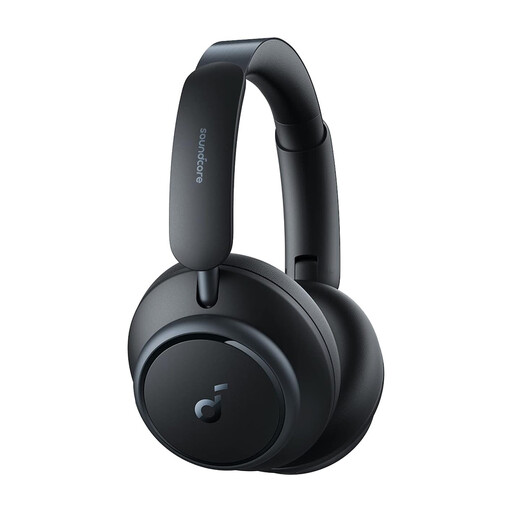
Why it's the right choice: Ideal for long journeys and remote work. Its foldable design, long battery life, and advanced noise-cancelling technology make it a reliable travel companion for staying focused and enjoying high-quality audio anywhere.
This model offers true adaptive active noise cancellation. It avoids the battery life trap by clearly specifying 40 hours with ANC and 60 hours without. Comfort is ensured by memory foam earcups.
Combines Hi-Res Audio Wireless sound via the LDAC codec with ultra-fast charging (8 hours of listening from a 5-minute charge). Excellent performance-to-price ratio.
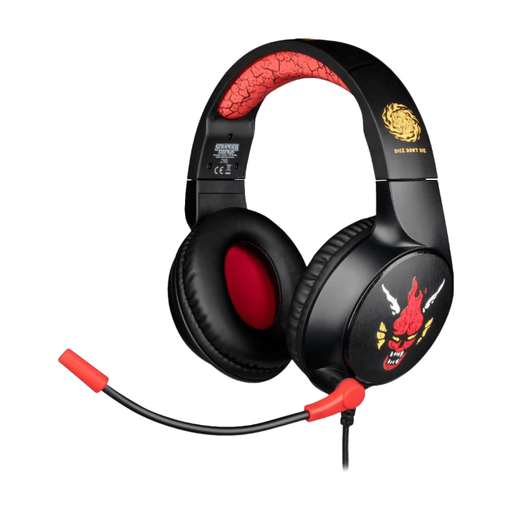
Why it's the right choice: Designed for long gaming sessions on PC or console. The wired connection eliminates all latency, and the over-ear design (which encloses the ear) enhances immersion by blocking external noise.
This headset doesn't claim to offer active noise cancellation. It relies on good passive sound isolation—an honest approach perfectly suited for gaming. Comfort is ensured by an over-ear design and soft padding.
"Plug and play" simplicity, multi-platform compatibility (PC, PS5, Switch), and an original design for fans of the Stranger Things series.
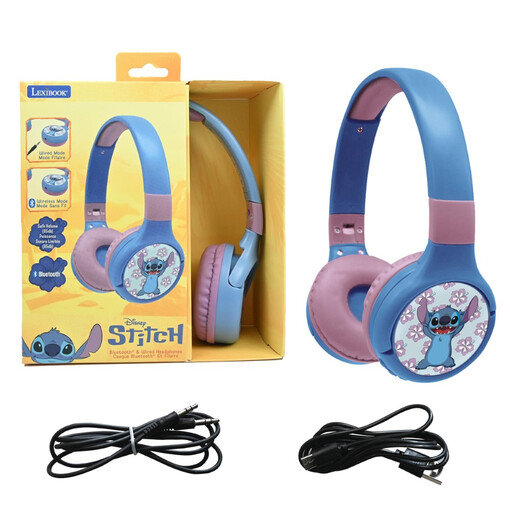
Why it's the right choice: A versatile and affordable option, perfect for children or occasional use. The dual Bluetooth and wired connectivity offers great flexibility, whether at home or on the go.
This headset doesn't try to compete with high-end ANC models. It focuses on safety with a volume limit of 85 dB to protect young listeners' hearing—a much more relevant feature for its target audience.
The volume-limiting feature provides peace of mind for parents. Its foldable, lightweight design and fun aesthetic make it a product perfectly suited for children.
We have tested and compiled a complete selection of models that meet our selection criteria and current standards.
Yes, absolutely! That's actually one of the major benefits of active noise-cancelling headphones. You can activate it on its own to block out noise in an open-plan office, on public transport, or simply to concentrate in a noisy environment without playing any audio.
Yes. The LDAC codec transmits more data for better audio quality, which requires more power from your headphones and smartphone. Expect a 10% to 20% decrease in battery life when you enable this mode compared to a standard Bluetooth codec like SBC or AAC.
The lifespan depends on the build quality and how they are maintained. Generally, a high-quality model can last for five to eight years. The component that degrades the fastest is the lithium-ion battery, which will lose capacity after a few years (around 300 to 500 full charge cycles). The earpads can also wear out and may need to be replaced.