
Livraison le jour même ou le lendemain

Qualité garantie

Débloquez vos offres de bienvenue: Livraison GRATUITE | Jusqu'à -80 % | 30 jours d'essai gratuits à JoyPlus
Téléchargez l'application
Public transport, open-plan offices, neighbours who are a little too festive... In an increasingly noisy world, finding your own bubble is no longer a luxury, but a necessity. A good pair of noise-cancelling headphones can literally change your life. The problem? Faced with a jungle of models and marketing promises, it's hard to know where to start. How can you tell the difference between technology that actually delivers and a simple sales pitch?
As the Head of Product Recommendations at Joybuy, my mission is to guide you through this jungle. Forget the incomprehensible technical jargon! This guide breaks down the common pitfalls and gives you the keys to choosing THE model that's right for you, without breaking the bank.
Audio marketing loves to muddy the waters with technical terms and dazzling promises. Here are the three most common mistakes that lead to buyer's remorse.
Trusting the "noise reduction" label without digging deeper. Not all technologies are created equal. Simple "sound isolation" (or passive isolation), achieved with thick earcups, is often sold as a miracle solution. The real magic is Active Noise Cancellation (ANC): microphones capture ambient sounds, and a chip generates an opposing sound wave to neutralise them. But be warned, its effectiveness varies wildly from one model to another, especially with human voices or sudden noises.
Taking the advertised battery life at face value. An XXL long battery life of 50 or 60 hours looks impressive. The catch? This figure is almost always calculated with noise cancellation... turned off. Ironic, since that's THE feature you're interested in. In reality, once ANC is activated, the battery life melts away, sometimes by 30% to 50%. This is a crucial detail for frequent travellers and daily commuters.
Underestimating the importance of form factor and comfort. An over-ear headset (which surrounds the ear) promises total immersion, but its weight and bulk can quickly become a burden on your commute. Conversely, in-ear earbuds are the kings of discretion but can irritate the ear canal over time. Choosing the wrong format almost guarantees your investment will end up at the bottom of a drawer.
To make the right choice, forget the slogans and focus on these few technical points. They are the real deciding factors.
This is the number one criterion, the non-negotiable point. ANC excels at erasing constant, predictable background noises: the drone of a plane engine, the roar of the subway, or the hum of office ventilation.
Good noise-cancelling headphones shouldn't compromise on sound quality. Poorly implemented ANC can quickly distort your music.
We've said it before, but it's crucial: demand the battery life with ANC enabled. Aim for 20 to 30 hours for headphones; that's become the standard. For earbuds, 6 to 8 hours per charge (not including case recharges) is a good score. Comfort, while subjective, is based on concrete criteria:
The "perfect" headphones don't exist. However, the perfect headphones for you do. Here are our recommendations for three typical profiles in 2026.
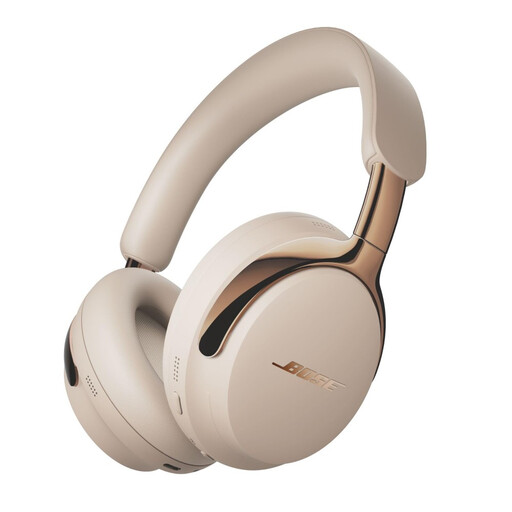
Why this choice: For frequent flyers and open-plan office pros who refuse to compromise on silence or comfort. These Bose headphones are the gold standard for their stunning ANC and a fit so comfortable you'll almost forget you're wearing them.
Here, noise cancellation isn't an empty promise; it's the best on the market. Its comfort and light weight are designed for long-haul flights, avoiding the pitfall of headphones that become unbearable after two hours.
Active noise cancellation that borders on perfection, paired with Spatial Audio via Bose Immersive Audio for a spectacular sound immersion.
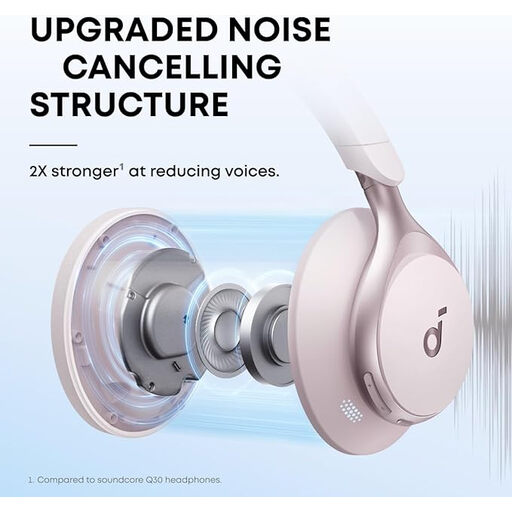
Why this choice: The smart choice for students and young professionals who want high-performance Bluetooth headphones without breaking the bank. It packs premium features (Adaptive ANC, Hi-Res Audio) at an unbeatable price.
It plays the transparency card by advertising its battery life with ANC on (40 hours), a far cry from misleading marketing figures. Its adaptive ANC proves it does more than just the bare minimum.
An unbeatable price-to-performance ratio. Compatibility with the LDAC codec for Hi-Res audio is a real luxury at this price point, guaranteeing a superior listening experience.

Why this choice: For iPhone, Mac, or iPad owners, these are a no-brainer. These noise-cancelling wireless earbuds offer a magical user experience: instant switching between devices, personalised Spatial Audio... Apple's simplicity at its best.
Their ultra-portable in-ear form factor is a masterstroke. With four sizes of eartips included, comfort is guaranteed. They thus avoid the pitfall of bulkiness for nomads who prioritise discretion above all else.
The perfect, seamless integration with the Apple ecosystem. Their noise cancellation, which is highly effective for such a compact format, makes them the ideal companion for daily commutes.
Discover our full selection of products that meet our demanding selection criteria and safety standards.
A few clear answers to the most common questions.
It depends on two factors: the battery and physical wear. Just like a smartphone, the lithium-ion battery will lose capacity after 3 to 5 years, depending on your usage. The good news? On models from major brands like Bose or Sony, wear-and-tear parts (earcups, headband) are often replaceable, which significantly extends the life of your headphones.
No, ANC technology is safe. It doesn't add sound volume; it subtracts it. The principle is to emit an "anti-noise" that cancels out ambient sound before it reaches your eardrums. The only real risk is isolating yourself too much from the outside world. So, remember to use Transparency Mode or remove your headphones when your attention is required (when crossing the street, for example).
Yes, most over-ear headphones have a plan B. Models like the Sony WH-CH720N or the Bose QuietComfort come with an audio cable (3.5mm jack). This is perfect for plugging into an airplane's entertainment system, a console, or an old computer. It's also the ideal backup solution if your battery runs out.