
Livraison le jour même ou le lendemain

Qualité garantie

Débloquez vos offres de bienvenue: Livraison GRATUITE | Jusqu'à -80 % | 30 jours d'essai gratuits à JoyPlus
Téléchargez l'application
Creating a bubble of calm amidst the chaos of your commute, focusing in an open-plan office, or simply immersing yourself in your music: this is a luxury that's become essential. Noise-cancelling wireless earbuds promise this tranquility. But be warned: the market is a jungle of models and marketing claims that too often lead to disappointment. Our mission is to help you decode the spec sheets to make a truly informed choice.
Before we get to our top picks, let's review the 3 common pitfalls that many buyers fall into.
To avoid falling for the hype, focus on these few objective technical characteristics. They, not the marketing, reveal a product's true performance.
Active Noise Cancellation (or ANC) technology uses microphones to capture external sounds and generate an opposing sound wave to cancel them out. But the best systems go even further:
The Hi-Res Audio Wireless label isn't just a marketing sticker. It guarantees compatibility with advanced Bluetooth codecs like LDAC. As a reminder, a codec is the method used to compress and decompress audio data between your smartphone and your earbuds.
Having good battery life is crucial for daily use. Always check two figures: battery life with ANC on and with ANC off, as the difference can be as much as 20-30%.
For crystal-clear calls, look for models equipped with multiple microphones (often 6) and a dedicated AI algorithm for filtering out background noise (wind, traffic, chatter). This is the only way to ensure the person on the other end hears you perfectly, not the noise around you. It's what separates decent earbuds from the best earbuds for calls.
Rather than a jumbled list, here are models we recommend for specific use cases, based on the objective criteria defined above.
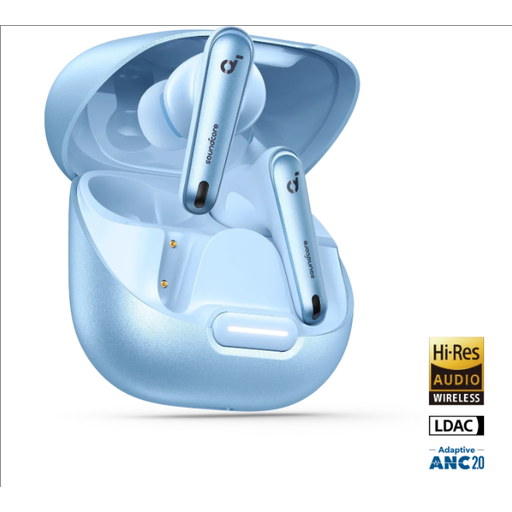
Why we recommend it: For those who spend hours commuting, battery life is king. This model promises up to 50 hours of listening time with the case. Its Adaptive ANC 2.0 system is designed to automatically adjust to the changing noises of a journey, from the train to the street.
It avoids the discomfort pitfall: supplied with multiple tip sizes, it ensures a custom fit, which is essential for long listening sessions and effective ANC.
Adaptive ANC 2.0 that adjusts to your ears and the environment. Support for the LDAC codec for high-resolution sound.

Why we recommend it: This user is looking for sound reproduction without compromise. The Liberty 4 Pro are built for this, with their ACAA acoustic architecture, a dual-driver system (woofer and tweeter), and Hi-Res Audio Wireless certification for a studio-quality listening experience.
It avoids the vague "audio quality" trap by relying on specific technical features (sound architecture, dual drivers) rather than marketing jargon.
ACAA acoustic architecture for clean frequency separation. Advanced adaptive ANC with 7 sensors for surgical-precision isolation.
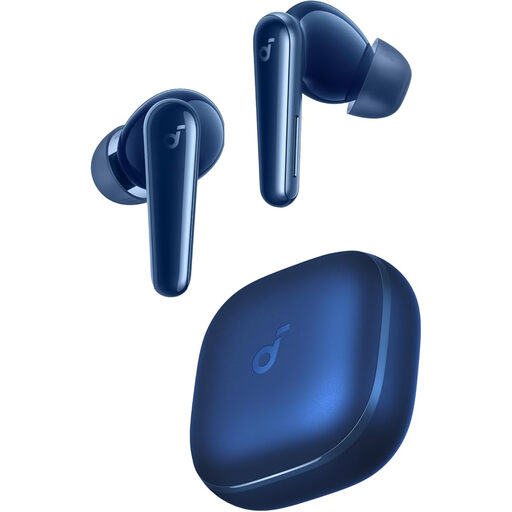
Why we recommend it: For professionals and students, call clarity is just as crucial as noise cancellation. This model goes all-in on isolating surrounding voices, featuring 6 microphones paired with an AI algorithm to ensure your voice always remains front and centre.
It tackles the poor-quality call pitfall head-on by separating ANC technology (for what you hear) from noise reduction for calls (for being heard).
6 AI-powered microphones for absolutely clear calls. According to the manufacturer, the ANC 3.0 technology specifically targets and reduces surrounding human voices.
We have tested and compiled a complete selection of models that meet our demanding selection criteria.
Generally, you can expect them to last between 2 and 4 years. The weakest link is always the lithium-ion battery, which inevitably loses capacity over charge cycles. To preserve them, avoid extreme temperatures and never store them completely discharged for a long period.
Absolutely. ANC is power-hungry, and activating it has a direct impact on battery life. Expect a drop of 20-30% on average. This is why reputable spec sheets always mention two figures: battery life with and without ANC.
Comfort is a personal matter, but one clue is a dead giveaway: the variety of included accessories. Prioritise models that come with at least 3 or 4 pairs of silicone tips in different sizes and shapes. This is the best guarantee of finding the perfect fit, not only for comfort but also for the passive isolation that is the first step to successful noise cancellation.