
Livraison le jour même ou le lendemain

Qualité garantie

Débloquez vos offres de bienvenue: Livraison GRATUITE | Jusqu'à -80 % | 30 jours d'essai gratuits à JoyPlus
Téléchargez l'application
In a French bathroom, lack of space quickly becomes apparent: towels hanging on the door, toothbrushes left beside the basin, bottles piled up in the shower and your phone exposed to splashes. No-drill bathroom storage offers a practical solution to these challenges, particularly for tenants and tiled walls that are best left unaltered.
However, a screw-free fixing is not automatically suitable for every surface. A few common mistakes can turn a good idea into a disappointing purchase.
A suction cup or adhesive works best on a clean, flat and non-porous surface. Glass, metal, stainless steel, acrylic and some smooth tiles generally offer the best conditions. Painted walls, wallpaper and untreated stone are much less suitable.
Tile grout, textured tiles and uneven surfaces reduce the contact area. Before installation, clean the area thoroughly, dry it completely and make sure the fixing is not positioned over a grout line.
A hook designed for a lightweight towel should not be used to hang a basket filled with bottles. The actual weight it can support also depends on humidity, temperature, how frequently it is handled and the condition of the surface.
To reduce the risk of items falling, check the maximum capacity stated by the manufacturer and leave a safety margin. Accessories used every day, such as a towel rail or toothbrush holder, require a stable fixing and flawless installation.
A wall-mounted bathroom organiser can retain water if its base is enclosed. Cleaning then becomes more laborious and drying takes longer. In a shower or near a basin, choose models with drainage holes, a removable container or a design that is easy to wash.
Finally, “damage-free” does not mean it can be removed without care. Adhesive should generally be peeled off gradually, while a suction cup should be removed by gently lifting its edge.
Stainless steel adhesive hooks are well suited to towels, dressing gowns and small accessories. However, take care not to confuse stainless steel with a simple decorative coating: check the product information to find out which material is actually used.
Measure the available width on the wall or door. A 600 mm wall-mounted towel rail, for example, requires sufficient length, as well as enough clearance to remove towels without hitting a piece of furniture.
In a small bathroom, depth matters just as much. A support that projects too far can obstruct a cupboard door or reduce the amount of space around the shower.
When buying in France, check the information relating to the manufacturer, the responsible person in the European Union, the materials, the maximum load and the warnings. Follow the installation instructions and never use an accessory beyond its stated capacity.
Products intended for damp environments must be installed in accordance with their specific instructions. For accessories incorporating an electrical function or requiring a power supply, check the relevant safety information and applicable marking separately. The products featured below are mechanical, adhesive or suction-cup storage solutions.
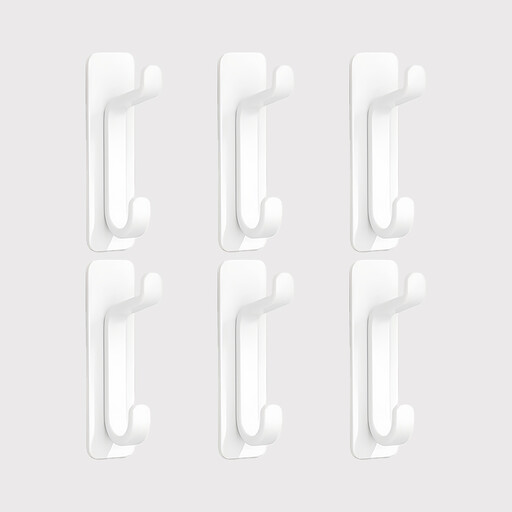
Why this choice suits this profile: This pack of six hooks lets you spread out towels, accessories and small items without adding several different storage systems. A simple way to get started, suitable for installation on a compatible surface or behind a door.
The multipack means you do not need to buy several separate products, while the adhesive installation requires no tools. However, it must be installed on a clean, dry and smooth surface.
Pack of 6, advertised stainless steel construction and the option of over-door storage, depending on the space available.
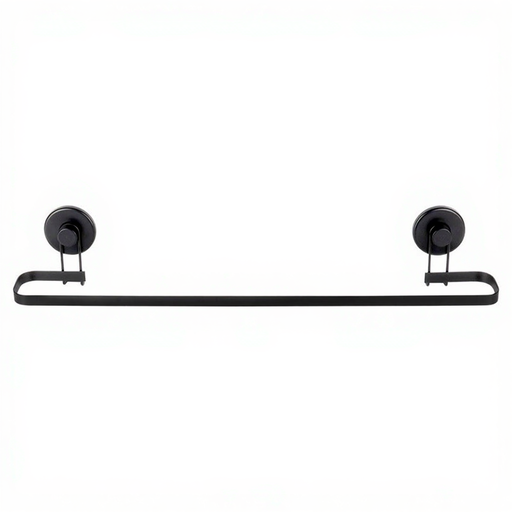
Why this choice suits this profile: At 600 mm wide, it lets you organise several towels in a more structured way. An option worth considering when a clean, understated look and storage capacity matter just as much as the amount of space it occupies.
Its clearly stated dimensions let you check the available space before buying and avoid choosing a model that is too bulky for a piece of furniture or a narrow partition.
Stated dimensions of 600 × 85 × 110 mm, metal construction and a shallow profile. Check the fixing method before choosing a no-drill installation.
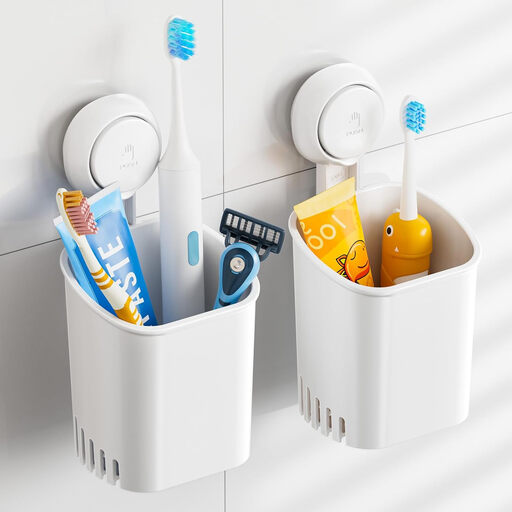
Why this choice suits this profile: This suction toothbrush holder is designed for busy bathrooms, families and rented homes. It is suitable for smooth, non-porous surfaces such as glass, smooth tiles, stainless steel or acrylic.
The drainage holes and removable cup make it easier to drain water and clean the holder. The instructions rule out grout lines, porous surfaces and cracked or uneven tiles.
Pack of 2 holders, advertised materials: ABS and TPE, screw-free and glue-free fixing, with a stated maximum capacity of 11 lb. Do not exceed this limit.
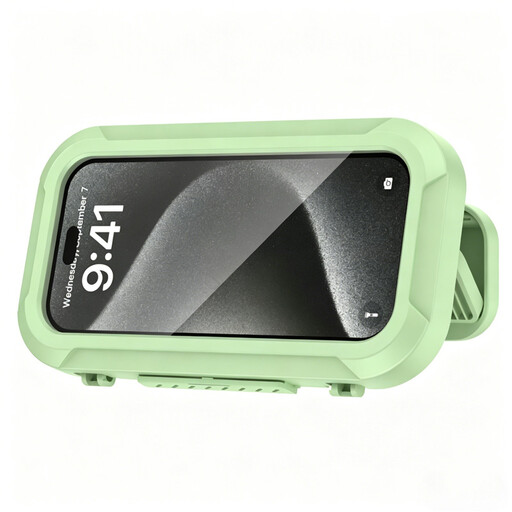
Why this choice suits this profile: This waterproof phone holder is designed for use in the shower. It keeps your device within sight while helping to protect it from splashes, without the need to drill into the wall.
Its purpose is clearly specialised: it is not a replacement for storage for towels or bottles. Check that it is compatible with your phone’s dimensions and keep the fixing clean and dry.
Advertised as a waterproof box, with a touch screen and 360° rotation. Use it in accordance with the manufacturer’s instructions.
We have put together a complete, real-time updated list of products that meet these strict selection criteria and European safety requirements.
On a smooth, degreased tiled surface, you can choose stainless steel adhesive hooks, a suction cup or a towel rail designed for tool-free installation. Avoid placing the holder over a grout line or on a textured tile. The product information should always take precedence over general recommendations.
How long it stays in place depends on the surface, humidity, suspended weight and quality of installation. There is no universal duration that applies to every product. Careful installation, a reasonable load and regular checks reduce the risk of the adhesive coming away.
Yes, provided it is installed on a compatible surface and removed in accordance with the instructions. Before buying, check the terms of your tenancy agreement and, if adhesive is involved, test it in an inconspicuous area. Compatibility is often more limited on painted or porous walls.