Student who mainly reheats meals
If you defrost food and reheat meals without wanting to brown or crisp them, a solo microwave will do the job. Check that it can fit your plates and that there’s enough room for it on your worktop.


If you mainly want to reheat and defrost food in a studio flat, start with a solo microwave; choose a grill model if you’d also like to brown or crisp dishes. If you don’t have a conventional oven, a combination microwave with convection is worth considering if you plan to cook oven-style dishes regularly. In all cases, measure the space and your dishes, then check the clearances required in the manual.
The choice between a solo, grill or combination model depends first and foremost on the meals you prepare, as UFC-Que Choisir and Samsung France explain.
If you defrost food and reheat meals without wanting to brown or crisp them, a solo microwave will do the job. Check that it can fit your plates and that there’s enough room for it on your worktop.
A model with a grill lets you give some dishes a golden finish, while still offering reheating and defrosting functions. However, a grill on its own doesn’t provide the convection cooking of a combination microwave.
If you often prepare dishes that need oven-style cooking, consider combination microwaves with convection. Before choosing a model, compare its dimensions, the space available for your dishes and the installation instructions.
Start with the way you usually cook, then check the appliance’s dimensions and instructions against your kitchen space.
| Feature | What to check | What I need |
|---|---|---|
| Cooking modes | Check which modes are actually listed: microwave, grill and convection. UFC-Que Choisir distinguishes between a grill, which browns or crisps food, and a combination model, which adds convection cooking. | I mainly reheat and defrost: a solo model may be enough. For browning or crisping, I’ll look at grill models; for regular oven-style cooking, I’ll consider combination models. |
| Available space | Compare the appliance’s external width, height and depth with the space you have. Measure your dishes too, and check the internal dimensions and turntable diameter: the capacity in litres alone won’t tell you whether they’ll fit. | My appliance needs to fit on the worktop without stopping me from using my usual plates and dishes. |
| Ventilation | Check the clearances specified in the manual for the freestanding model, especially if you’re considering a shelf or alcove. Samsung France gives general guidance of 10 cm at the back and sides and 20 cm above, while noting that requirements vary by appliance. | I have limited space: I need to leave the clearances required in the manual without blocking the ventilation. |
| Containers | Check the manual to see which containers and accessories are suitable for each mode. When heating food in its packaging, follow the instructions on power and time; Anses warns that overheating can increase the migration of substances from some packaging. | I want to use my usual containers and reheat ready meals in line with the instructions for their packaging. |
According to UFC-Que Choisir, one of the key differences with a combination model is its convection cooking. If you reheat almost all your meals, this feature may not suit your main needs.
Think about the dishes you prepare in a typical week: choose a solo model for reheating and defrosting, a grill model for browning or crisping, or a combination model if you regularly cook oven-style dishes.
The same dish may fit differently in two microwave cavities. Electrolux and Brandt, for example, list internal dimensions and turntable diameters, which are useful for making this comparison.
Measure your largest container, then compare it with the cavity and turntable of the model you’re considering. Check the external dimensions separately to make sure it will fit in your chosen space.
An empty space under a cupboard doesn’t guarantee enough clearance. Samsung France notes that the distances required around a microwave vary by model.
Read the installation instructions for the model you’ve chosen before setting aside an alcove or shelf, and make sure its ventilation openings will remain clear.
Anses says that overheating can increase the migration of substances from some food packaging into the food.
Follow the power and heating-time instructions for packaging that’s suitable for microwave use. If the packaging doesn’t say it can be used in a microwave, transfer the food to a suitable container.
These range examples show which features to compare; the details given apply to the specific models named, not every appliance from each brand.
The MCP349WH is an example from Whirlpool France’s range of freestanding combination microwaves.
The EMZ421MMK is an example of a freestanding microwave with a grill, for reheating and adding a browned or crispy finish.
The GE2626W is a freestanding grill microwave. Its dimensions can help you check whether it will fit in your space and accommodate your dishes.
In its advice, Samsung France distinguishes between solo microwaves, grill models and convection models.
This selection includes solo microwaves for reheating and defrosting, a grill model for browning or crisping, and a combination model to consider if you regularly cook without an oven. Compare their features and dimensions with your meals, containers and available space.
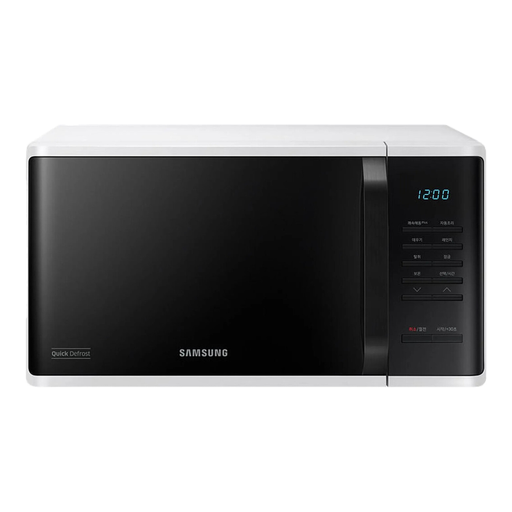 Image unavailable
Worth considering if you mainly need to reheat and defrost meals, rather than use a grill. The product title gives a capacity of 23 L; check the dimensions of your dishes and the clearances specified in the manual.
 Image unavailable
The grill is useful if you want to brown or crisp food as well as reheat it. The title lists a 20 L capacity and 700 W; if you plan to cook oven-style dishes regularly, check the available modes rather than relying on the grill alone.
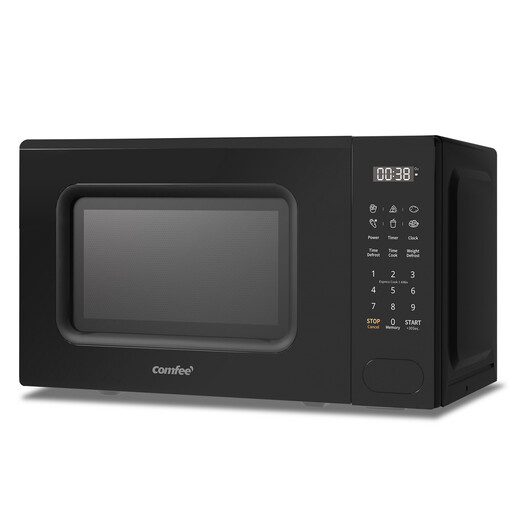 Image unavailable
Designed for reheating and defrosting, this model has digital controls and pre-set menus, as stated in its title. Before choosing it, compare the space it needs with the size of your containers.
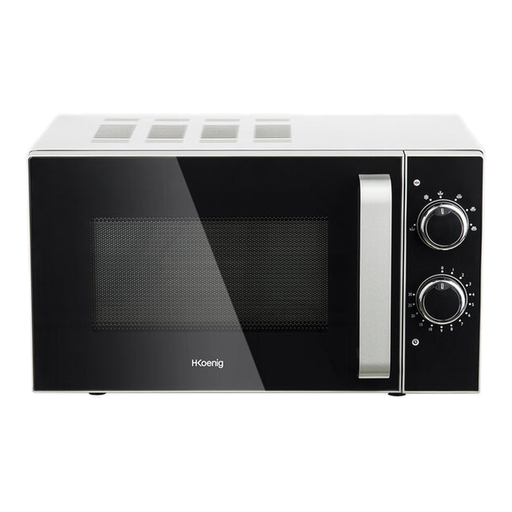 Image unavailable
An option to consider for reheating and defrosting in a kitchen with limited equipment. The title lists a 20 L capacity and 700 W; measure your plates and check the manual when choosing where to put it.
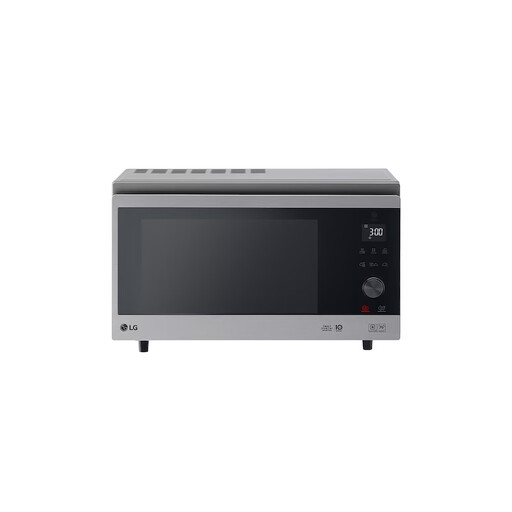 Image unavailable
Worth considering if you regularly cook without an oven and want several cooking modes in one appliance. The title lists a 39 L capacity: measure the space carefully, check which modes and accessories are suitable for your dishes, and confirm the required ventilation clearances.
Choose a combination microwave with convection if you regularly need to cook oven-style dishes as well as reheat and defrost food. UFC-Que Choisir distinguishes this type of cooking from the grill function, which is used to brown or crisp food. If you mainly need to reheat meals, start with those needs before adding other modes.
No: check the internal dimensions and turntable diameter against your containers too. For example, Electrolux lists a 218 × 303 × 316 mm cavity and a 27 cm turntable for the EMZ421MMK. These measurements apply to this model, not every microwave with the same capacity.
Follow the clearance instructions in the manual for your chosen model. Samsung France gives general guidance of 10 cm at the back and sides and 20 cm above, but notes that requirements vary by appliance. Check them before planning to put the microwave in an alcove or on a shelf.
No: use a tray that’s suitable for microwave use and follow its instructions on power and heating time. Anses warns that overheating can increase the migration of substances from some packaging; if the packaging doesn’t say it can be used in a microwave, transfer the food to a suitable container.