What should you check first?
Sort your usual meals by cooking method, then check that the appliance you choose will work with your dishes and fit the space you have.
| Priority |
What to check |
What I need |
| Oven-baked dishes |
Check the convection and grill functions on a combi microwave, or the cooking modes on a mini oven. Compare the interior size with your dishes; the word ‘combi’ alone doesn’t tell you which accessories are suitable. |
I want to cook a dish in a tin or brown the top, rather than just reheat it. A mini oven is suited to this; a combi microwave may also work if its functions and interior space suit my dishes. |
| Basket cooking |
For an air fryer, measure the basket and allow space to open the drawer. Check that the amount you want to cook will fit the available capacity. |
Most of my meals are portions that fit in an air fryer basket. If I regularly cook in large dishes, this capacity may not meet my needs. |
| Saucepans and slow-cooked dishes |
A portable hob is for frying pans and saucepans; an induction model requires compatible cookware. Depending on the model, a multicooker may offer steaming, slow cooking or pressure cooking, but it won’t replace a hob for frying. |
For boiling or searing in the pans I already own, I’d look at hobs. If I mainly make covered dishes, the cooking modes on a multicooker matter more. |
| Usable space |
Measure the appliance’s width, depth and height, then allow for the space needed to open the door or drawer. Check the model’s instructions for the required clearance and supporting surface. |
I need to be able to use the appliance without blocking the rest of the worktop, not just fit it there when it’s closed. |
| Electricity and use |
Compare the appliance’s stated power with the specifications of your available power supply. To understand energy use, consider the modes you use, how long you use them for and how often. |
I want to know whether my electrical installation is suitable and choose based on the meals I’ll actually cook. ADEME’s published annual averages for appliance categories don’t predict the energy use of a cooking session with the model I’ll buy. |
A few brands to consider
These models illustrate different features; a brand name alone won’t tell you which type of cooking you need.
Panasonic
The range includes combi microwaves, worth considering if you want one appliance for reheating and some oven-style cooking.
- Panasonic France lists the NN-CD88 as having a 1 000 W microwave, a 1 300 W quartz grill and convection functions.
- These features relate to the NN-CD88. Check the functions and permitted accessories for the specific model you’re considering.
Moulinex
Its mini ovens and multicookers offer two distinct ways to prepare everyday meals.
- The Moulinex manual for the Optimo OX444810 lists convection, conventional heat and grill; the Cookeo+ manual describes steaming, slow cooking and pressure cooking.
- A mini oven is suited to dishes designed for an oven cavity; the Cookeo+ modes are intended for different types of cooking.
Philips
The brand offers basket-style air fryers for dishes that fit in their cooking space.
- Philips France describes the NA154/00 as having two 3,55 L baskets that can be combined into a 7,1 L space using a removable divider.
- Even with an adjustable basket, check the interior dimensions against your dishes; this appliance isn’t for cooking in a saucepan.
Tefal
A portable Tefal induction hob may suit you if you want to cook with a frying pan or saucepan.
- Tefal lists seven heat settings for the Everyday Slim, from 300 to 2 100 W.
- Check that your cookware is suitable for induction; a portable hob can’t handle oven cooking.
Appliances available on Joybuy
These options cover three ways to cook without a usable conventional oven: air-frying in a basket, cooking on an induction hob and baking in a mini oven. First, choose the cooking method that suits your meals.
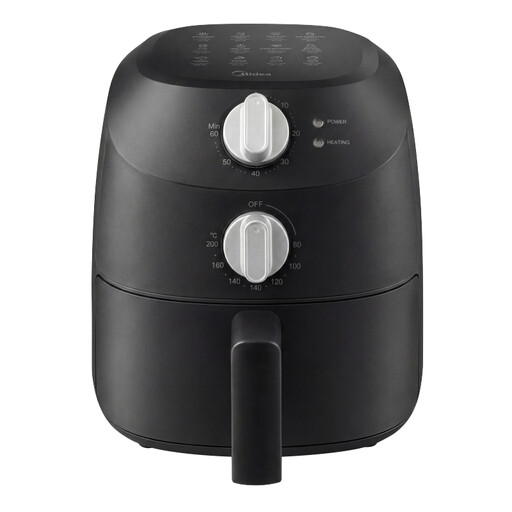 Image unavailable
Midea 2 L air fryer, 1 150 W
An option for portions that fit in a 2 L basket, rather than every type of cooking you’d do in an oven or on a hob. The product name lists a 60-minute timer and dishwasher-safe parts. Check the space needed around the appliance and the room available on your worktop.
View on Joybuy
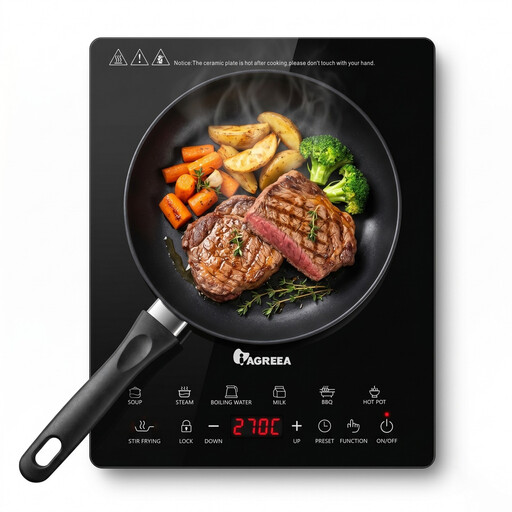 Image unavailable
IAGREEA DF200-14V10, 2 000 W induction hob
Worth considering if you mainly cook with a saucepan or frying pan rather than in an oven. The product name lists eight power levels, a temperature range of 60 to 270 °C and compatibility with cookware measuring 12 to 26 cm. Check your pans, the installation instructions and the power supply available.
View on Joybuy
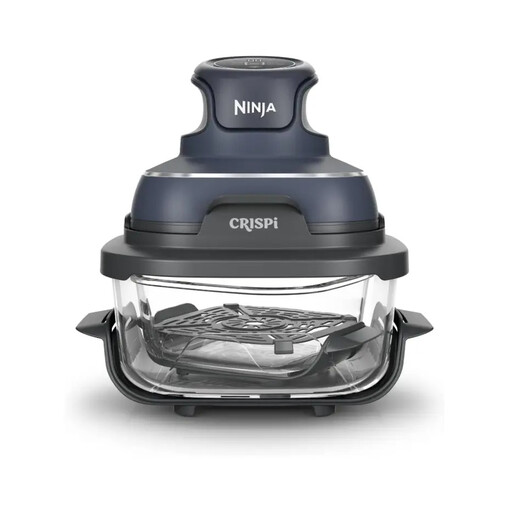 Image unavailable
Ninja Crispi FN101EUGY air fryer
Another air-frying option if your portions fit in the model’s containers. Compare their size with your usual meals and allow for the space needed to use the appliance, as shown in the instructions. This type of appliance won’t replace a hob for frying.
View on Joybuy
 Image unavailable
ochama 2 000 W portable induction hob
This hob is for cooking in a saucepan or frying pan that’s suitable for induction; it doesn’t offer the functions of an oven. The product name lists ten power settings, six functions and a lock. Before deciding where to put it, check its dimensions, the instructions and your electrical supply.
View on Joybuy
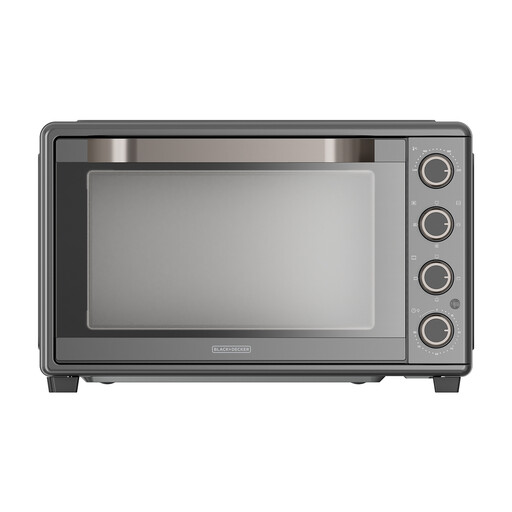 Image unavailable
Black+Decker BXOV3000E, 1 500 W mini oven
Worth considering if you want to cook dishes in an oven cavity rather than in a basket or on a hob. Check that your dishes will fit inside and that your worktop has enough room for the door to open, as well as the clearance specified in the instructions.
View on Joybuy
Frequently asked questions
Can an air fryer replace an oven in a small kitchen?
It can handle meals where the portions and dishes fit in its basket, but it won’t necessarily fit large tins or dishes that need an oven cavity. Compare the interior dimensions with what you cook instead of relying on the stated capacity alone.
What should I choose to use saucepans and frying pans without a cooker?
A portable hob lets you cook with them. If you choose induction, check that your cookware is compatible and the right size, then check the power supply and installation requirements for the model.
What should I check before putting a cooking appliance on the worktop?
Check the model’s instructions for the type of surface it needs and the clearance required around it. Also check that the door or drawer can open, and inspect the cable and available power supply. The power rating on the appliance isn’t enough to confirm that your electrical installation is suitable.
Does a furnished rental property in France have to include an oven?
For furnished rental properties covered by French Decree No. 2015-981 of 31 July 2015, Légifrance states that the minimum list of furnishings includes cooking hobs and an oven or microwave oven. This doesn’t mean that every compact cooking appliance can automatically count as one of these items.
How can I compare the energy use of these appliances?
Compare the modes you’ll use, the quantities you’ll prepare, cooking time and how often you’ll cook, rather than just the wattage shown on each appliance. ADEME’s published annual averages for an electric oven and a microwave relate to typical use in those categories; they don’t tell you how much energy a mini oven, combi microwave or air fryer will use to cook your meal.


