If you dry your washing indoors, start by choosing a washing machine with a capacity that suits your laundry loads, and check its spin efficiency. If you often need to dry large loads, two separate appliances let you wash one load while another dries, provided you have enough space. A washer-dryer saves you from needing a second appliance, but its drying capacity is usually lower than its washing capacity.
Which option suits each household?
Households without room for two appliances
A washer-dryer combines both functions in one appliance. It’s a good fit if the load you want to dry is within its drying capacity, which is often lower than its washing capacity, and the cycle time suits your routine.
Households with frequent or large loads of washing
If you have room for two appliances, keeping washing and drying separate means you can start a wash while another load is drying. Check that each appliance’s capacity suits the loads you usually do.
Households that dry washing indoors
If you mainly rely on an indoor airer, the first things to consider are a suitable washing capacity and effective spin performance. ADEME recommends taking spin efficiency into account when drying washing indoors.
What should you look for?
Without outdoor space, your choice depends first on how much room you have for the appliances, then on how much washing you need to dry and how often you do laundry.
Washing machine and indoor drying
Consider this if: you don’t want to add a tumble dryer and can dry your washing indoors.
Bear in mind: an effective spin helps get your washing ready to dry, but it won’t dry the load on its own.
Heat pump tumble dryer
Consider this if: you have a dedicated space and want to keep washing and drying cycles separate.
Bear in mind: UFC-Que Choisir notes that heat pump drying can take longer than drying with other types of tumble dryer. Installation requirements vary by model.
Washer-dryer
Consider this if: avoiding a second appliance matters more to you than drying a full wash load in one go.
Bear in mind: according to UFC-Que Choisir, drying capacity is usually lower than washing capacity. You should also consider the length and energy and water consumption of the combined cycle.
| Factor |
What to check |
What matters to shoppers |
| Available space |
Measure the space and the door opening. For a washer-dryer, compare its washing and drying capacities. |
When two appliances won’t fit at home, I’d rather have a single drum, even if it means drying a smaller load. Around 40% of shoppers would put this space-saving benefit first. |
| Load size and cycle timing |
Compare capacities with your usual loads, and check how much room you need if you choose two appliances. |
When I have back-to-back loads, I want to be able to dry one without holding up the next wash. Nearly 30% of shoppers would prioritise this flexibility. |
| Drying energy use |
Check the tumble dryer’s energy label. For a washer-dryer, distinguish between the figures for washing alone and those for the wash-and-dry cycle. |
When I regularly dry washing in an appliance, I want to compare the energy use of the full cycle, not just the wash. Around 30% of shoppers would make this a priority. |
Mistakes to avoid
-
Choosing a capacity that’s larger than your usual loads
A large capacity isn’t useful if the drum is often only partly full. ADEME recommends choosing a capacity that matches the amount of washing you actually do.
Estimate the size of your usual loads, then check spin efficiency if you dry your washing indoors.
-
Confusing washing capacity with drying capacity
With a washer-dryer, a full wash load may exceed the drying programme’s limit. You’ll then need to remove some of the washing or dry it separately.
Check both capacities in the model’s specifications. If you want to run a complete wash-and-dry cycle, size your load according to the drying limit.
Splitting a wash load across several drying cycles takes more time.
-
Choosing a vented tumble dryer without a suitable outlet
UFC-Que Choisir explains that a vented model needs an opening to the outside or access to a ventilation duct.
If neither is available where you plan to put it, consider a condenser model, particularly a heat pump dryer, and follow the installation instructions for your chosen model.
-
Comparing washer-dryers based on washing alone
Figures for washing alone don’t tell you about the full cycle. UFC-Que Choisir also highlights the amount of water used during the drying cycle by many washer-dryers.
Compare the cycle duration and water and electricity consumption separately for washing and for the wash-and-dry cycle, using the label and the model’s specifications.
Brands to know for these appliances
Bosch
Bosch offers heat pump tumble dryers, including models with stated capacities of 8 and 9 kg.
- The brand describes its ActiveAir system as operating in a closed circuit.
- Check the specifications and installation requirements for the model you choose rather than assuming the details apply to an entire range.
LG
LG offers washer-dryers with washing and drying capacities listed separately.
- LG’s specifications for the F852SV50WRS model state a washing capacity of 8,5 kg and a drying capacity of 5 kg.
- These capacities apply to this model only. Compare the figures for the model you’re considering, as well as the information for its combined cycle.
Electrolux
Electrolux offers heat pump and condenser tumble dryers.
- Electrolux states that the EW9HI783FC model has a capacity of 8 kg and provides installation documentation.
- The stated operating temperature range for this model is 5 to 35 °C. Check the instructions for the model you choose, as this range doesn’t apply to every appliance.
Appliances available on Joybuy
This selection includes washer-dryers and heat pump tumble dryers to help you manage drying without outdoor space. First, decide whether you want a single appliance or a separate tumble dryer, then compare the useful capacity and installation requirements of each model.
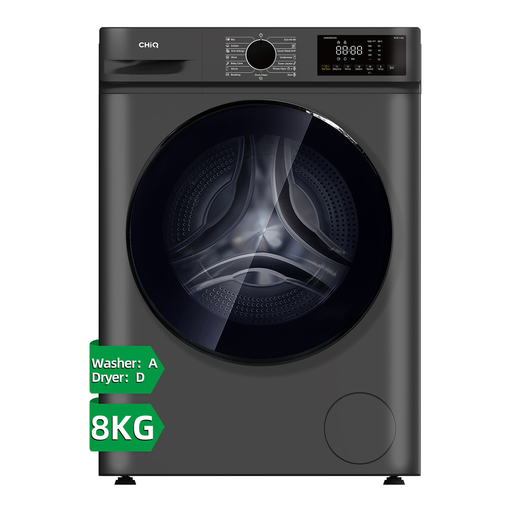 Image unavailable
CHiQ JW85882HG, 8/5 kg washer-dryer, dark grey
For both functions in one appliance, if a 5 kg drying load suits your laundry needs.
Stated capacity: 8 kg for washing and 5 kg for drying; spin speed listed as 1 400 tr/min. Check the model’s installation dimensions before deciding where to put it.
View on Joybuy
 Image unavailable
Hotpoint CHD84MWBSEE, 8 kg heat pump tumble dryer
For drying your washing in a separate appliance, if you have a dedicated space for it.
Stated capacity: 8 kg; stated energy rating: C. Compare this capacity with your usual loads and check the instructions for dimensions and installation requirements.
View on Joybuy
 Image unavailable
Comfee CD08EHP05W-HR, 8 kg heat pump tumble dryer
For drying separately from your washing when you have room to install a dedicated appliance.
Stated capacity: 8 kg; stated energy rating: D. Check the model documentation for dimensions, installation instructions and energy consumption figures.
View on Joybuy
 Image unavailable
Comfee CD10EHP05W-HR, 10 kg heat pump tumble dryer
Worth considering if your laundry loads justify a stated drying capacity of 10 kg and you have room for a second appliance.
Stated energy rating: D. A larger capacity won’t necessarily benefit you if your usual loads are small. Check the energy label and installation instructions too.
View on Joybuy
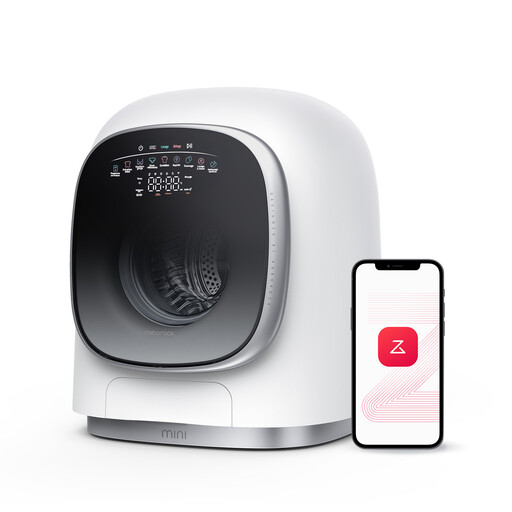 Image unavailable
Roborock Marshmallow Zeo Mini, 1/0,5 kg washer-dryer, white
For washing and drying very small loads in one appliance, rather than handling a household’s everyday laundry.
Stated capacity: 1 kg for washing and 0,5 kg for drying. Check the figures for the wash-and-dry cycle and what the displayed energy rating covers for this model.
View on Joybuy
Frequently asked questions
Can you install a vented tumble dryer without an outlet to the outside?
Not without the external opening or access to a ventilation duct required for this type of appliance, according to UFC-Que Choisir. A condenser tumble dryer, including a heat pump model, doesn’t need an external vent, but you should still check the installation requirements in the instructions.
Can a washer-dryer dry the whole load it has just washed?
Only if the load is also within its drying capacity. For example, LG states that the F852SV50WRS model has a washing capacity of 8,5 kg and a drying capacity of 5 kg. So, if you wash a full load at the maximum capacity, you’ll need to reduce it before drying.
Which figures should you compare on a washer-dryer’s energy label?
Compare the figures for washing alone separately from those for the wash-and-dry cycle. The European Commission states that washer-dryer labels show details including efficiency classes, energy use per 100 cycles, water use per cycle, cycle duration and noise. The figures for washing alone don’t describe the full cycle.


