
Livraison le jour même ou le lendemain

Qualité garantie

Débloquez vos offres de bienvenue: Livraison GRATUITE | Jusqu'à -80 % | 30 jours d'essai gratuits à JoyPlus
Téléchargez l'application
Replacing your refrigerator can be a daunting task. Faced with a jungle of models, technologies, and energy labels, it's easy to feel overwhelmed. Are you looking for the ideal appliance to keep your food fresh for longer, say goodbye to the chore of defrosting, and do it all without sending your electricity bill or noise levels soaring? This guide is for you. Our mission: to give you all the key insights to find the No Frost fridge-freezer that will fit perfectly into your daily life.
Before you start comparing models, let's cover the basics. To make the right choice, here are the three essential criteria to scrutinize.
The total volume, expressed in litres, is the first thing to check. For a couple or a family of 3 to 4, a total capacity between 300 and 450 litres is generally a good compromise. Pay close attention to the split between the refrigerator and freezer sections. A large-capacity refrigerator is only worthwhile if its interior layout (adjustable shelves, deep door bins, dedicated drawers) matches your habits. A well-designed appliance saves you time and brings peace of mind every day.
Since the energy label was redesigned, make no mistake: a Class C fridge-freezer is already a top performer, synonymous with significant savings on your bill. To compare models, rely on the annual consumption, expressed in kWh/year.
Another crucial factor, especially in open-plan kitchens, is acoustic comfort. A quiet fridge-freezer emits less than 39 dB. The quietest models go as low as 35 dB, the equivalent of a whisper.
No Frost technology, also known as fan-assisted cooling, is a must-have today. It prevents frost build-up in the freezer (goodbye, manual defrosting!) and ensures an even temperature throughout the refrigerator, optimising food preservation.
For the more tech-savvy, a smart refrigerator offers a host of features via a mobile app: adjust the temperature remotely, receive an alert if the door is left ajar, or run a diagnostic. Convenient!
We have reviewed several freestanding models to bring you a selection that meets key needs in terms of capacity, efficiency, and features.
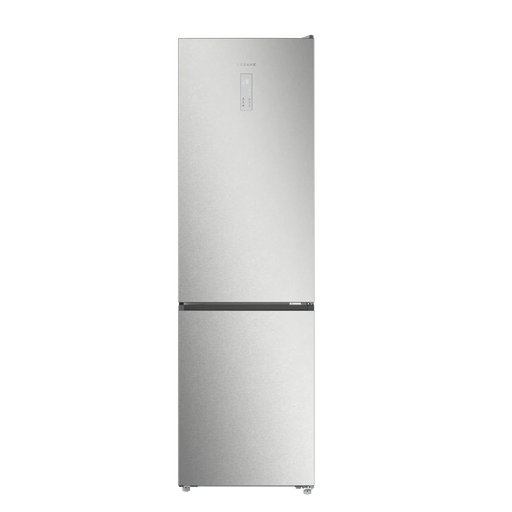
Why it stands out
This Dreame model makes a strong impression with its XXL volume of 456 litres, perfect for families who stock up on fresh and frozen goods. Its real advantage is the FreshFlex zone, a compartment with an adjustable temperature for specific needs (meat, fish, vegetables).
Pros
Who is it for?
For large families or anyone needing a large-capacity refrigerator that offers maximum flexibility to store every food item under optimal conditions.
See price and details for the Dreame DRB450WMBDEU
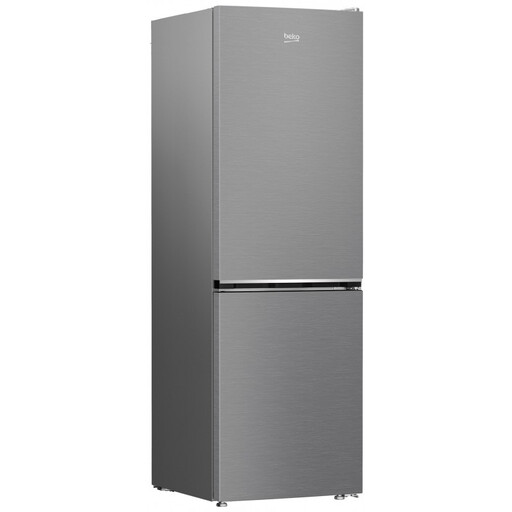
Why it stands out
For this Beko refrigerator, silence is golden. Registering just 35 dB (Noise Class B), it's practically unnoticeable, even in a kitchen that opens into the living room. Its total No Frost technology ensures perfect preservation and minimal maintenance.
Pros
Who is it for?
For anyone who puts acoustic comfort at the top of their priority list, especially those living in a studio or with an open-plan kitchen.
See price and details for the Beko B5RCNE416HXB
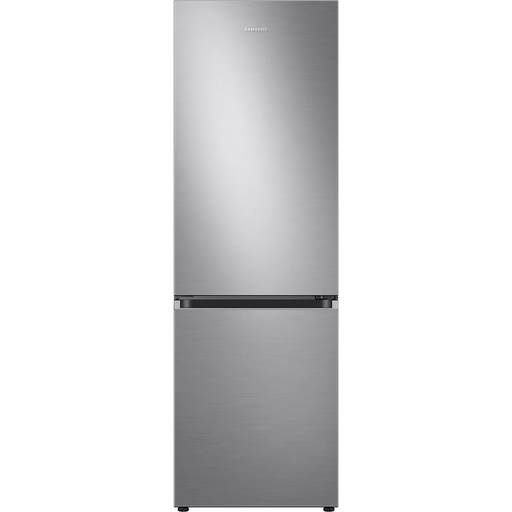
Why it stands out
This Samsung refrigerator plays the modern card with its Wi-Fi connectivity, integrated into the SmartThings ecosystem. It combines technology, silence (35 dB), and efficiency (Class C) for a complete, high-performance solution.
Pros
Who is it for?
For tech enthusiasts who want to control their appliances from their smartphone. The result: greater convenience and optimised energy savings.
See price and details for the Samsung RB34C605CS9
Our selection covers three distinct profiles. If you haven't found your perfect match here—whether due to size, budget, or feature requirements—other models might be right for you.
Fan-assisted cooling simply uses a fan to circulate air for an even temperature in the refrigerator, but it doesn't prevent frost from forming in the freezer. No Frost (ventilated) cooling goes a step further: it circulates cold, dry air in both compartments. The result: it completely blocks frost formation and maintains a constant temperature everywhere, which extends the storage life of your food.
Yes, absolutely. Since the energy label was redesigned in 2021, the rules have changed, and the standards have been raised dramatically. Today's Class C is equivalent to the old A++ or A+++ ratings. Choosing a C-rated appliance is therefore an excellent move to achieve substantial energy savings compared to an older model.
For a family of 4, a total net volume of around 350 to 450 litres is a good starting point. The ideal split will then depend on your habits: if you're a fan of frozen foods, aim for a freezer of at least 100 litres. If, on the other hand, fresh produce dominates your shopping, a larger refrigerator volume will be more suitable.