
Livraison le jour même ou le lendemain

Qualité garantie

Débloquez vos offres de bienvenue: Livraison GRATUITE | Jusqu'à -80 % | 30 jours d'essai gratuits à JoyPlus
Téléchargez l'application
Choosing a new refrigerator can quickly become a headache. Between the chore of defrosting, background noise in an open-plan kitchen, and the impact on your electricity bill, the questions pile up. Don't worry! This guide is here to demystify the market and help you find the no-frost fridge freezer that will fit seamlessly into your daily life, without drowning you in technical jargon.
As a Product Expert at Joybuy, my mission is to track down the most reliable and high-performing appliances on the market for you. Let's review the essential criteria for making the right choice.
Before diving into our selection, here are the key points to keep in mind when choosing your next appliance.
No Frost technology has become the standard, and for good reason. Its main advantage? It prevents ice build-up in the freezer. Goodbye to the chore of manual defrosting! A circuit of cold, dry air is circulated evenly, ensuring better food preservation and preventing odour transfer.
This technology is even more appealing when paired with a low-energy consumption fridge freezer. To keep your bill under control, look for models equipped with an Inverter compressor. Unlike a conventional motor that operates in on/off bursts, an Inverter compressor continuously adjusts its speed. The result: it consumes less energy, wears out more slowly, and is significantly quieter.
If your kitchen opens into your living room or if you live in a studio apartment, the refrigerator's noise becomes a crucial factor. A quiet fridge freezer is a daily game-changer. The noise level, expressed in decibels (dB), is your best indicator.
Capacity, measured in litres, should be chosen based on the size of your household. For a couple or a small family, a total volume of around 300 litres is generally a good compromise. The 300L refrigerator segment is also one of the most competitive on the market.
The most common format remains the fridge with a bottom freezer. This is a particularly ergonomic design: the refrigerator section, which is used most often, is at eye level, while the freezer and its drawers remain easily accessible.
Here are the models that caught our attention for their technical specifications and their ability to meet today's expectations.
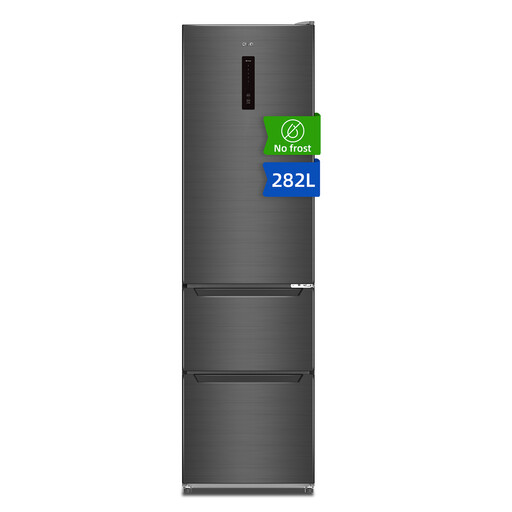
Why we love it: This CHiQ model is the perfect solution for small spaces, without compromising on technology. With a footprint of just 0.32?m?, it manages to pack in a well-designed 282-litre capacity. Its Inverter compressor ensures quiet operation and controlled energy consumption, while its black finish adds a welcome touch of modernity.
Highlights:
Who is it for? For couples and small families in apartments or with compact kitchens. It's the smart choice for anyone looking for a compact, quiet appliance with excellent value for money.
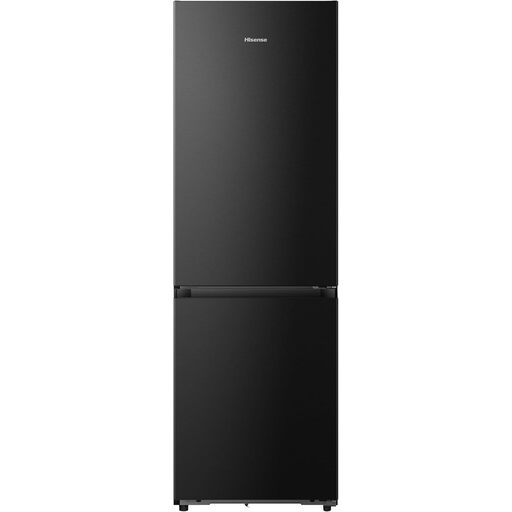
Why we love it: The Hisense RB3K330SAFC stands out for its quiet operation and energy efficiency. With a noise level of just 35?dB, it will go unnoticed in your home. Its 330-litre capacity is generous for a family, and its C energy class (new label) guarantees controlled annual consumption.
Highlights:
Who is it for? For families who want a large storage volume without sacrificing peace and quiet, all while keeping an eye on their electricity bill. Its reversible door is a real bonus for less conventional kitchen layouts.
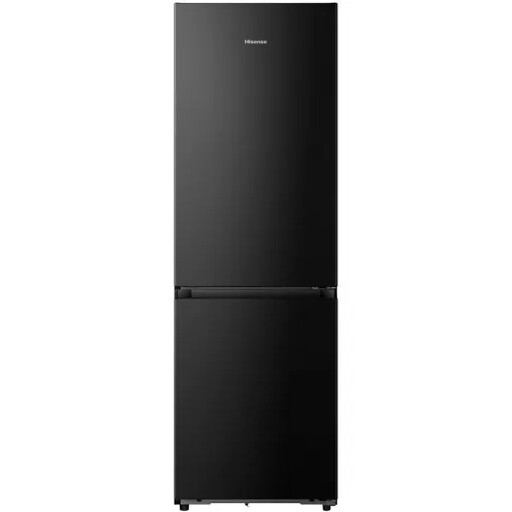
Why we love it: This Hisense model builds on the excellent foundation of its counterpart (330L, 35?dB, Inverter) by adding smart features and an even more polished design. Its Wi-Fi connectivity allows you to control the refrigerator remotely from a smartphone. Its elegant black design is enhanced by technologies like Metal-Tech Cooling, which ensures more stable cold air distribution.
Highlights:
Who is it for? For tech enthusiasts looking for an appliance that is as high-performing and quiet as it is smart. Its sleek design and intelligent features make it a centrepiece for a modern kitchen.
Technology is constantly evolving, and every household's needs are unique. If you're looking for a specific feature, like a water or ice dispenser, other models might be a better fit for you.
??Discover our selection of fridge freezers with an ice maker
Fan-assisted cooling uses a fan to circulate cold air only in the refrigerator compartment. This limits ice build-up but doesn't completely prevent it in the freezer, which will require occasional defrosting. No Frost (or total ventilated cooling) extends this principle to BOTH the fridge and the freezer. The result: no ice build-up, which permanently frees you from the chore of defrosting.
Yes, and significantly so. An Inverter compressor continuously adjusts its speed based on actual cooling needs, instead of running in 'all-or-nothing' cycles at full power. This intelligent modulation can reduce energy consumption by up to 20% compared to a conventional compressor, while also being quieter and more durable.
On average, a fridge freezer has a lifespan of 10 to 15 years. Of course, this longevity depends on the build quality, maintenance, and the onboard technologies. Models with an Inverter compressor, for example, tend to last longer because their motor is under less strain and therefore wears out more slowly.