
Livraison le jour même ou le lendemain

Qualité garantie

Débloquez vos offres de bienvenue: Livraison GRATUITE | Jusqu'à -80 % | 30 jours d'essai gratuits à JoyPlus
Téléchargez l'application
Choosing a new refrigerator can quickly become a daunting task. Between marketing promises and complex spec sheets, it's easy to get lost. "No Frost" technology is a major buzzword, but are all models truly created equal? As a product expert at Joybuy, my mission is to demystify the jargon and help you avoid the common pitfalls to make an informed decision that's perfectly suited to your daily life.
The first pitfall? Confusing the different cooling technologies. A "Low Frost" or static cooling appliance will always require regular manual defrosting, unlike a true Total No Frost system. Then there's the noise level—a detail that's anything but minor. A constant background hum, however faint, can quickly become a nuisance in an open-plan kitchen. Finally, with the disappearance of the old energy labels (A+, A++, A+++), it's crucial to understand the new A to G rating system to find a genuinely energy-efficient refrigerator.
To avoid buyer's remorse, here are the non-negotiable technical specs to scrutinize. Your daily comfort, the proper preservation of your food, and, of course, the size of your electricity bills all depend on these criteria.
The cooling technology is the number one criterion. Here's what you need to know:
These two elements are directly linked to the appliance's compressor type.
A refrigerator's volume is measured in litres. For a household of 2 to 4 people, a 300L refrigerator (total volume) is generally a good starting point.
To help you move from theory to practice, we've selected several models that tick all the right boxes for different user profiles.
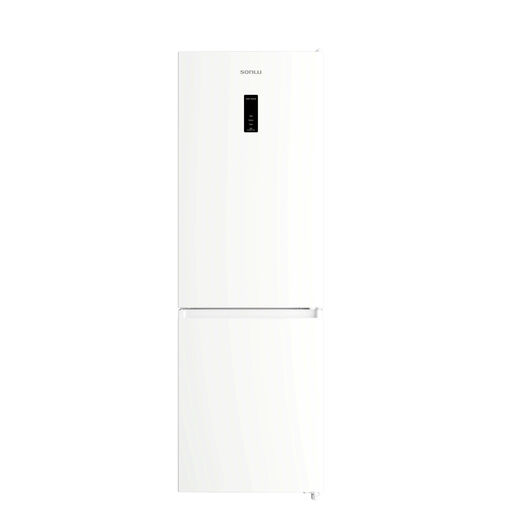
Why it's a great match: Ideal for a couple or a small family looking for a reliable, no-frills appliance. Its 310L capacity is well-balanced, and its standard size fits easily into most kitchens.
It features a full No Frost system, saving you the chore of defrosting. Its Inverter compressor ensures quieter operation and controlled energy use—two points often overlooked in entry-level models.
An excellent features-to-price ratio, with technologies (Inverter, No Frost) usually reserved for higher-end ranges. The reversible door offers great installation flexibility.
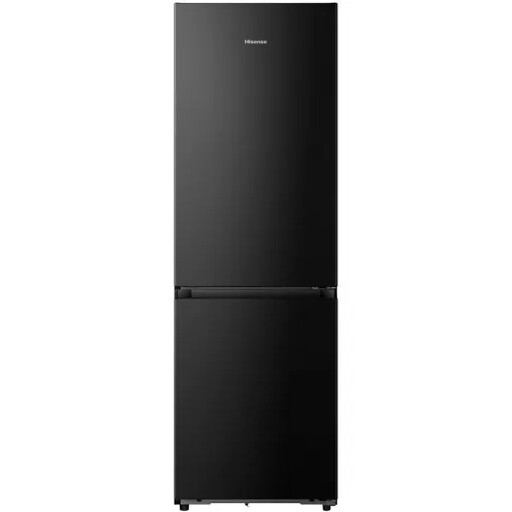
Why it's a great match: For those who refuse to compromise on silence and style. Its black stainless steel finish and sleek design make it a statement piece that integrates perfectly into a modern, open-plan kitchen.
At just 35 dB, it's an exceptionally quiet appliance, ideal for maintaining the peace in a living space. Its Class C energy rating and Inverter compressor guarantee very low consumption, avoiding the trap of stylish but energy-guzzling appliances.
Combines energy performance (Class C), silence (35 dB), and premium design. The Total No Frost system with Metal Cooling ensures optimal and uniform food preservation.
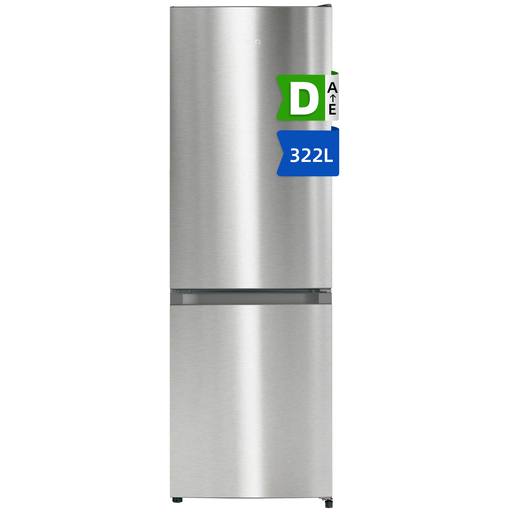
Why it's a great match: A versatile choice for families of 3 to 4. It offers a comfortable 322L capacity and all the essential technologies for stress-free daily use, without compromising on performance.
This model ticks all the important boxes: Total No Frost, a quiet Inverter compressor (37 dB), and good energy efficiency (Class D). It avoids the trap of appliances that sacrifice one key feature to highlight another.
A very well-rounded package: generous capacity, quiet operation, full No Frost technology, and 4-star freezing for rapid and effective nutrient preservation.
Explore our full selection of refrigerators and freezers that meet our standards for performance and reliability.
The lifespan of a combi fridge is typically between 10 and 15 years. Models equipped with an Inverter compressor tend to be more durable because the motor is under less strain than in a conventional model. Regular maintenance, such as cleaning the door seals and the condenser (if accessible), can extend its lifespan.
Yes, for two main reasons. First, it avoids the energy spikes associated with the constant starting and stopping of a traditional compressor. Second, by maintaining a more stable temperature, it puts less demand on the cooling system over the long term. According to manufacturers, energy savings can reach 20% to 30% compared to an equivalent standard model.
Installation is a key step. Place your freestanding refrigerator on a flat, stable surface. Leave a space of at least 5 to 10 cm at the back and on the sides to allow air to circulate and the condenser to dissipate heat properly. Avoid placing it near a heat source (oven, radiator) or in direct sunlight. Wait a few hours after installation before plugging it in to allow the internal fluids to settle.