
Livraison le jour même ou le lendemain

Qualité garantie

Débloquez vos offres de bienvenue: Livraison GRATUITE | Jusqu'à -80 % | 30 jours d'essai gratuits à JoyPlus
Téléchargez l'application
The tedious chore of defrosting, the constant game of Tetris to fit your groceries, the persistent hum of your old fridge… Replacing your fridge freezer can quickly become a headache. Faced with a sea of models and technologies, it's easy to feel overwhelmed.
But don't worry, our editorial team is here to help you make sense of it all. In this guide, we break down the essential criteria and highlight the models that stand out, so you can find the No Frost fridge freezer that perfectly suits your household's needs.
Before diving into comparisons, it's crucial to define your needs based on a few key points.
The very first question to ask is about volume. For a household of 3 to 4 people, a total capacity of 300 to 400 litres is an excellent compromise. If you have a larger family or you like to buy in bulk, a large-capacity model (over 400 litres), or even an American-style fridge, would be a better choice. Don't forget to measure the available space in your kitchen, always leaving a few centimetres of clearance on each side for proper ventilation.
The promise of No Frost, also known as fan-assisted cooling? To put an end to frost in the freezer once and for all. A ventilation system circulates cold, dry air evenly, which prevents ice from forming. The result: say goodbye to the chore of manual defrosting! Your food is also better preserved, and odours no longer mix between different shelves.
In a kitchen that opens into a living room, the noise level is a point you absolutely cannot overlook. A quiet refrigerator generally emits less than 40 decibels (dB). The most discreet models go as low as 35?dB, which is equivalent to a whisper.
The wave of smart devices hasn't spared our kitchens. A Wi-Fi connected refrigerator gives you control from your smartphone: adjust the temperature remotely, receive an alert if the door is left open, or even manage your shopping lists.
To guide you, our editorial team has selected three models that stand out, each designed for a specific type of use.
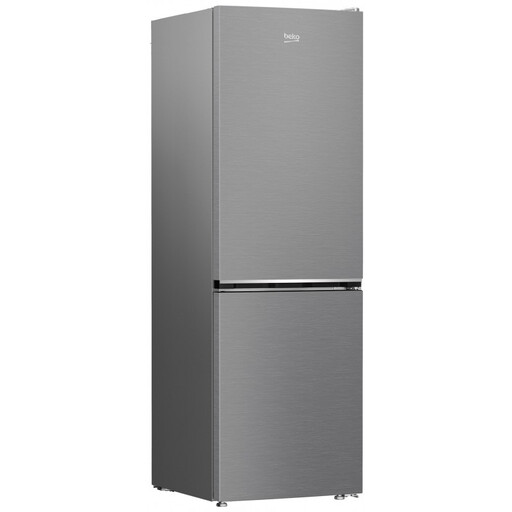
Why it stands out?: This Beko model combines a very large capacity of 415 litres with nearly silent operation. It's the ideal option for open-plan kitchens and families who need space.
Key features?:
Who is it for?? Ideal for families of 3 to 4 people looking for a spacious, user-friendly, and above all, very discreet appliance to integrate into an open living space.
See details for the Beko B5RCNE416HXB on Joybuy.fr

Why it stands out?: This LG American-style fridge impresses with its massive 628-litre capacity and its ingenious Door-in-Door feature, a quick-access hatch that limits cold air loss.
Key features?:
Who is it for?? Designed for large families and cooking enthusiasts who need maximum space and appreciate practical innovations like Door-in-Door and connectivity.
See details for the LG GSXE81EVBD on Joybuy.fr
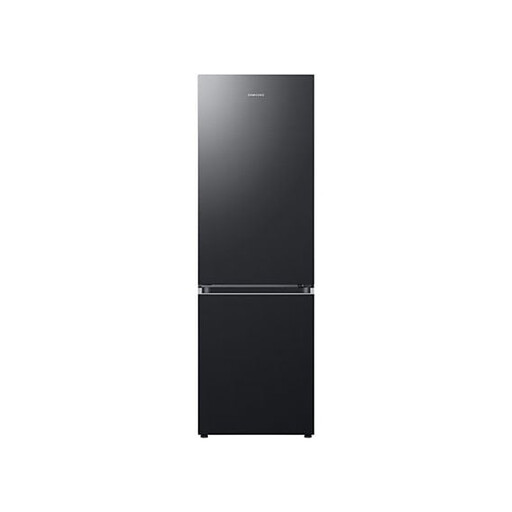
Why it stands out?: This Samsung fridge freezer is a true powerhouse of technology. It optimises its energy consumption using AI and offers flexible storage for customised food preservation.
Key features?:
Who is it for?? Perfect for energy-conscious households and tech enthusiasts who want to intelligently manage their appliance and benefit from cutting-edge preservation solutions.
See details for the Samsung RB34C704DB1 on Joybuy.fr
Every kitchen and every family is unique. If our selection doesn't tick all your boxes (dimensions, budget, design), don't worry: other solutions are available.
To explore a wider selection, feel free to browse our complete category of fridge freezers.
Discover All Our Fridge Freezers
Static cooling is the traditional system: cold air, being denser, settles at the bottom, while warmer air rises. This means you have to strategically place your food. Fan-circulated cooling adds a fan in the fridge for a more uniform temperature. No more hassle with strategic placement! Finally, No Frost (fan-assisted cooling) is the gold standard: cold, dry air circulates everywhere, in both the fridge and the freezer. The result: a consistent temperature, no frost, and better food preservation.
For a family of 4, a total volume between 300 and 400 litres is an excellent starting point. This typically breaks down to about 200-280 litres for the refrigerator section and 80-120 litres for the freezer. Of course, this volume should be adjusted based on your habits: do you shop once a week? Do you store a lot of frozen food?
It all depends on your needs! Basic features, like open-door alerts or remote temperature adjustments, are genuinely practical for daily use. As for more advanced functions (inventory management, recipe suggestions, etc.), they will appeal to organisation enthusiasts and those who want to turn their kitchen into a true command centre.