Renters without an external vent
If there’s no usable opening or duct, start by ruling out vented tumble dryers. According to UFC-Que Choisir, condenser models, whether standard or heat pump, don’t need to be connected to the outside.


If you can’t use an external vent, rule out vented tumble dryers. Condenser models, with or without a heat pump, don’t need an external connection. If you have room for two appliances and regularly dry large loads, compare separate tumble dryers. If there’s space for only one appliance, a washer-dryer means you don’t need to install two, but its drying capacity is lower than its washing capacity.
If there’s no usable opening or duct, start by ruling out vented tumble dryers. According to UFC-Que Choisir, condenser models, whether standard or heat pump, don’t need to be connected to the outside.
If you often dry loads close to the capacity of your washing machine, compare drying capacities first. A separate appliance is worth considering if you have enough space. UFC-Que Choisir notes that a washer-dryer’s drying capacity is lower than its washing capacity.
A washer-dryer lets you wash and dry with a single appliance. The space-saving benefit comes with a lower drying capacity than washing capacity: a full load may need to be split before drying, as UFC-Que Choisir explains.
First, check which drying method is suitable for your room, then consider the space available and how much laundry you need to dry. Energy use and maintenance can help you refine your choice.
Consider this if: you have room for a separate appliance and regularly dry laundry without an external vent.
The trade-off: according to UFC-Que Choisir, it uses less electricity than a standard condenser tumble dryer, while the latter may dry clothes faster.
Consider this if: you have room for a separate tumble dryer and place more importance on programme times.
The trade-off: this type of appliance doesn’t need an external connection, but uses more electricity than a heat-pump model, according to UFC-Que Choisir.
Consider this if: your home has space for just one appliance.
The trade-off: its drying capacity is lower than its washing capacity. UFC-Que Choisir also reports that most of the models it assessed have long cycles and use water during drying.
| What matters to you | What to check | Who is this important to? |
|---|---|---|
| No external vent | Drying method and appliance dimensions, including the space needed to open the door. | When there’s no duct in the room, my first priority is finding an appliance that will fit. Around 36% of consumers put this compatibility first. |
| Space available | Number of spaces available and, for a washer-dryer, its separate washing and drying capacities. | If I only have room for one appliance, avoiding a second machine matters more than drying a full load in one go. Saving space is the main priority for around 29% of consumers. |
| Amount of laundry | Maximum drying capacity in kg, compared with the load you usually wash. | If I do laundry regularly, I want to avoid extra drying loads. Being able to dry loads close to the amount washed comes first for around 21% of consumers. |
| Use and maintenance | Energy label, programme times and access to parts that need maintenance, as set out in the manual. | If I use the appliance often, I want to compare its energy use and carry out the required maintenance easily. Around 14% of consumers prioritise these practical considerations. |
According to UFC-Que Choisir, this type of appliance needs an opening to the outside or a duct, so it isn’t suitable for this flat.
Check the drying method in the technical specifications before comparing other features.
UFC-Que Choisir points out that drying capacity is lower than washing capacity. So a full washing load may not be able to dry in one go.
Compare both figures in kg and plan your laundry around the drying capacity.
If the washed load exceeds it, you’ll need to take some laundry out or plan an extra drying load.
Both standard condenser and heat-pump dryers work without an external connection, but their electricity use and drying times can differ. UFC-Que Choisir says heat-pump models use less electricity, while standard models may dry clothes faster.
Compare the energy label and programme times with how often you expect to use the appliance.
You’ll need to be able to carry out maintenance once the appliance is installed. Electrolux support advises cleaning the filter after every cycle on the relevant appliances and following the manual for the condenser.
Check the manual to find these parts and make sure you’ll be able to reach them where the appliance is installed.
These examples highlight features to compare on specific models. They don’t necessarily apply to every appliance from each brand.
The WQG24502FR is an example of a separate heat-pump tumble dryer.
The EW8HI4835FG is an example of the brand’s range of separate heat-pump tumble dryers.
The RH8N14SL and RH9V57WH let you compare capacity and dimensions across two separate tumble dryers.
Beko’s French range of washer-dryers includes models listed with an 8 kg washing capacity and a 5 kg drying capacity.
This selection includes separate heat-pump and condenser tumble dryers, plus a washer-dryer for homes where there’s room for just one appliance. Compare each model with the space available in your room and the size of your usual loads.
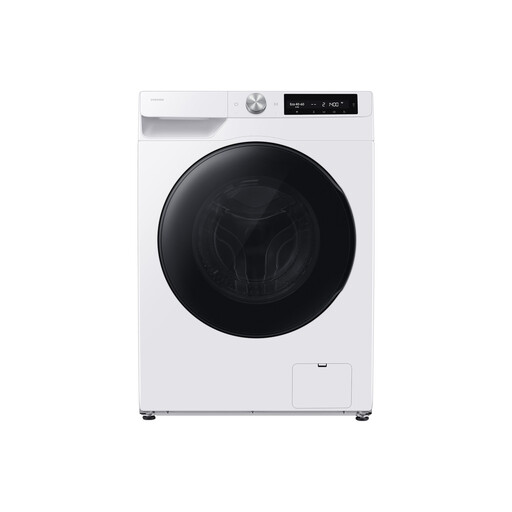 Image unavailable
Worth considering if you can only install one appliance. The listed drying capacity is 6 kg. Check the washing capacity of the version on offer: the product title says 10 kg, while the specifications given state 11 kg. Also check the connections and clearance required.
 Image unavailable
Worth comparing if you have space for a separate tumble dryer and want to dry loads of up to 8 kg. The product title lists an energy rating of C. Check the installation dimensions and how water is collected or drained before choosing where to put it.
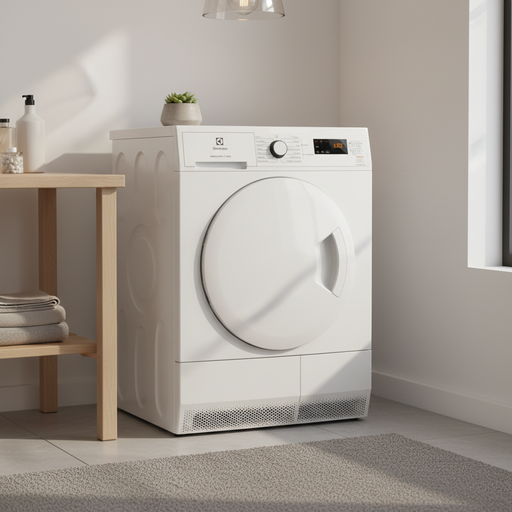 Image unavailable
Worth considering if you’re looking for a separate tumble dryer that doesn’t need an external air connection. Its stated capacity is 8 kg. Check that the dimensions suit your space and that managing the water tank works for you.
 Image unavailable
Worth considering for drying without an external air connection, but confirm the capacity before buying: information for this model gives conflicting figures of 8 kg and 10 kg. Also check the dimensions and how water is managed in your chosen space.
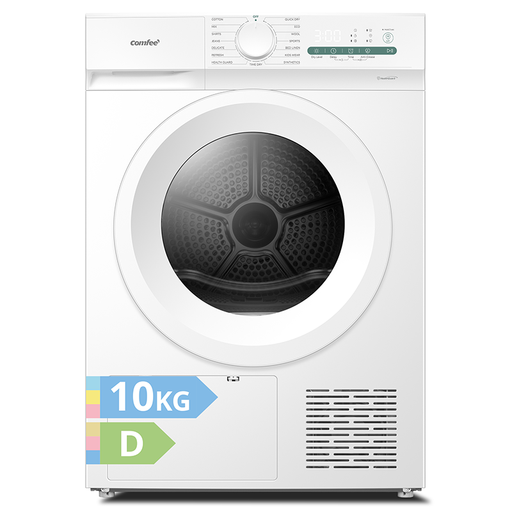 Image unavailable
Worth comparing if you have room for a separate appliance. Confirm its drying capacity before comparing it with your usual laundry loads: the product title states 10 kg, while a description for this model gives 8 kg. Also measure the space and check how water is collected.
Yes, if it’s a condenser model, either standard or heat pump: UFC-Que Choisir says it doesn’t need to be connected to the outside. A vented tumble dryer, on the other hand, needs a usable opening or duct. Then check the dimensions and installation instructions for your chosen model.
Not if the washing load exceeds its drying capacity. UFC-Que Choisir explains that the two capacities are different, with drying capacity being lower. Compare both figures in kg before planning to run a wash-and-dry cycle back to back.
Most of the models covered by UFC-Que Choisir’s testing use water during drying, but don’t assume this applies to every model. Check water and electricity use, as well as the length of the drying programme and combined cycle, before you choose.
Follow the manual for your model, particularly for the filter and accessible condenser. For example, Electrolux support recommends cleaning the filter after every cycle on the relevant appliances. Make sure you can reach it once the tumble dryer is installed.