
Livraison le jour même ou le lendemain

Qualité garantie

Débloquez vos offres de bienvenue: Livraison GRATUITE | Jusqu'à -80 % | 30 jours d'essai gratuits à JoyPlus
Téléchargez l'application
Putting up a picture, towel or coat without getting out the drill is especially handy if you rent, are a student or simply like to change your décor. But not all no-drill wall hooks are created equal. An adhesive fixing that works on tiles may not be suitable for a painted wall, while a hook described as “strong” can lose its grip if you misjudge the load or installation time.
Here are the points to consider before you buy, along with a selection of options for different needs.
The stated load capacity usually applies under specific conditions: a smooth, clean and dry surface, correct installation, the recommended setting time and a stable distribution of weight. A swinging bag, a mirror with its centre of gravity far from the wall or a wet towel all put more strain on the fixing.
So allow a safety margin. For a 4 kg item, a fixing rated for 5 kg may be cutting it a bit fine, especially in a humid room. For a heavy picture, it’s better to choose picture-hanging strips or a hook designed for plasterboard, with a capacity above the item’s actual weight.
Adhesive hooks are mainly designed for smooth, stable surfaces: tiles, glass, metal, mirrors or paint that is firmly bonded. They’re generally not recommended for wallpaper, textured walls, bare wood, greasy surfaces or freshly painted walls.
When it comes to hooks for plasterboard walls, there are two main types: adhesive models, suitable for light loads on an even surface, and claw hooks, which slot directly into the plasterboard. The latter avoid nails and screws, but can leave small holes when removed. So it’s important to distinguish between “no nails or screws” and “no marks at all”.
A repositionable fixing isn’t necessarily designed to be moved several times using the same adhesive. Stretch-release strips are generally removed by pulling slowly in the direction shown, rather than pulling the hook towards you.
For a temporary installation, check whether it’s marked repositionable, how to remove it and how many strips are included. For a permanent fixture, prioritise load capacity, compatibility with your wall and stability over a marketing claim that promises clean removal.
Start by identifying the surface: painted plasterboard, a painted wall, tiles, glass, a mirror or metal. In a bathroom or kitchen, steam, splashes and soap residue can reduce the grip of many products. Bathroom and kitchen hooks should be fitted to a dry, degreased, non-porous area.
A dusty or slightly crumbly wall won’t provide a reliable base. In that case, a system designed specifically for plasterboard will often be more suitable than an adhesive strip.
Don’t rely solely on the figure on the packaging. Consider the width of the picture, the depth of the item and the number of fixing points too. A large decorative item can create much more leverage than a compact item of the same weight.
As a guide, the products featured below have different stated capacities: up to 5 kg per hook, 7 kg or 9 kg for some strips, and up to 30 kg for a two-hook system designed for plasterboard. These figures depend on following the manufacturer’s instructions and on the type of surface.
Clean the surface in line with the manufacturer’s recommendations, then dry it completely. Press firmly for the specified time and wait for the recommended period before hanging your item. For JE CHERCHE UNE IDEE repositionable adhesives, the product information recommends waiting 24 hours before applying a heavy load.
Never exceed the stated load capacity, and don’t use an adhesive hook for a valuable item or anything that could be dangerous if it fell.
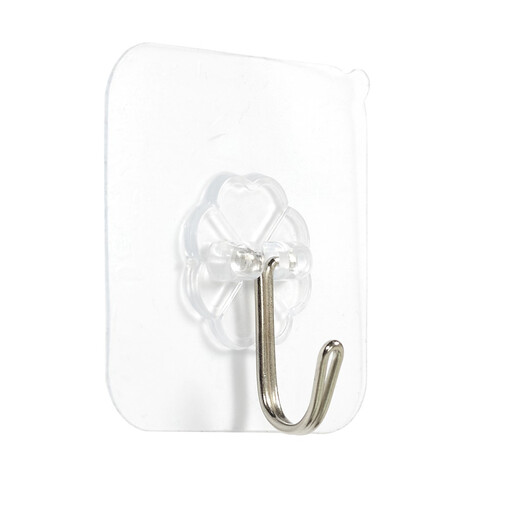
Why it suits this type of user : This pack of 10 hooks is ideal for small-scale projects in a student studio flat, hallway or home office. Each hook is rated to hold up to 5 kg on a suitable surface.
The product information specifies which surfaces to avoid, how to clean the surface beforehand and how to remove the hooks by pulling downwards. This helps prevent mistakes caused by rushing the installation or applying a hook to a damp wall.
Pack of 10 hooks, advertised repositionable adhesive, for indoor use, with a stated capacity of up to 5 kg per hook.
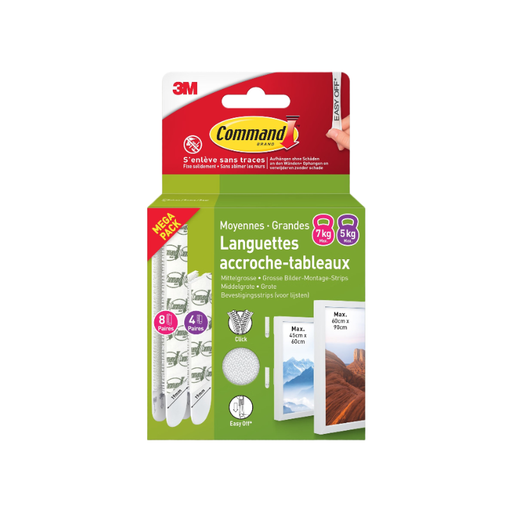
Why it suits this type of user : This multipack lets you choose the right strip size for different picture frames, photos, panels and decorative items in a well-presented home.
Capacity varies by size: up to 5 kg for medium strips and 7 kg for large ones, with recommended frame dimensions also provided.
4 pairs of medium strips and 8 pairs of large strips, advertised residue-free removal from compatible surfaces, and discreet fixing behind the frame.
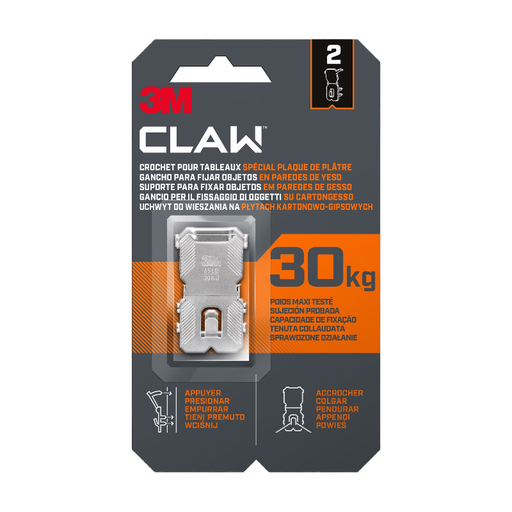
Why it suits this type of user : Designed for hanging heavy items on plasterboard, such as some mirrors, picture frames and large decorative pieces.
It doesn’t rely on adhesive that can be affected by moisture. Its metal claws do, however, slot into the plasterboard: installation requires no nails or screws, but may leave small marks.
Two metal hooks, advertised tool-free installation and a stated maximum load of up to 30 kg on plasterboard, depending on installation conditions.
We’ve put together a comprehensive, regularly updated list of products that meet these strict selection criteria and European safety regulations.
Clean and dry the surface thoroughly. Don’t apply the hook to a dusty, greasy or damp area. Press firmly for the specified time, then wait for the recommended period before adding a load. Follow the removal method given in the instructions too.
Generally not, unless the manufacturer clearly says they are. Removing the adhesive could lift the top layer of wallpaper or leave a mark. For damage-free fixing, always check the list of compatible surfaces and, if appropriate, test it on an inconspicuous area.
Check the total weight of the frame, its hanging system and the stated maximum load. A claw hook designed for plasterboard may be suitable for a heavy load, while picture-hanging strips can be more practical for compatible frames and smooth painted surfaces. In every case, stay within the stated capacity and check the stability of the installation regularly.