
Livraison le jour même ou le lendemain

Qualité garantie

Débloquez vos offres de bienvenue: Livraison GRATUITE | Jusqu'à -80 % | 30 jours d'essai gratuits à JoyPlus
Téléchargez l'application
Hanging a towel, coat or picture without getting out the drill is especially handy if you rent, are a student or simply want to protect your walls. But not all no-drill wall hooks are suitable for the same surfaces or weights.
Choosing the wrong fixing could mean it comes unstuck, leaves a mark or damages delicate paintwork. Before buying adhesive hooks, suction hooks or hooks for plasterboard, here are the things to check.
The maximum weight shown on the packaging doesn’t mean the hook is suitable for every item. The weight needs to be distributed properly and the surface must be stable enough. A fully loaded bag, for example, puts more strain on a hook when it’s handled regularly than a simple towel does.
For everyday use, leave a margin between the item’s weight and the stated capacity. Never exceed the limit specified by the manufacturer.
Removable wall hooks generally stick best to a smooth, clean, dry and grease-free surface. Wallpaper, bare wood, textured walls and damp or crumbly surfaces can significantly reduce adhesion.
A fixing described as “mark-free” isn’t guaranteed to leave old or poorly bonded paint undamaged. Take particular care with freshly painted walls, and always check the product instructions.
Adhesive needs time in contact with the surface to set properly. Depending on the model, you may need to wait an hour or even 24 hours before hanging anything heavy. Skipping this step significantly increases the risk of the hook coming off.
For keys, a tea towel or a small accessory, a capacity of under 1 kg may be enough. For a coat, bag or dressing gown, look for a heavy-duty wall hook and check the stated maximum weight.
The models in this selection have very different capacities: around 450 g, 1.3 kg, 5 kg, or even up to 11 kg or 20 kg for some hooks designed for plasterboard. These figures can’t be compared without considering the surface and installation method.
An extendable or repositionable adhesive fixing can generally be removed by slowly pulling the tab in the direction shown. Don’t pull the hook straight towards you if the instructions say to pull it downwards. Hooks with claws designed for plasterboard may leave small marks in the wall when removed.
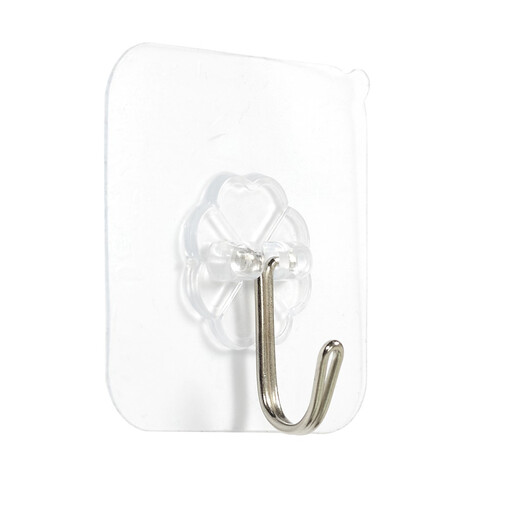
Why this is a good fit: With 10 hooks, this pack is handy for smaller storage projects in a hallway, bedroom, kitchen or home office, without needing to buy several packs.
Each hook has a stated capacity of 5 kg, but the instructions require a clean, dry surface and a 24 hour wait before hanging anything heavy.
Pack of 10 hooks, repositionable backing and residue-free removal claimed on compatible surfaces.
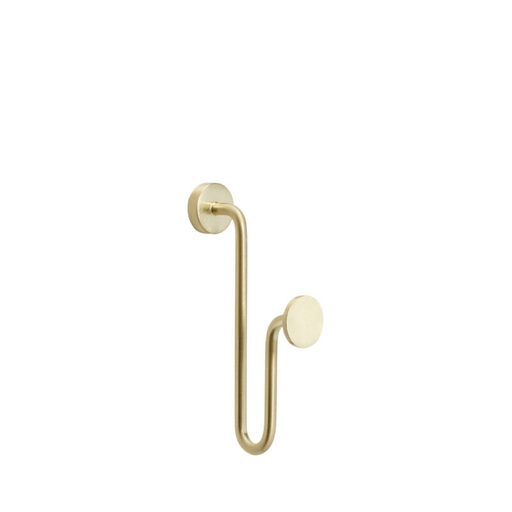
Why this is a good fit: Its brass finish and swivelling arm are a stylish addition to a carefully considered interior, especially in a hallway, kitchen or bedroom.
Its dimensions of 7 × 2.5 × 13 cm are clearly stated, so you can check how much space it will take up before installation.
Iron construction with a brass finish, stated weight of 80 g and easy care with a soft, dry cloth.
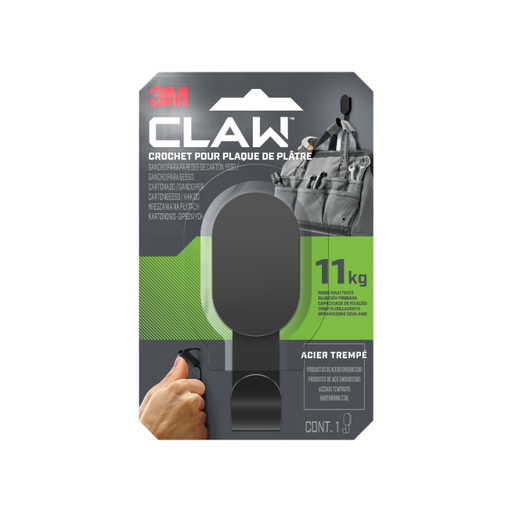
Why this is a good fit: This plasterboard hook is suitable for hanging coats, bags, towels and relatively heavy decorative items on a plasterboard wall.
It’s specifically designed for plasterboard and installs by pressing into place. However, you’ll need to be comfortable with its claws penetrating the wall.
Hardened steel claws, tool-free installation and a stated capacity of up to 11 kg.
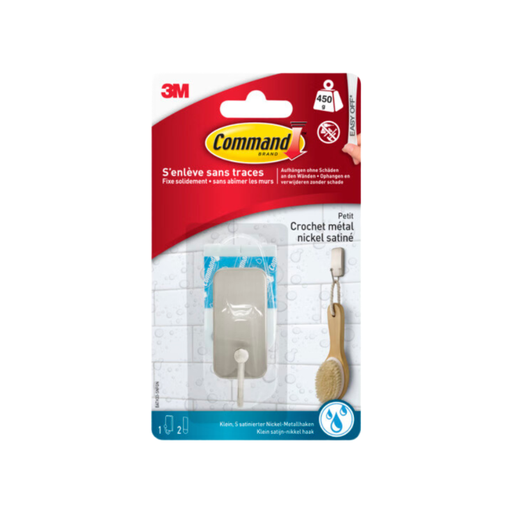
Why this is a good fit: Its moisture-resistant design makes it suitable for towels, dressing gowns and small accessories in rooms exposed to splashes.
The instructions say to clean the surface with alcohol, press for 30 seconds and wait for one hour. Avoid textured surfaces and wallpaper.
Aluminium double hook, satin nickel finish, water-resistant adhesive and replaceable adhesive strip.
We’ve selected products that meet these strict criteria while taking European safety requirements into account.
Yes, provided the product is designed for damp environments and the surface is smooth, dry and properly cleaned. Don’t install it in an area that’s constantly wet, and follow the recommended setting time.
It depends on the adhesive, the surface, humidity and temperature changes. Check the fixing regularly and replace it if it starts to come unstuck, becomes misshapen or shows signs of wear.
Hooks with claws mean you don’t need a drill or wall plugs, but their points do penetrate the plasterboard. They may leave small marks when removed, unlike some adhesive hooks designed for compatible surfaces.