
Livraison le jour même ou le lendemain

Qualité garantie

Débloquez vos offres de bienvenue: Livraison GRATUITE | Jusqu'à -80 % | 30 jours d'essai gratuits à JoyPlus
Téléchargez l'application
Whether you're a renter or a homeowner, the desire to personalise your space often hits the same snag: drilling into walls is either forbidden or just plain daunting. The no-drill wall hook has emerged as the perfect solution. Yet, the market is flooded with products whose tempting promises quickly turn into a nightmare: a picture frame crashing to the floor, a chunk of paint ripped off, or an adhesive that gives up in a humid bathroom.
This guide is here to help you navigate the options. We'll break down the most common pitfalls and give you the keys to making an informed choice that's perfectly suited to your needs.
Before you grab the first adhesive hook you see, it's wise to understand the design flaws and misleading marketing claims that cause the most disappointment.
To avoid these unpleasant surprises, here are the key points that determine the performance and reliability of a no-drill wall mount.
Weight is the primary criterion, but it must be considered in the context of real-world use.
A hook's effectiveness is 50% the product and 50% the surface! One rule of thumb: always check the manufacturer's recommendations.
Instead of an exhaustive list, we've matched user profiles with targeted solutions that meet specific needs while sidestepping the pitfalls mentioned earlier.
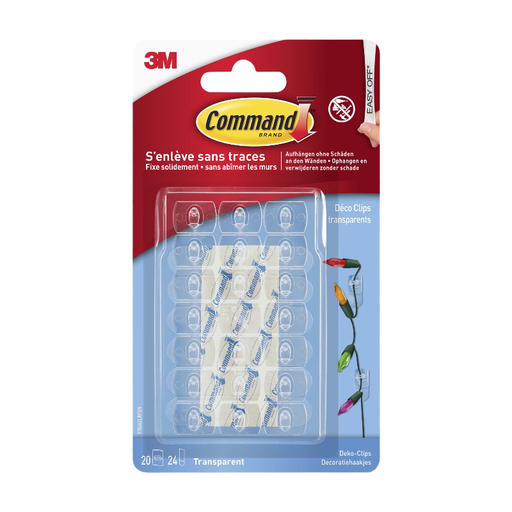
Why we chose it: Ideal for students or decor enthusiasts who love to change their setup on a whim. Perfect for hanging string lights, photos, keys, or calendars without any hassle. Its transparency makes it nearly invisible.
This product doesn't promise to hold a heavy load. Its niche is lightweight objects, which prevents any disappointment. The 3M adhesive technology is renowned for its clean removal on compatible surfaces.
Maximum discretion thanks to its transparent design. The stretch-release strip system allows for damage-free removal, a godsend for renters.
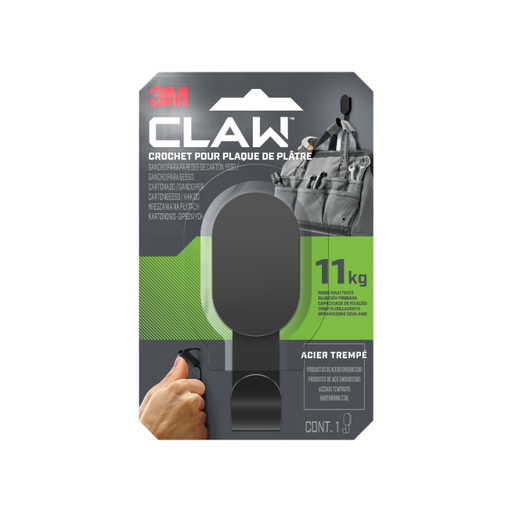
Why we chose it: For those looking for a sturdy coat hook or a heavy picture hook (up to 11 kg) to mount on drywall, without taking out the drill and anchors. It's a mechanical solution, not just an adhesive one.
It sidesteps the "heavy-duty" adhesive trap by relying on steel claws that anchor securely into the drywall. The weight promise is delivered through mechanical action, which is far more reliable for heavy objects.
Tool-free installation with a simple push of a thumb. It offers a high load capacity without needing to find a stud in the wall.
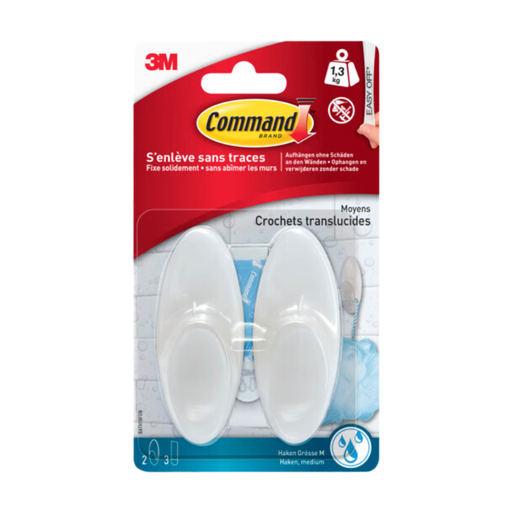
Why we chose it: Specifically designed for humid environments. This is THE trusted solution for hanging a towel, bathrobe, or shower accessories on tile or a glass panel.
It tackles the humidity pitfall head-on. It comes with water-resistant adhesive strips that maintain their sticking power even in the presence of steam and condensation.
Reliable adhesion in hot, wet, and humid conditions. Removal is still flawless, leaving no sticky residue on tile or glass.
We've put together a complete selection of products that meet our strict selection criteria and current safety standards.
1. How do I remove a no-drill wall hook without damaging the wall? For hooks with a stretch-release strip (like Command), the secret is to pull the tab very slowly, straight down and parallel to the wall. Never pull it towards you, as this can rip the paint off. For other adhesives, gently heating the area with a hairdryer can soften the glue. You can then slide dental floss behind the hook to gradually work it loose.
2. Is the stated load capacity really reliable? Consider this value a theoretical maximum achieved under lab conditions. As a safety precaution, always apply a buffer: do not exceed 75% of the stated load. For a hook rated for 2 kg, don't hang anything heavier than 1.5 kg, especially if the object is handled frequently.
3. Can I use an adhesive hook on wallpaper? This is a very bad idea. The adhesive will stick to the paper, not the wall itself. When you try to remove it, you are almost certain to tear the wallpaper. For this type of surface, no-drill solutions are unfortunately almost non-existent.