
Livraison le jour même ou le lendemain

Qualité garantie

Débloquez vos offres de bienvenue: Livraison GRATUITE | Jusqu'à -80 % | 30 jours d'essai gratuits à JoyPlus
Téléchargez l'application
A picture frame that falls, an adhesive strip that marks the paintwork, or a hook that peels off after a few weeks: a no-drill wall fixing isn’t just about looks or the promise of “no damage”. The weight of the item, the type of wall, and how you prepare the surface all play a crucial role in how well everything stays put.
Whether you’re a tenant, a student, a parent, or a professional, here are the things to check before buying adhesive fixing strips, hooks, or a wall mount.
A stated capacity in kilograms isn’t always enough. A large picture frame or a whiteboard puts different stress on the wall than a small, compact object. You need to consider the total weight, the dimensions of the item, and the recommended number of fixing points.
For example, some strips designed for medium-sized frames can hold up to 5 kg, while wider models can reach 7 kg to 7.2 kg, depending on the product. These figures are based on the manufacturer’s conditions – they shouldn’t be exceeded.
Command removable strips and adhesive hooks are generally designed for smooth, clean, and dry surfaces. Wallpaper, rough walls, fresh paint, porous or dusty surfaces – all of these can significantly reduce adhesion.
A plaster or plasterboard wall isn’t necessarily compatible with every solution. For a heavy item, a plasterboard hook with mechanical claws can be a better choice than an adhesive strip, as long as you stick to the maximum load stated.
Sticking a strip on and immediately hanging a frame is a classic mistake. Depending on the model, the instructions ask you to clean the surface with household alcohol, press firmly for about 30 seconds, and then wait one hour before applying any weight.
When it comes to removal, don’t pull the strip towards you. Its tab should be stretched slowly downwards, parallel to the wall. This technique helps achieve a damage-free fixing, though it doesn’t guarantee that no marks will appear on every surface.
Choose a fixing whose maximum load clearly exceeds the weight of the item. For a small clock or a set of keys, a 1.3 kg hook might be enough. For a larger frame, refer to the capacity that matches the specific size you’re using.
Also plan for several fixing points when the manufacturer recommends it. A well-distributed load reduces the stress on each strip, but it won’t suddenly make an incompatible wall suitable.
For a no-drill wall fixing intended for a picture frame, go for smooth surfaces: fully dry paintwork, glass, metal, certain laminated panels, or tiles. Always check the exclusions: wallpaper, textured surfaces, vinyl, or recently painted walls may be advised against.
For a television, the situation is different. A TV wall mount designed for a large screen and capable of supporting a heavy load generally needs to be fixed into solid concrete, solid brick, or load-bearing wooden studs. The model shown below must not be installed on plasterboard, drywall, or hollow brick.
Frame strips often rely on a clip-together system. They hold the picture flat against the wall and can allow repositioning in certain conditions. Adhesive hooks are better suited to no-drill storage of accessories, keys, or small items.
For a mechanical solution on plasterboard, metal claws anchor directly into the surface. They aren’t entirely comparable to an adhesive fixing: they can leave small marks, even if they avoid the need for a screw and a drill.
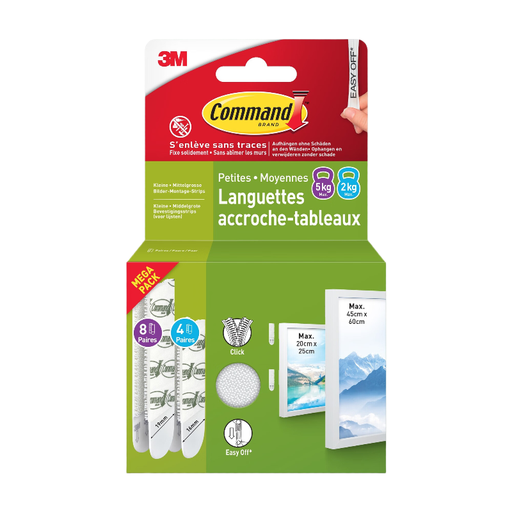
Why this choice suits this profile: This multi-size pack lets you adapt to lightweight frames, photos, or a small whiteboard without having to buy several separate products.
The Small and Medium sizes make it easier to match the weight of the item, rather than forcing a large strip onto a small frame.
A pack combining 4 pairs Small and 8 pairs Medium, with removable removal designed for smooth indoor surfaces.
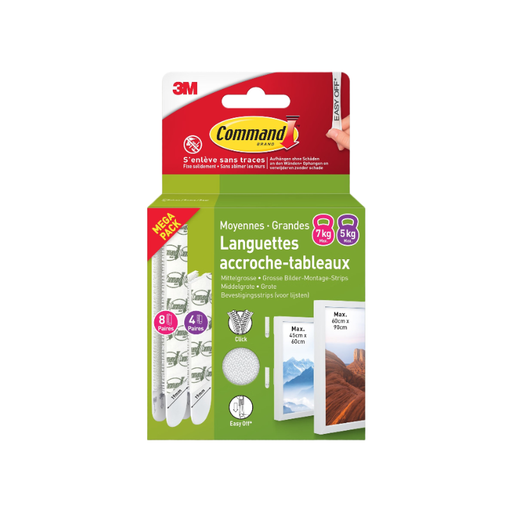
Why this choice suits this profile: This combination is ideal for those who swap frames, lightweight mirrors, clocks, and wall displays from room to room.
The capacities vary by size: up to 5 kg for the Medium strips and up to 7 kg for the Large, according to the product page.
4 pairs Medium and 8 pairs Large, a repositionable mechanism, and stated compatibility with smooth paintwork, glass, metal, laminate, and tiles.
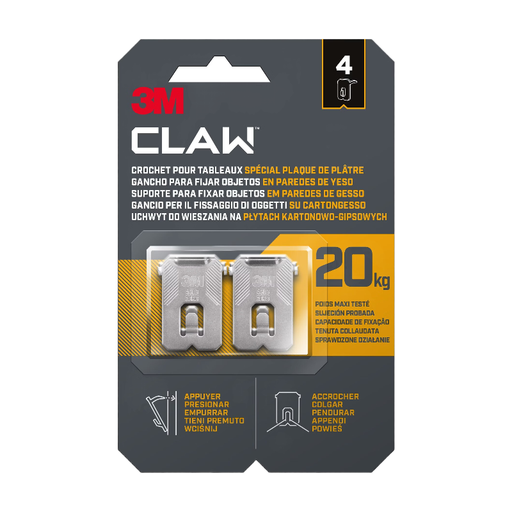
Why this choice suits this profile: For hanging a mirror or a large picture on plasterboard, this mechanical solution avoids using a traditional screw.
The stated load reaches 20 kg, but it’s still essential to check the actual weight of the item, the condition of the partition, and the installation instructions.
Hardened steel claws, press-fit installation, and a pack of 4 hooks designed for indoor drywall.
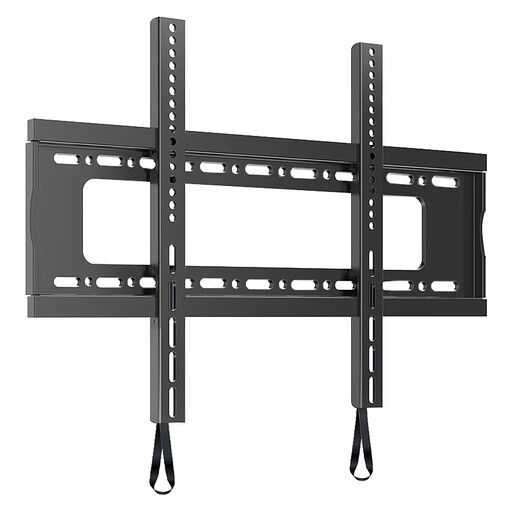
Why this choice suits this profile: It’s suitable for both private individuals and businesses looking for a fixed mount for a large screen, provided you have a solid concrete, solid brick, or load-bearing wooden stud wall.
The product page specifies compatible walls, VESA up to 600 × 600 mm, and a maximum load of 85 kg in the detailed specifications.
A 2.8 mm steel structure, a 28 mm profile, and a bottom lock to tighten after the screen is hung.
We’ve put together a complete, real-time updated selection of products that meet these demanding selection criteria and European safety regulations.
To hang a picture, distribute the fixing points evenly. If it’s a heavy or valuable item, especially above a sofa or bed, a mechanical fixing suited to the wall type can reduce the risk of it falling. An adhesive fixing isn’t suitable for every situation.
Yes, certain strips and hooks are designed to support specific loads. However, you need to check their capacity, the nature of the surface, and the dimensions of the frame. For a significant load, a mechanical hook for plasterboard may be more appropriate than an adhesive one, at the cost of a small mark when removed.
The products shown generally advise against using them on wallpaper, rough or porous surfaces, and freshly applied paint. Always consult the instructions and check the exact type of wall covering before installation.
For a large television, the wall mount must be anchored into a load-bearing wall with the correct fixings. Fixed models designed for heavy screens are not suitable for plasterboard or hollow brick when the instructions forbid it. Install it with two people and check the locking system to reduce the risk of it falling.