
Livraison le jour même ou le lendemain

Qualité garantie

Débloquez vos offres de bienvenue: Livraison GRATUITE | Jusqu'à -80 % | 30 jours d'essai gratuits à JoyPlus
Téléchargez l'application
A no-drill shower shelf is a quick way to clear the bath edge, keep your bottles within easy reach and avoid having to get the drill out. It’s a particularly handy solution for tenants, small bathrooms and anyone who’d rather not put extra holes in the tiles.
That said, you still need to pick the right model. A fixing that peels off, a fiddly structure to clean or dimensions that don’t fit your shower can quickly turn a good idea into a regrettable purchase.
Adhesive or suction-cup fixings don’t behave the same way on every surface. Smooth, clean, thoroughly degreased tiles generally offer the best conditions. On the other hand, a painted, porous, uneven wall or one with wide grout lines can compromise adhesion. Before you order, check which surfaces are compatible and the curing time recommended by the manufacturer.
Even a no-drill shower shelf shouldn’t be installed on an unstable wall. Once it’s in place, avoid loading it until the recommended waiting period has passed.
The phrase rust-resistant shower caddy sounds reassuring, but it doesn’t tell you everything. It gives no information about the finish, the alloy used or the conditions under which the product can stay exposed to moisture long-term. In a constantly humid bathroom, look at the stated material, the quality of the coating and any areas where water might pool.
Carbon steel offers good rigidity, but its longevity depends heavily on its surface protection and how well it’s maintained. If water collects, wipe down the metal parts and steer clear of abrasive cleaners.
A closed or overly deep basket holds onto moisture and soap residue more easily. A slatted base or sufficiently wide openings help water drain away. Also check the stated maximum weight capacity, especially if you plan to put large bottles, family-sized products or heavy accessories on it.
For a no-drill installation, pay close attention to the following points:
If your wall isn’t suitable for adhesive fixing, a wall-mounted bathroom shelf with screws and wall plugs will often be more reliable. In that case, choose the wall plugs according to the type of wall.
Measure the available width, the depth you can accommodate and the space needed to open the shower door or reach the tap. A structure of 40 to 45 cm can offer a decent amount of storage, but it won’t suit every wall.
In a small bathroom, a shallow floating wall shelf or a multi-tiered model makes better use of the height. For a family, several separate baskets make it easier to divide up shampoos, soaps and accessories.
Carbon steel appeals for its rigidity and contemporary look. Varnished wood can work in a bathroom that isn’t heavily exposed to direct splashes. As for painted or treated metal, it needs regular checks for chips and contact points, which are often the first to show signs of wear.
Whatever the material, wipe down surfaces when water collects and use a soft cloth for cleaning. Avoid metal scourers and highly abrasive products.
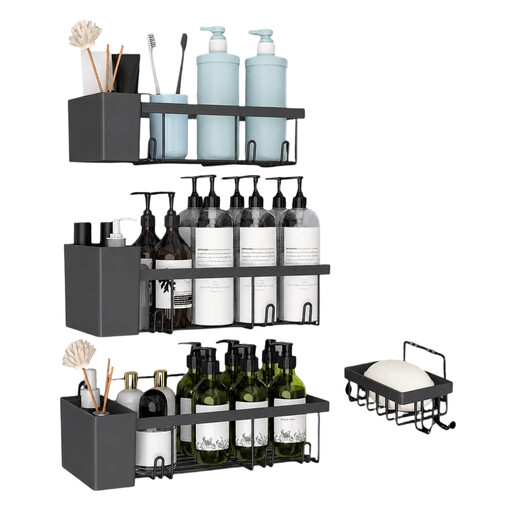
Why this choice suits this profile: This five-piece set is ideal for anyone who wants to organise several areas without buying each item separately. The product page mentions a no-drill design and a carbon steel structure.
The number of pieces is clearly stated in the title, making it easy to compare with a single basket sold on its own. Still, check the fixing method and dimensions before installation.
A five-piece set with a stated carbon steel structure. A consistent solution for spreading shower storage across several spots.
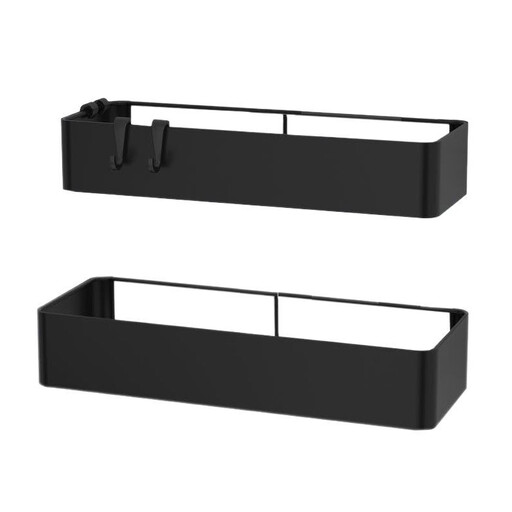
Why this choice suits this profile: With two stated widths of 38.6 cm and 40 cm, this set can work for a bathroom that needs several storage spaces. The product is described as rust-resistant, but that doesn’t mean you can skip regular maintenance in a damp environment.
The two dimensions are listed separately, so you won’t underestimate the space needed. Still, measure your wall and check the fixing system before ordering.
Two wide shelves and a rust-resistance mention in the product name.
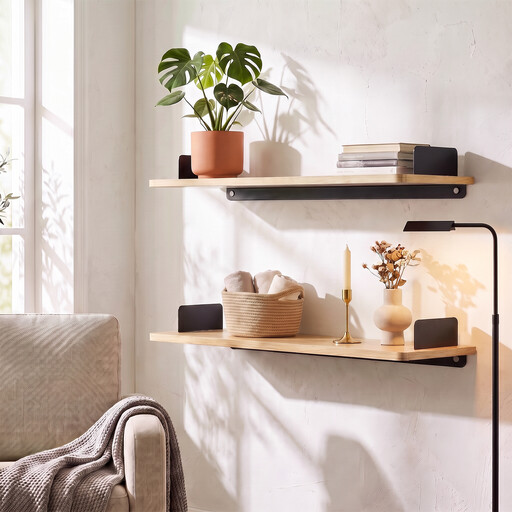
Why this choice suits this profile: This floating shelf combines an FSC-certified rubberwood top with aluminium alloy brackets. It’s aimed at those who value finish and stated capacity, whether in the bathroom, kitchen or hallway.
The product page states that installation requires drilling, wall plugs and screws. This model is therefore not a no-drill solution, but it avoids confusing a permanent fixing with an adhesive system.
A stated maximum capacity of 20 kg, varnished wood and aluminium brackets. The weight should still be evenly distributed and must be compatible with the wall and wall plugs used.
We’ve put together a full, real-time selection of products that meet these demanding criteria and European safety standards.
In the kitchen or hallway, a multi-functional wall storage unit with hooks can sometimes be more useful than a shower caddy. The Ju7cer model, for example, is described as a wooden wall rack with five double hooks. Its product page recommends installation with pre-drilled holes and the included hardware: it’s therefore better suited to keys, towels, aprons or leads, rather than an area constantly exposed to water.
No. Smooth, clean, dry surfaces are generally the most suitable, but the manufacturer’s recommendations should always come first. Grout lines, uneven surfaces, dust and limescale deposits can significantly reduce adhesion.
It all depends on the material, the fixing system, the weight it carries and how well it’s maintained. Careful installation, evenly distributed weight and the absence of standing water all help to extend its lifespan. Check the fixing points regularly and replace the shelf at the first sign of visible deformation or corrosion.
Some models are versatile enough to move from one room to another. However, check the material, depth, maximum weight capacity and fixing system. A carbon steel shelf can suit different uses, while a wooden shelf needs more care when it comes to water splashes and steam.