
Livraison le jour même ou le lendemain

Qualité garantie

Débloquez vos offres de bienvenue: Livraison GRATUITE | Jusqu'à -80 % | 30 jours d'essai gratuits à JoyPlus
Téléchargez l'application
A perfectly organised bathroom is one of life's small luxuries. But the thought of getting out the drill and damaging pristine tiles for a simple storage solution is enough to put anyone off. It's a non-starter for renters or anyone who wants to keep their walls intact. The market is flooded with so-called "?no-drill?" solutions, but be warned: not all are created equal. So, how do you sort the reliable accessories from the gimmicks that will end up in the bin within weeks?
As the Head of Product Recommendations at Joybuy, my mission is to guide you. Let's cut through the marketing jargon and get straight to the point. Here are the three most common pitfalls to avoid and the essential criteria for making the right choice.
Before you rush out and buy the first model you see, watch out for these design flaws that can turn a great idea into a frustrating experience.
To avoid these traps, scrutinise these three points. They are what determine the quality and longevity of your future wall-mounted bathroom organiser.
The term "?no-drill?" actually covers several different technologies. Your choice will primarily depend on your wall surface.
The humid environment of a shower is unforgiving. The choice of material is therefore non-negotiable.
A good shower basket must drain water, and fast. Take a look at the bottom of the caddy: the presence of wide slots or drainage holes is non-negotiable. Some models are even slightly angled to help water flow away. A removable basket is a definite plus, as it makes deep cleaning much easier.
Keeping these criteria in mind, here are a few models that meet specific needs and have caught our attention.
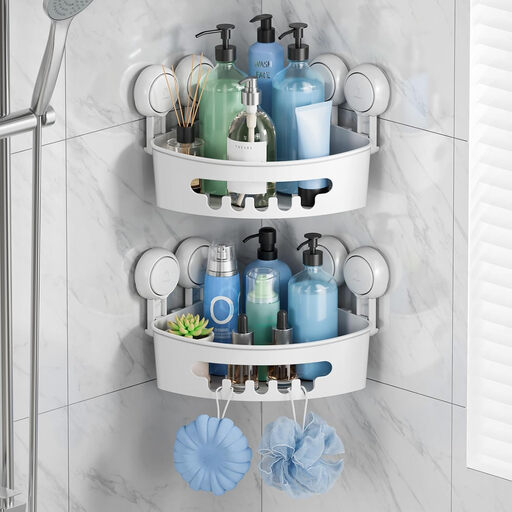
Why we chose it: The ideal solution for optimising space without damaging walls. This corner shower caddy is removable, leaves no trace, and its ABS construction eliminates any risk of rust. An essential feature for getting your security deposit back without any arguments. The two-pack makes it easy to organise products for the whole family.
Its TPE suction cup, inspired by octopus tentacles, locks with a single press for a formidable grip on smooth surfaces. Meanwhile, the ABS material completely neutralises the threat of rust.
Installs in seconds flat, no tools required, and is infinitely repositionable. Its advertised load capacity of up to 10 kg is impressive, provided you stick to the required surface type.
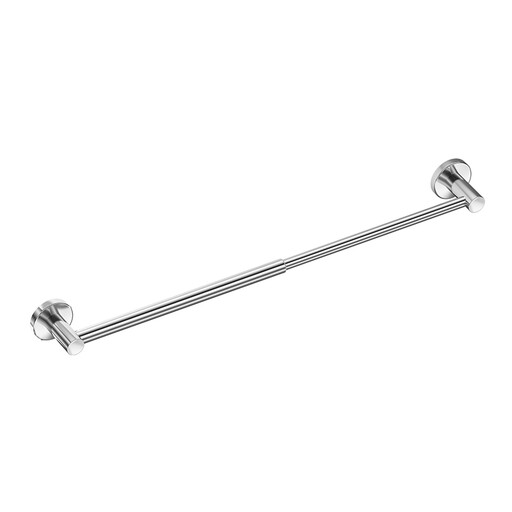
Why we chose it: For those who want an elegant solution that perfectly matches modern tapware. This model attaches directly to the shower riser rail for a streamlined look and rock-solid stability, regardless of the wall surface.
This model cleverly bypasses the suction cup problem by using the shower rail as its anchor point. Its stainless steel construction is specifically designed for long-term corrosion resistance.
An adjustable and contemporary design. Its wide-slotted base ensures optimal drainage, putting an end to stagnant water and soap scum.
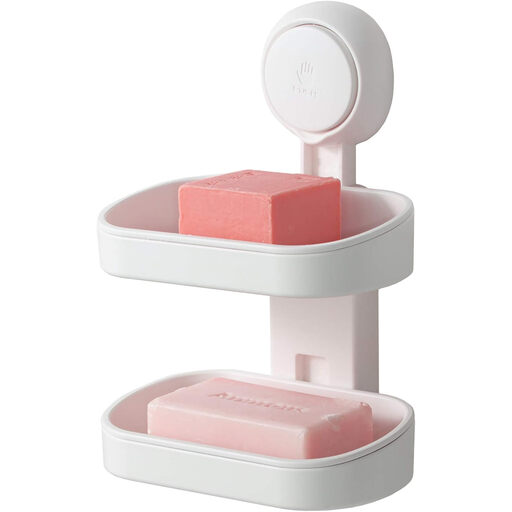
Why we chose it: Soap melting in a puddle of water is a classic problem. This shower soap dish provides a solution that is as simple as it is smart. It's perfect for fans of artisanal soaps or shampoo bars who want to keep them dry and make them last longer.
Its two-tier design tackles the problem of stagnant water head-on. The perforated upper tray allows the soap to air-dry, while the lower tray collects excess water. You just need to empty it from time to time.
It features the same TPE pressure suction cup technology, ensuring a reliable and removable hold. Its fully detachable design makes cleaning incredibly simple.
We've curated a complete selection of products that meet our standards for quality and durability.
Success comes down to three things: surface, cleanliness, and technique. The surface must be perfectly smooth and non-porous (glass, glossy tile, mirror, etc.). Clean it with rubbing alcohol to remove any trace of grease or limescale, then dry it meticulously. Press firmly on the centre of the suction cup to expel the air before engaging the locking mechanism. Finally, and this is crucial, never exceed the maximum load capacity recommended by the manufacturer.
It all depends on the materials. A model made from quality ABS plastic or genuine stainless steel can last for years if well-maintained. Conversely, entry-level chrome-plated metal products or those with rigid PVC suction cups rarely last more than a few months in a humid environment before showing signs of failure.
Absolutely not! This is a classic mistake. To create a vacuum seal, the suction cup needs a perfectly continuous and flat surface. Even the slightest grout line, no matter how thin, creates a micro-leak that will destroy the seal and cause the caddy to fall. The golden rule: always position the suction cup squarely in the centre of a tile, far from any grout lines.