
Livraison le jour même ou le lendemain

Qualité garantie

Débloquez vos offres de bienvenue: Livraison GRATUITE | Jusqu'à -80 % | 30 jours d'essai gratuits à JoyPlus
Téléchargez l'application
Hanging a picture frame, installing a hook in the bathroom, or mounting a phone in the car without reaching for the drill can be incredibly handy – especially if you're renting or a student. However, not all no-drill fixing solutions are created equal.
An adhesive strip designed for a small frame won't necessarily hold a heavy mirror. Similarly, a suction cup might stick perfectly to a clean window, only to lose its grip on a dusty or uneven surface. Here are the key factors to consider before you buy, along with a selection of solutions suited to different needs.
The maximum load stated on the packaging doesn't mean the item can be fixed under any conditions. The weight must be properly distributed, the surface must be compatible, and the installation must follow the manufacturer's instructions.
For a picture frame, consider its weight, plus the weight of the glass and any decoration inside. Always build in a safety margin, especially in rooms exposed to vibrations or humidity.
Adhesive fixing strips are generally designed for smooth, clean, and dry surfaces. Flaking paint, wallpaper, a porous wall, render, or even just dust can reduce adhesion and increase the risk of the fix coming loose.
A drywall hook, such as a claw-style model, works on a different principle: it inserts into the plasterboard, leaving small holes. It avoids the need for a drill, but it isn't a completely mark-free fixing solution.
Some strips can be removed cleanly using a pull-tab, but their adhesive isn't necessarily reusable. Check whether the product accepts replacement strips. For a removable wall fixing, the removal method is just as important as the holding strength.
For a small storage accessory, a light-duty fix may be sufficient. For a larger decorative item, choose a system with a clearly stated maximum load. The QI Rayon Black Large picture hanging strips, for example, are rated for items weighing up to 7 kg, provided the surface and installation instructions are followed.
Wide or heavy items may require multiple fixing points. Also consider their centre of gravity: a frame that tilts forward puts more stress on the adhesive than an object that sits flush against the wall.
Before applying, clean the area with a product that leaves no greasy film, then let it dry completely. Avoid applying a strip to a damp, crumbly, or textured surface unless the instructions explicitly allow it.
In a bathroom, choose a strip that is stated as moisture-resistant. The black double hook for bathrooms is suitable for glass, mirrors, tiles, painted or varnished wood, and some painted surfaces, with a maximum load of 1.8 kg.
An easy, tool-free installation doesn't mean you can skip the steps: clean, position, press firmly for long enough, then wait the recommended time before hanging the object. To remove a strip, slowly pull the tab in the intended direction, usually parallel to the wall. Do not pull the support directly towards you – you risk peeling off the paint.
In a car, safety comes first. A car phone mount must not obscure the road, interfere with the controls, or be positioned in front of an airbag. A suction cup for a car camera should only be installed on a smooth, non-porous surface, and its hold should be checked regularly.
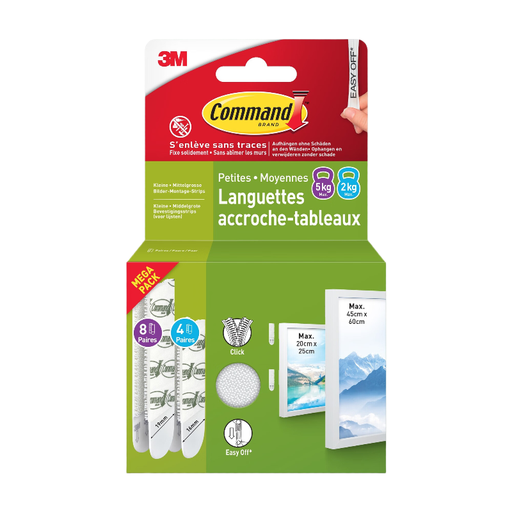
Why this choice suits this profile: This multipack includes 4 small pairs and 8 medium pairs, so you can hang several frames, whiteboards, or lightweight accessories.
The two sizes prevent you from using a fix that is either too large or too small for the item. However, always check compatibility with the surface before applying.
A mixed pack, adhesive application, and removal designed for smooth indoor surfaces.
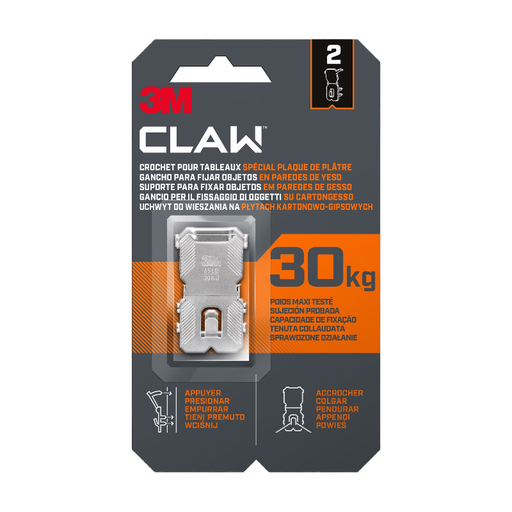
Why this choice suits this profile: This metal hook is designed for frames, mirrors, and heavy decorations on drywall, with a stated capacity of up to 30 kg.
It doesn't rely on an adhesive strip, whose hold can vary depending on the paint. Instead, its hardened steel claws insert directly into the plasterboard.
Tool-free press-in installation, with two hooks included. Make sure the wall is indeed drywall.
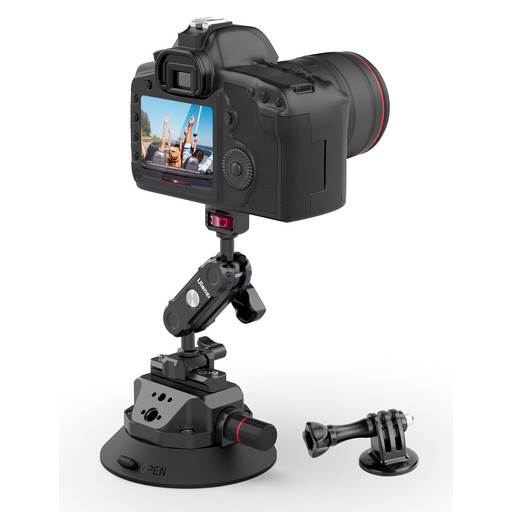
Why this choice suits this profile: This mount is aimed at drivers and creators who want to attach a camera to a window or other smooth automotive surface.
The pump creates a controlled vacuum, but the surface must remain clean, smooth, and non-porous. For equipment installed externally, using a safety tether is recommended.
A 4.5-inch suction cup, built-in pump, and quick-release plate. Check stability before each use.
We've put together a comprehensive, real-time updated list of products that meet these strict selection criteria and European safety regulations.
No. Adhesive strips work best on smooth, clean, and dry surfaces. A rough, crumbly, or wallpaper-covered wall can compromise the hold. On drywall, a claw hook can be suitable, provided you accept the small holes it leaves.
The duration depends on the weight, temperature, humidity, surface, and quality of the installation. Follow the waiting time stated before loading the fix, then check the fixings regularly in high-stress areas.
It can be suitable on a window or a smooth, non-porous surface, provided the maximum load is respected. Clean the surface, activate the vacuum system correctly, and check the indicator or pressure regularly. Never position the camera in a way that reduces visibility or interferes with the vehicle's safety features.