
Livraison le jour même ou le lendemain

Qualité garantie

Débloquez vos offres de bienvenue: Livraison GRATUITE | Jusqu'à -80 % | 30 jours d'essai gratuits à JoyPlus
Téléchargez l'application
A no-drill adhesive wall hook helps you organise a hallway, kitchen or bathroom without getting out the drill. It is particularly convenient for tenants, anyone keen to avoid holes and those looking for a quick installation. But beware: a model that holds perfectly well in a hallway may not be suitable for a bathroom or a heavier load.
Before placing your order, check the compatible surface, stated maximum load and resistance to moisture. Here are the key points to consider to avoid disappointment, along with a selection of models suitable for a range of uses.
A hook rated for 2.2 kg is not necessarily suitable for a heavy bag that is removed several times a day. Repeated handling creates very different pulling forces from those produced by a towel or set of keys simply hanging from the hook.
The load stated by the manufacturer should be treated as a maximum limit, not a target to reach without leaving a margin. For a bulky item or something that is frequently removed, choose a model with a capacity well above the item's weight.
A no-drill wall hook generally adheres best to a smooth, clean, dry and stable surface. Textured walls, wallpaper, delicate coverings or recently applied paint can reduce adhesion and may even be damaged when the hook is removed.
Tiles, glass, metal and certain painted surfaces are often listed as compatible supports in product specifications. This does not remove the need to check the manufacturer's recommendations. On a delicate finish, always test the product in an inconspicuous area.
In a bathroom, steam, splashes and changes in temperature can put the fixing under considerable strain. An adhesive bathroom hook should use water-resistant strips if it is installed near a washbasin or shower.
A classic decorative hook will work perfectly well in a hallway or bedroom, but it is not automatically designed for humid environments. Also check the hook's corrosion resistance if you are looking for a stainless steel or metal adhesive hook.
Before installation, clean the area according to the instructions supplied with the product, then allow it to dry completely. Dust, grease and moisture create a film between the adhesive and the wall, quickly compromising the strength of the fixing.
For several Command models, the instructions recommend pressing firmly on the fixing for 30 seconds. Some then require you to wait around one hour before hanging an item from it. Fresh paint should generally be given enough time to cure properly: in all cases, follow the manufacturer's instructions.
Here are a few guidelines to help you choose the right capacity:
The hook's size also matters. A double model spreads the load between two hanging points, while a small removable wall hook takes up less space and is more discreet.
Plastic, ABS, nickel-plated metal and stainless steel offer different looks and levels of resistance. A metal adhesive hook or stainless steel adhesive hook is a natural fit in a contemporary bathroom. A white model, meanwhile, will blend in more discreetly on a light-coloured wall.
For an area exposed to moisture, look specifically for the descriptions moisture-resistant, water-resistant or rust-resistant. These indications describe the intended conditions of use; they do not mean that the product can be submerged or installed outdoors.
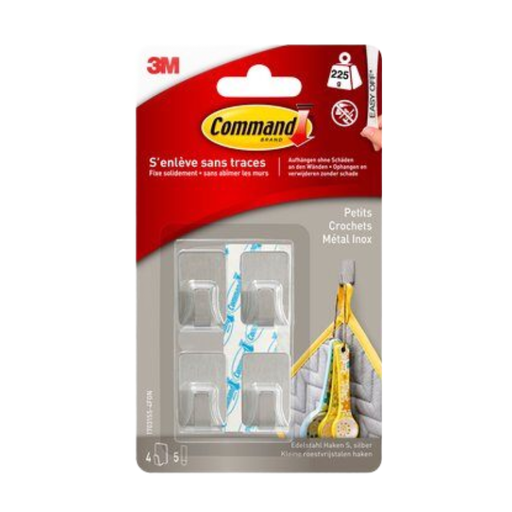
Why this choice suits this profile : its compact size is ideal for a first installation in a hallway, kitchen or bathroom, for hanging lightweight items.
Its stated capacity of around 225 g clearly limits it to lightweight accessories, reducing the risk of accidental overloading.
Stainless steel construction, a polished finish, tool-free installation and replacement strips available separately.
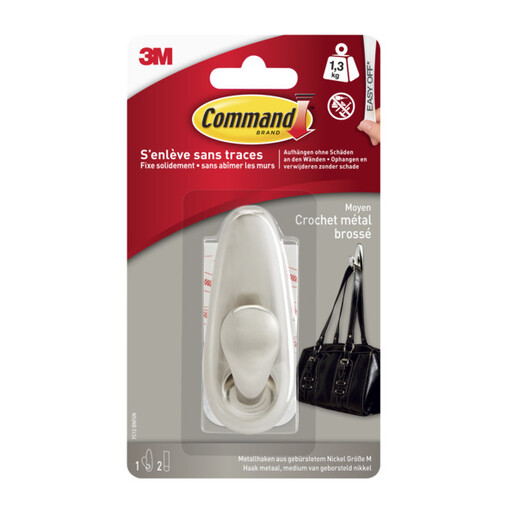
Why this choice suits this profile : its brushed nickel finish complements a carefully styled interior, whether in a hallway, living space or bathroom.
Its stated maximum load of 1.3 kg clearly defines its intended use, without suggesting that it can hold just any item.
Brushed nickel-plated metal, tool-free installation, removal without holes or residue according to the product specifications, and the option to reposition the hook with new strips.
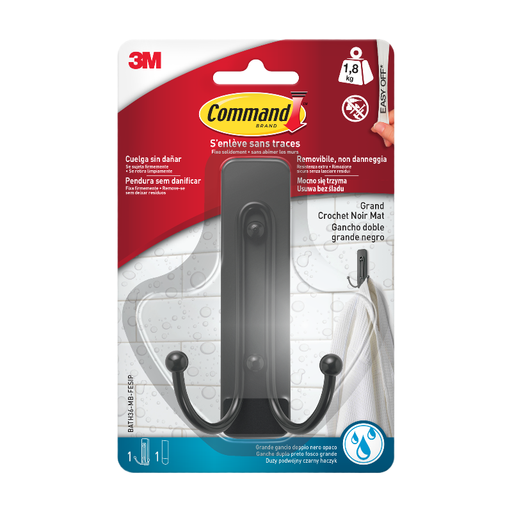
Why this choice suits this profile : designed for humid environments, it is suitable for everyday storage of towels, dressing gowns or shower accessories.
The product specifications mention water resistance and a maximum load of 1.8 kg, while also specifying compatible surfaces for bathroom use.
A double design, ABS construction, a matt black finish and installation without nails, screws or tools.
Explore our complete, real-time updated selection of products that meet these strict selection criteria and European safety requirements.
For a reliable, consistent fixing, follow these steps:
To remove a removable wall hook, do not pull it directly towards you. Grip the tab, then pull it slowly in the intended direction, usually downwards or parallel to the wall. If the strip tears or the hook resists, stop immediately to avoid pulling off the paint.
Only models that specify water or moisture resistance are designed for this environment. Check their compatibility with tiles, glass or mirrors, then carefully follow the recommended installation time and load. As a rule, a standard hook should not be considered suitable for a shower.
It depends on the quality of the surface, moisture levels, temperature, load and frequency of handling. If the hook holds a towel, dressing gown or accessory that you remove frequently, check regularly that it is still adhering properly. Replace the adhesive strip as soon as the manufacturer recommends.
Models fitted with a stretch-release tab are designed to be removed cleanly when installed on a compatible surface and removed according to the instructions. However, no adhesive is suitable for every type of finish. Avoid wallpaper, rough surfaces, unfinished supports and delicate paint unless the manufacturer states otherwise.