
Livraison le jour même ou le lendemain

Qualité garantie

Débloquez vos offres de bienvenue: Livraison GRATUITE | Jusqu'à -80 % | 30 jours d'essai gratuits à JoyPlus
Téléchargez l'application
Want to hang a towel, coat or decoration without getting out the drill? A no-drill adhesive hook can make life easier, provided you choose a model suited to the surface, the weight of the item and the surrounding humidity. For renters, students or homeowners keen to protect their walls, it is a practical way to keep your home better organised.
However, beware of the claims displayed on the packaging. A maximum load stated without details of the conditions of use, installation on an unsuitable surface or removing the hook too quickly can cause it to come away, leave marks or make the fixing unusable. Here are the criteria to check before buying, followed by a selection of models suited to different needs.
The capacity shown on the packaging generally refers to a maximum load measured on a smooth, clean and properly prepared surface. It does not guarantee that a hook will support the same weight on a textured, damp or freshly painted wall.
For everyday use, leave a margin between the actual weight of the item and the stated capacity. A full bag, a plant with a damp pot or several towels exert considerably more strain than a small object hung occasionally.
A nail-free hook adheres mainly to smooth, clean, dry and non-porous surfaces: tiles, glass, metal, mirrors or firmly bonded paint. Wallpaper, uneven walls, brick, bare concrete and delicate paint increase the risk of the hook coming away or pulling off the surface.
Even when described as removable or ‘leaving no marks’, a hook cannot guarantee clean removal from every type of surface. Always check the restrictions specified by the manufacturer before installing it.
Removing the protective film and hanging an item straight away is one of the most common mistakes. Most adhesive strips need to be pressed firmly and then left to set for a certain amount of time. The Command models featured here generally require you to hold the fixing in place for 30 seconds, then wait one hour before hanging anything from it.
In a bathroom, also take the time to dry the surface thoroughly. Steam, splashes and soap residue can significantly reduce adhesion.
Start by weighing or estimating the item you want to hang, then choose a suitable fixing:
A hook designed for heavy items is not necessarily suitable for ceiling installation. The downward force and the orientation of the adhesive strip vary depending on the position. To hang a plant or string lights, take a look at our selection of no-drill ceiling hooks.
In a kitchen or bathroom, choose a moisture-resistant strip and a material able to withstand splashes, such as aluminium, treated metal or certain plastics. The term ‘water-resistant’ does not mean that the hook can be submerged or installed directly under running water.
Compatible surfaces should be clearly stated. A metal adhesive hook can provide a more elegant finish, while a plastic model is better suited to a discreet or temporary installation.
A removable hook is generally taken down by gently pulling the tab in the intended direction, often downwards and parallel to the wall. Do not pull the hook directly towards you, as this increases the tension placed on the paint.
Also check whether replacement strips are available. Some Command hooks can be reused with new compatible strips, avoiding the need to replace the entire fixing.
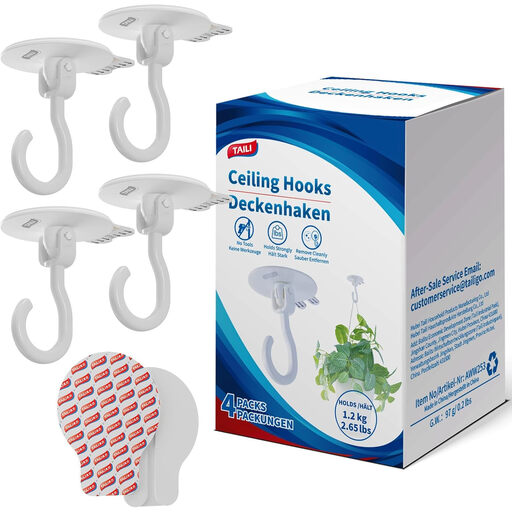
Why this choice suits this profile: This pack is ideal for renters and anyone looking for several hanging points for string lights, small accessories, lightweight plants or utensils.
The stated capacity is clearly shown: 2.6 lb per hook, or approximately 1.18 kg. Compatible and unsuitable surfaces are also specified, helping you avoid installation on an uneven wall or wallpaper.
A pack of 4 hooks, suitable for wall or ceiling use, with 360° rotation and stretch-release strips for easy removal.
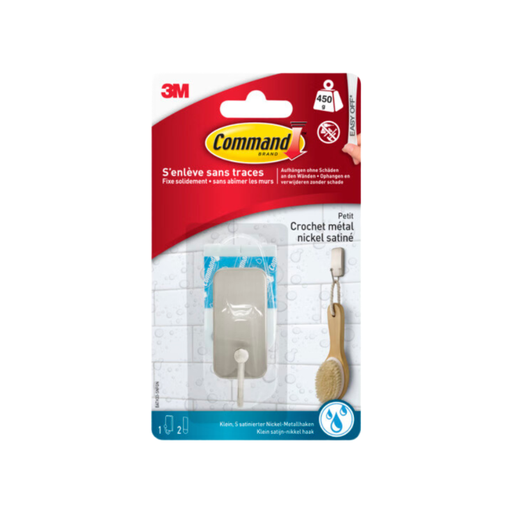
Why this choice suits this profile: Its satin finish sits effortlessly in a bathroom or hallway where style matters just as much as function.
Its water-resistant design is suited to humid environments. Nevertheless, the instructions specify avoiding wallpaper, textured surfaces and unpainted walls.
An aluminium double hook, removal without holes or residue when used as instructed, and the option to reuse it with suitable strips.
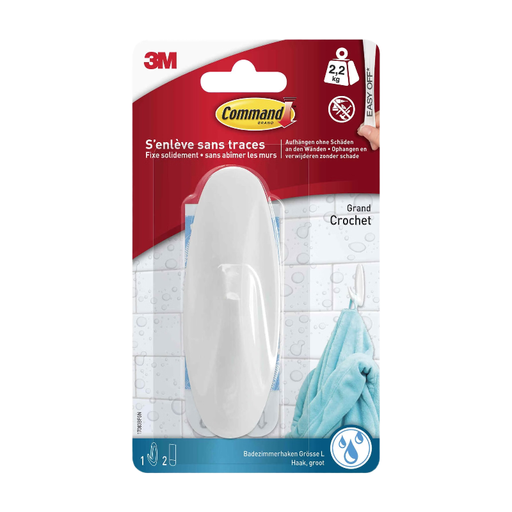
Why this choice suits this profile: Its generous size is ideal for the kitchen, utility room or hallway, for hanging utensils, towels and accessories used every day.
The maximum load is clearly set at 2.2 kg. However, it must be installed on a smooth surface, and fragile objects should not be hung above a bed or walkway.
A 105 × 38 × 38 mm size, water-resistant strips and stated compatibility with glass, tiles, metal and painted walls.
We have put together a complete, regularly updated selection of products that meet these strict selection criteria and European safety requirements.
Avoid hanging valuable, breakable or potentially dangerous items above a bed. An adhesive hook remains a light- to medium-duty fixing. For a substantial load on a partition wall, check whether a mechanical fixing or a hook designed for plasterboard would be more suitable.
Its lifespan depends on the weight suspended, frequency of use, humidity, temperature and the quality of the surface. Careful installation and a load below the stated limit help ensure it remains secure over time. In a bathroom or kitchen, inspect the hook and surface regularly.
Yes, many models are designed for smooth surfaces such as tiles, glass, mirrors or metal. The surface must be clean, dry and free from dust or grease. Check the product details, as compatibility depends on the adhesive strip used.
Some models are specifically designed for ceiling installation, particularly for lightweight decorations, string lights or small plants. The permitted load and type of surface must be checked separately. For this use, browse the dedicated no-drill ceiling hooks category and choose a model whose orientation is explicitly designed for ceiling installation.