
Livraison le jour même ou le lendemain

Qualité garantie

Débloquez vos offres de bienvenue: Livraison GRATUITE | Jusqu'à -80 % | 30 jours d'essai gratuits à JoyPlus
Téléchargez l'application
Are you renting, or do you want to hang towels or create wall storage without getting the drill out? No-drill adhesive hooks can do the job, provided you pick a model suited to the weight you need to support and the surface of your wall. A poor choice, however, can lead to peeling, marks, or the object falling off.
A hook described as "strong" won't necessarily hold a heavy bag, a plant, or a glass-fronted picture frame. The maximum load depends on the weight of the object, but also on the pull force, humidity, temperature, and the condition of the wall.
For light decorations, a hook supporting 225 g per hook may be enough. For a coat or a towel, check the capacity stated by the manufacturer and keep a safety margin. Above all, avoid hanging a valuable or potentially dangerous item right at the theoretical weight limit.
Self-adhesive wall hooks mainly stick to smooth, clean, and dry surfaces: tiles, glass, metal, painted wood, or compatible painted walls. Powdery paint, textured walls, wallpaper, or a damp surface can significantly reduce adhesion.
Plasterboard requires special attention. Some adhesives work on painted, smooth surfaces, while claw hooks, like the 3M CLAW models, anchor slightly into the board. So, these are different types of no-drill wall fixings.
Even repositionable hooks need careful application. Clean the area, dry it, apply the strip without touching the adhesive part with your fingers, then press firmly. Some models also need a setting time before bearing weight.
When removing, don't pull the hook straight towards you. Where the system allows, slowly pull the tab downwards or parallel to the wall, following the instructions. This precaution reduces the risk of peeling the paint.
For a bathroom or kitchen, look for hooks designed for these rooms, with an indication of moisture resistance. This doesn't mean they can be submerged or placed on a constantly wet wall. The surface must remain clean, dry, and stable.
Transparent hooks are handy for fairy lights, small decorations, and accessories, as they blend into the background more. However, their discreetness shouldn't make you forget their often limited weight capacity.
Check the load supported by each hook, not just the one advertised for the whole pack. For a picture frame, adhesive suspension strips can distribute the weight across several points. Choose their size based on the frame's dimensions and weight, then follow the manufacturer's instructions.
A double hook is more practical for a towel or bathrobe. Conversely, a mini-hook is better suited for keys, cables, small decorations, or light utensils.
"Removable" doesn't necessarily mean reusable in the same way. Some systems accept a new adhesive strip, while others need to be replaced after removal. Also, check the usage restrictions: wallpaper, bare wood, rough walls, and freshly painted surfaces are often not recommended.
If you're unsure about the compatibility of your wall covering, test it on an inconspicuous area. This will avoid nasty surprises.
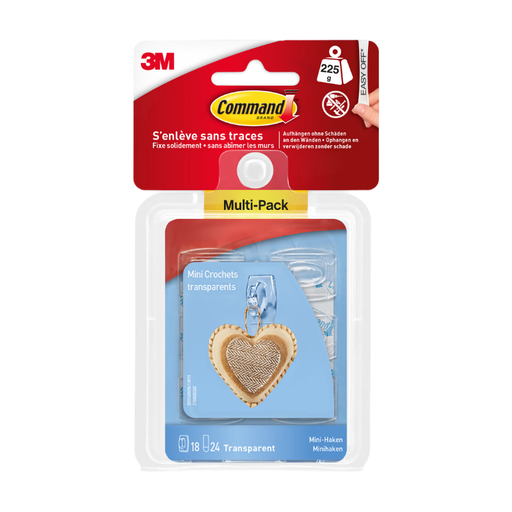
Why this choice suits this profile: With its 18 hooks, this set is ideal for small storage projects in a hallway, bedroom, or kitchen, without needing to buy multiple packs.
The listing states a capacity of 225 g per hook and specifies compatible surfaces, mainly smooth ones. These limits help you use it wisely for light items.
Transparent design, 18 hooks included, and 24 small adhesive tabs, according to the available information.
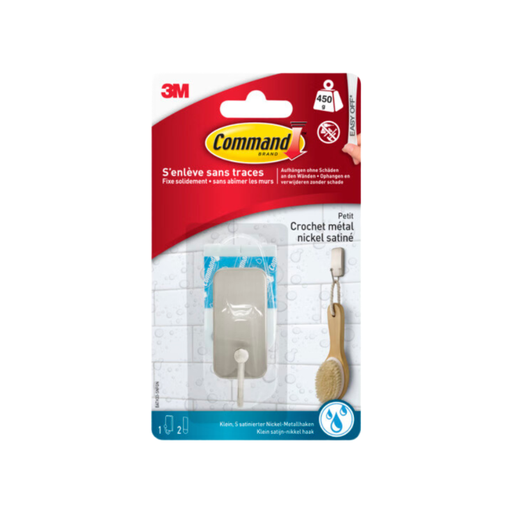
Why this choice suits this profile: Its satin finish and double-hook format fit perfectly in a bathroom, kitchen, or hallway where aesthetics matter as much as practicality.
The instructions recommend preparing the surface with alcohol, applying pressure for 30 seconds, then waiting an hour before use. Textured surfaces and wallpaper are excluded.
Double aluminium hook, adhesive stated as moisture-resistant, and reusable with suitable replacement strips.
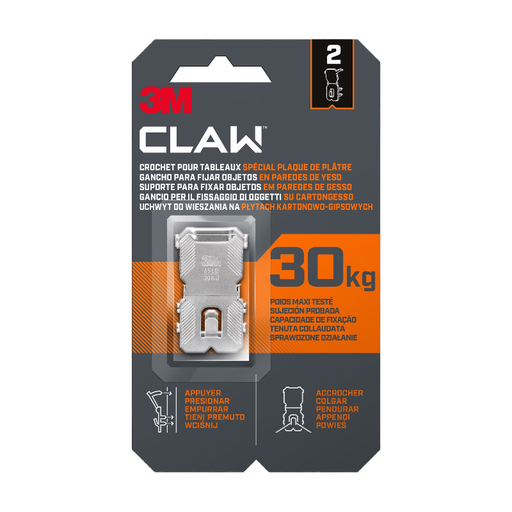
Why this choice suits this profile: For picture frames, mirrors, and heavy decorations on plasterboard, this system is an alternative to adhesive hooks.
This is not an adhesive hook: its hardened steel claws insert into the plasterboard. This distinction prevents you from choosing an adhesive to support too heavy a load.
Tool-free installation with a simple thumb press, and a stated capacity of up to 30 kg for two hooks, according to the product listing.
We've compiled a complete, real-time updated selection of products that meet these demanding criteria and European safety standards.
Yes, if the wall is painted, smooth, clean, and compatible with the adhesive used. For a heavy load, it's better to choose a system specifically designed for plasterboard, like a claw hook. Always follow the stated capacity and the instructions in the manual.
It all depends on the quality of the surface, humidity, temperature, and the weight hung. There is no universal duration. Inspect the hook regularly and replace it if the tab starts to peel or the adhesive seems damaged.
Manufacturers present them as removable or designed for clean removal, but the result depends on the wall covering and the method used. Avoid friable, freshly painted, or textured surfaces, then slowly pull the tab in the indicated direction.