
Livraison le jour même ou le lendemain

Qualité garantie

Débloquez vos offres de bienvenue: Livraison GRATUITE | Jusqu'à -80 % | 30 jours d'essai gratuits à JoyPlus
Téléchargez l'application
No-drill adhesive hooks solve a very real problem: organising your home without reaching for the drill. This is especially handy when you're renting or want to protect freshly painted walls. But you need to pick the right model – a poorly chosen sticky fixing can peel off, leave marks, or fail to hold the weight it claims to support.
Before buying adhesive wall hooks, there are three common pitfalls to avoid.
The capacity stated on the packaging usually applies to very specific conditions: a smooth, clean, dry surface, with installation following the instructions to the letter. A loaded bag, a saucepan or a mirror exerts a different kind of pull than a light object simply hung up.
Always leave a safety margin. For a 1 kg item, avoid choosing a hook rated for exactly 1 kg. Heavy-duty hooks designed for plasterboard or bulky items sometimes use a different technology, with metal claws that embed directly into the board.
Textured walls, wallpaper, porous surfaces, fresh paint or dusty surfaces all significantly reduce adhesion. In a bathroom, also check for moisture resistance – a standard hook may not be suitable inside a shower.
Adhesive models are generally designed for tiles, glass, metal, painted wood and smooth painted walls. Always check the instructions for your chosen model before fitting.
Pulling the hook towards you can tear the paint or damage the surface. With stretchy tab systems, you should normally pull the tab slowly downwards, parallel to the wall. No holes doesn't mean you can skip a few precautions.
Start by weighing – or at least estimating – the item you want to hang. Not all uses are the same:
If you need to hang several items, spreading the load across multiple hooks can be a good idea. Just make sure you don't exceed the capacity of each fixing or the wall surface itself.
Plastic is lightweight and discreet. Stainless steel or metal with a nickel finish offers a more decorative look that fits easily into a hallway, kitchen or bathroom. However, a metallic finish doesn't replace a tab designed to resist moisture.
Clear hooks are particularly well suited to decorations and reminders when you want the fixing to be as unobtrusive as possible. Metal hooks focus more on the decorative look and the stated mechanical strength.
Before installation:
These steps matter especially for adhesive hooks for plasterboard walls. If the wall is crumbly or uneven, a claw hook designed for plasterboard may be more suitable, even if it leaves tiny holes.
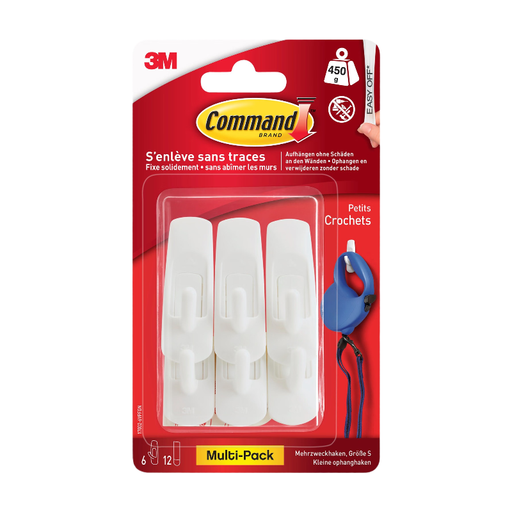
Why this suits this profile: This pack of six white hooks is ideal for everyday small needs: keys, lightweight towels or decorations.
Its stated capacity is for light items – you can't mistake it for a hook meant for heavy loads.
Pack of six, tool-free installation, stated compatibility with smooth surfaces and removal via a stretchy tab.
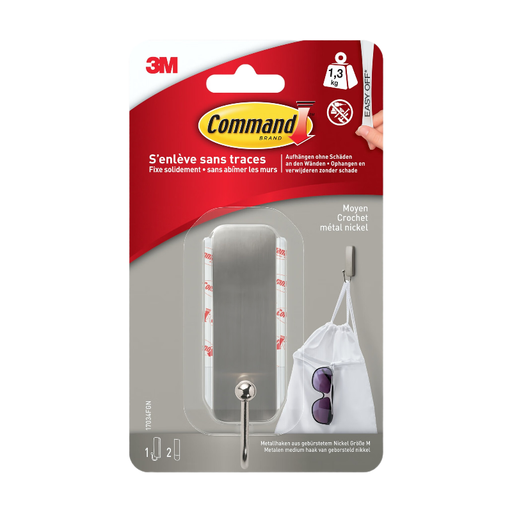
Why this suits this profile: Its nickel finish blends into interiors where the hook is part of the overall design style.
With a stated capacity of 1.3 kg, it encourages you to check the intended use rather than relying solely on its metallic appearance.
Nickel-plated metal, tool-free installation and removal stated to leave no holes or residue on a suitable surface.
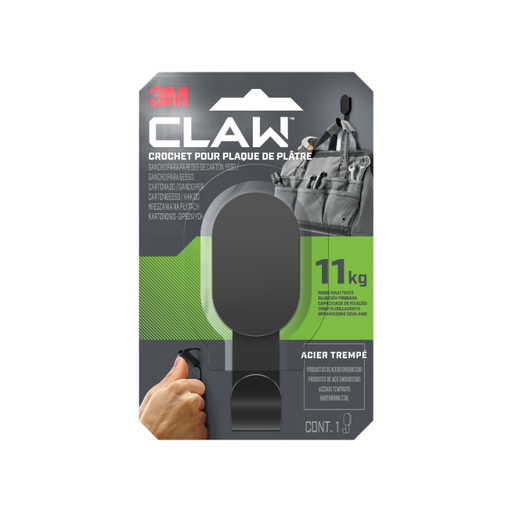
Why this suits this profile: This model is for those who want to hang a heavy item on plasterboard without screws or traditional wall plugs.
This isn't a sticky hook – its hardened steel claws are designed to grip plasterboard. This difference stops you from mistakenly applying the rules of adhesive fixings.
Stated capacity up to 11 kg, installation with a simple thumb press and targeted use on indoor plasterboard.
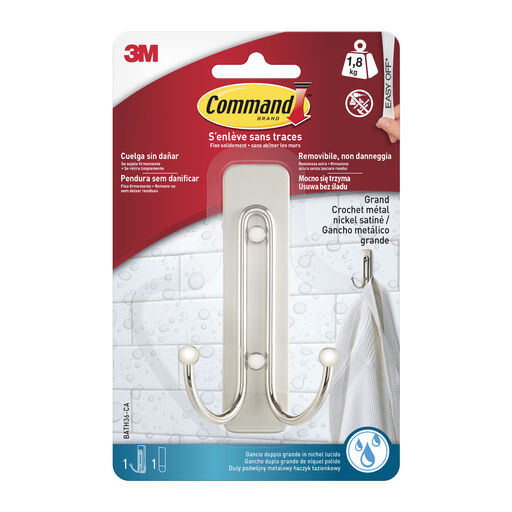
Why this suits this profile: Described as water-resistant, this model is suitable for storing towels, bathrobes and accessories in a damp room.
Its water resistance is clearly stated, but installation must be on a smooth, clean, dry surface – never on a textured or wet wall.
Double hook, satin nickel finish and stated load capacity up to 1.8 kg for indoor use.
We've selected a full range, updated in real time, of products that meet these demanding criteria and European safety standards.
An adhesive hook generally requires no special maintenance. However, do check its hold regularly if the item is handled every day. In a bathroom, condensation, water splashes and temperature changes can weaken the adhesive over time.
Don't hang fragile or valuable items above a bed, worktop or walkway. For nail-free hooks used outdoors, only choose a model whose specification mentions weather resistance, and stick strictly to its weight limit.
Yes, provided the plasterboard is covered with smooth, clean, completely dry paint and the weight is moderate. For a heavy frame, claw hooks designed for plasterboard offer a different solution. They aren't sticky and their installation leaves small holes.
It all depends on the weight supported, the surface, humidity, temperature and the quality of the installation. There's no universal lifespan that applies to all surfaces. Stick to the stated capacity, let the adhesive set before use, and check regularly that the fixing is still holding properly.
Manufacturers claim clean removal when the surface is compatible and the tab is pulled slowly in the right direction. However, fragile paint, wallpaper or incorrect installation can damage the surface. If the surface is delicate, test on an inconspicuous area first.