
Livraison le jour même ou le lendemain

Qualité garantie

Débloquez vos offres de bienvenue: Livraison GRATUITE | Jusqu'à -80 % | 30 jours d'essai gratuits à JoyPlus
Téléchargez l'application
Hanging a picture frame, a towel or a bag without getting the drill out is especially appealing to tenants, students and anyone who wants to keep their walls intact. But not all no-drill adhesive hooks are suitable for every surface or every weight.
Before you order, it’s worth knowing the difference between a simple adhesive wall hook for lightweight accessories and a solution that can hold a frame or a heavier item. Here are the key factors to consider to avoid any nasty surprises, along with a selection tailored to different needs.
The weight stated on the packaging usually refers to very specific conditions: a smooth, clean, dry surface and installation that follows the instructions to the letter. So a hook with a 5 kg capacity shouldn’t automatically be used for a 5 kg item, especially if the wall has just been painted or has a slight texture.
For a long-lasting installation, always leave a margin between the weight of the object and the maximum stated load. A heavy frame, for example, can exert a different kind of pull than a garment hanging vertically.
A nail-free hook can work on satin paint, tiles, glass or varnished wood, but adhesion varies greatly depending on the finish. Wallpaper, rough walls, dusty surfaces, bare wood or fragile paint all need special attention.
On plasterboard, a standard adhesive strip doesn’t always give the same result as a hook specifically designed for dry walls. Claw-style models, like the 3M CLAW range, aren’t actually adhesive hooks at all – they press into the material. It’s a distinction worth keeping in mind before you place your order.
Pulling the hook straight towards you can tear the paint or leave a mark. Removable fixing strips are usually taken off by slowly pulling the tab downwards, parallel to the wall. Also, make sure you follow the recommended waiting time before hanging anything on them.
For a hole-free wall fixing, start by identifying the surface: painted wall, tiles, glass, metal, varnished wood or plasterboard. Then clean the area with a suitable product, let it dry completely and avoid touching the adhesive part with your fingers.
Smooth, stable surfaces are generally the best match for adhesive strips. Fresh paint needs to be fully dry and cured before you apply anything. Always check the product instructions, especially for any surfaces that aren’t compatible.
Choose the size based on what you’re hanging:
For a no-drill picture frame hanger, using strips in pairs spreads the load better than a single fixing point. Also check the dimensions of the frame and make sure you can apply the strips to a clean, flat area.
A repositionable hook can be really handy in a rented home or for a changing display. Just bear in mind that ‘repositionable’ often means the hook can be reused with a new adhesive strip, not that the same strip can be peeled off and stuck back on several times.
Command hooks and adhesive picture hanging strips come in several sizes. Compare the number of pieces included, the stated weight capacity and the price of replacement strips.
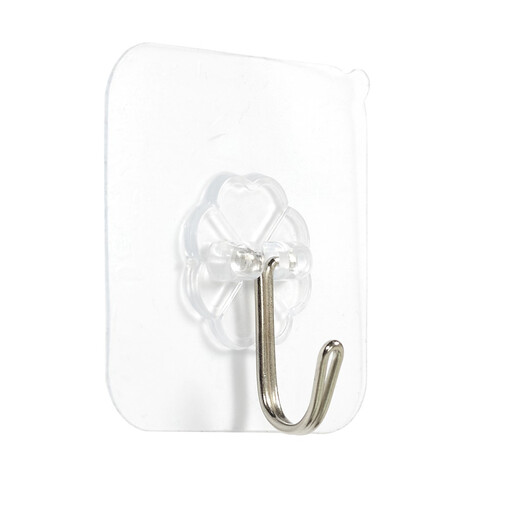
Why this suits this profile: This pack of 10 hooks is ideal for small jobs in a studio, hallway or bathroom, with a stated capacity of up to 5 kg per hook.
The weight capacity, the 24-hour wait before use and the surfaces that aren’t recommended are all stated on the product page, which helps prevent installation mistakes.
Pack of 10, repositionable adhesive and compatibility with smooth surfaces such as tiles, glass and mirrors.
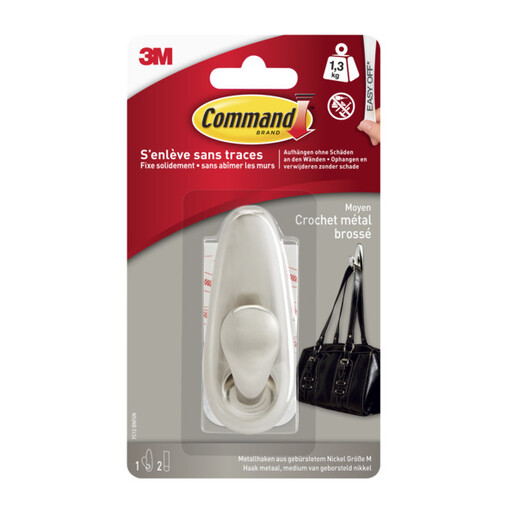
Why this suits this profile: Its brushed nickel finish blends into a well-decorated space, while offering adhesive installation for the living room, hallway or bathroom.
The product page states a maximum weight of 1.3 kg and recommends a clean, dry, non-textured surface – so you can choose based on your actual use.
Brushed nickel-plated metal, tool-free installation and replaceable adhesive strips, according to the manufacturer’s information.
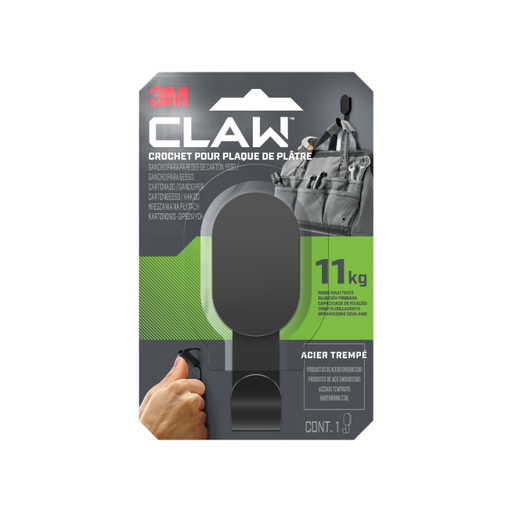
Why this suits this profile: This plasterboard wall hook is designed for heavier items like a mirror, coat or wall decoration, with a stated capacity of up to 11 kg.
This isn’t a simple adhesive fixing – its hardened steel claws are designed for dry walls, and its capacity is clearly stated.
Pressure-fit installation, no tools needed, and a design specifically for indoor plasterboard.
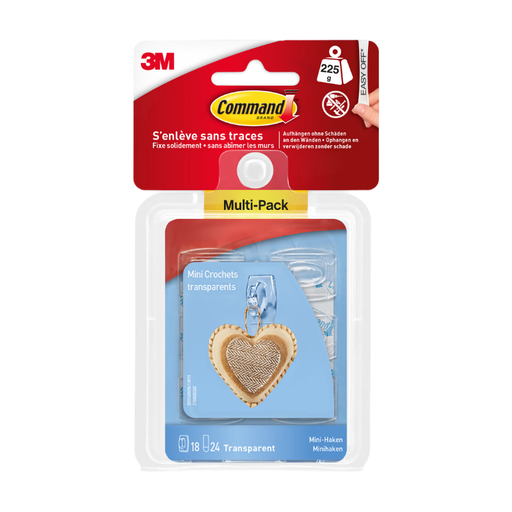
Why this suits this profile: Their transparent design is ideal for fairy lights, small accessories, keys and decorations that need to stay discreet.
The stated capacity of 225 g per hook makes it clear that this is a model for lightweight items, not a heavy-duty wall hook.
18 transparent hooks, self-adhesive application and intended for use on smooth indoor surfaces.
We’ve put together a full list, updated in real time, of products that fully meet these strict selection criteria and European safety regulations.
For a more decorative finish, the Hübsch Kinzo swivelling brass hook could also be considered as a metal wall hook. Its brass-plated iron structure measures 7 × 2.5 × 13 cm and weighs 80 g. However, its product page doesn’t describe it as an adhesive fixing – so check the included installation system before buying it for a no-drill project.
It’s generally not recommended, because the adhesive doesn’t stick as evenly and removing it can damage the surface. Stick to a smooth, clean, stable surface, and check the specific restrictions for the model you’re considering.
The waiting time depends on the product. Some instructions recommend waiting an hour, while the JE CHERCHE UNE IDEE repositionable hooks advise up to 24 hours for heavier items. Always follow the instructions that come with the model you buy.
No. Check the weight, the size of the frame, the material on the back and the maximum load of the pack. The medium and large strips in the Command range are designed for different uses, with stated capacities that can reach 5, 7 or 9 kg depending on the model.