
Livraison le jour même ou le lendemain

Qualité garantie

Débloquez vos offres de bienvenue: Livraison GRATUITE | Jusqu'à -80 % | 30 jours d'essai gratuits à JoyPlus
Téléchargez l'application
Hanging a picture frame, towel or bag without drilling into the wall is especially appealing to tenants, students and anyone who likes to regularly rearrange their home. But not all no-drill adhesive hooks are suitable for every wall or every object.
The phrase "heavy duty" alone doesn't guarantee a long-lasting fix. The type of surface, the actual weight of the item and the installation time are just as important. Here are the criteria to consider before buying, along with a selection of solutions for different uses.
The maximum weight stated by the manufacturer usually applies to very specific conditions: a smooth, clean, dry surface, with installation carried out exactly as recommended. It doesn't mean the same hook will support that weight on wallpaper, a dusty wall or damp tiles.
For a heavy item or one placed in a walkway, allow a safety margin. Spreading the weight across several fixing points is also a sensible precaution.
No-nail adhesive hooks are mainly designed for smooth indoor surfaces: glass, metal, tiles or paint that is firmly adhered. Textured walls, wallpaper, bare wood and freshly painted surfaces can reduce adhesion, and may even be damaged when the hook is removed.
Claw hooks for drywall are a different category. They don't rely on an adhesive strip – their claws insert directly into the plasterboard. So don't confuse them with removable, repositionable hooks.
Even when a product is described as removable, you must follow the manufacturer's instructions for taking it off. An adhesive strip is usually removed by pulling it slowly downwards, parallel to the wall, not towards you. A jerky movement can peel off a layer of paint.
Start by weighing the object you want to hang, then compare its weight to the maximum load stated for the model you're considering. Small storage hooks are fine for keys, accessories and lightweight decorations. For a coat, towel or bag, it's better to choose a sturdier size and take the strength of the surface into account.
For picture frames, adhesive frame strips spread the pressure across several areas. They stop the frame from pulling away from the wall, but must never be used beyond the recommended weight.
Before installing:
In a bathroom, steam and water splashes can reduce the hold of some bathroom hooks. Smooth tiles are often a reliable surface, provided they are perfectly dry at the time of installation.
Transparent plastic hooks are unobtrusive and work well for small items. Adhesive metal hooks, in stainless steel or with a nickel finish, give a more polished look in a hallway, kitchen or cloakroom.
The number of hooks is also worth considering. For organising several spaces, a pack of four, six, ten or eighteen hooks can be more practical and economical than buying them individually.
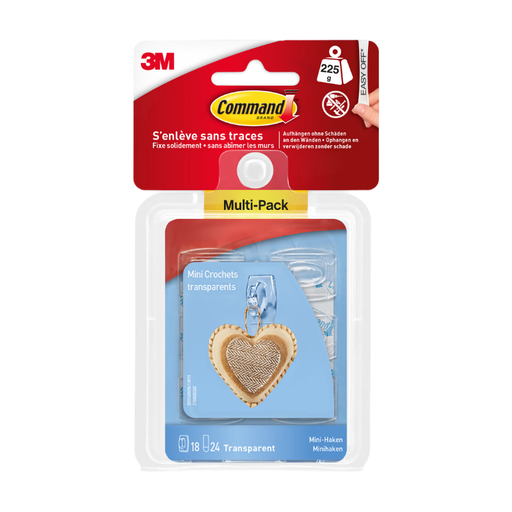
Why this choice suits this profile: This pack is ideal for first-time installations and organising several small spaces, such as the hallway, home office or kitchen.
The stated weight limit is 225 g per hook, which reduces the risk of accidentally hanging something too heavy on it.
Transparent self-adhesive hooks, sold in a pack of 18, for lightweight decorations, keys or fairy lights.
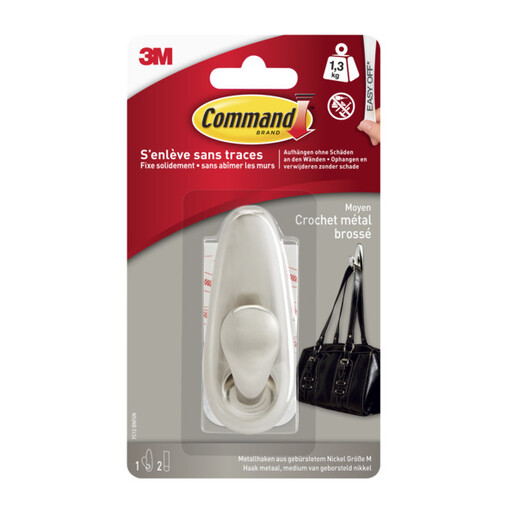
Why this choice suits this profile: Its brushed nickel finish blends easily into a well-thought-out décor, especially in a hallway, kitchen or bathroom.
Its specification states a maximum load of 1.3 kg and lists the compatible surfaces. This makes it easier to match the use to the wall.
A medium-sized metal hook, easy to install without tools and designed to be removed with a new adhesive strip if you want to reposition it.
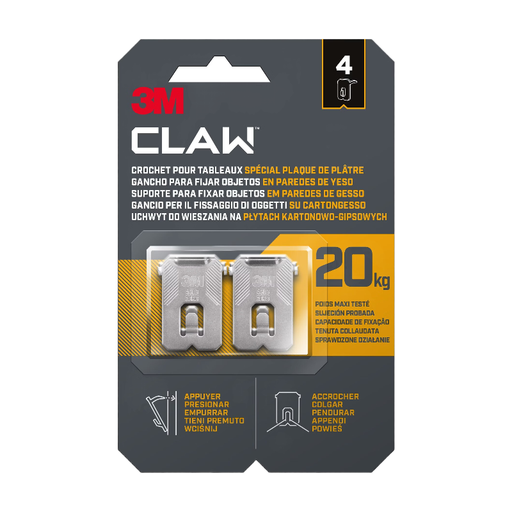
Why this choice suits this profile: This solution is for those who want to hang frames, mirrors or heavy decorations on a drywall partition.
This is not an adhesive hook – its hardened steel claws are designed for plasterboard. This distinction stops you from using it on an unsuitable surface.
A stated load capacity of up to 20 kg, thumb-press installation and a pack of four metal hooks.
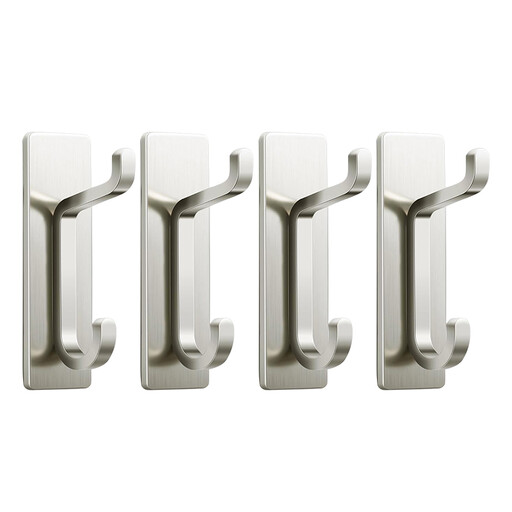
Why this choice suits this profile: This pack of four makes it easy to organise clothes, accessories or towels in several rooms, without any tools.
Its specification recommends surface mounting on a clean, dry area that is strong enough to support the weight. These conditions should be checked before installation.
A metal construction, silver finish and intended use in the living room, home office, cloakroom or hallway.
We've put together a comprehensive, real-time selection of products that meet these demanding criteria, while complying with European safety regulations.
This is generally not recommended, unless the product's specification explicitly allows it. The adhesive may not hold as well on a textured surface, and removing it could pull off the wallpaper. A painted, smooth, clean, dry wall offers much more predictable conditions.
The waiting time varies depending on the model. Some products require prolonged pressure, then a waiting period of around an hour, or even longer, before bearing weight. Always follow the instructions on the leaflet, and allow extra time for a heavy item or installation in a damp room.
"Repositionable" doesn't necessarily mean the adhesive can be reused indefinitely. Some hooks need a replacement strip. Also check the removal method and the compatibility of the new surface before moving the hook.