
Livraison le jour même ou le lendemain

Qualité garantie

Débloquez vos offres de bienvenue: Livraison GRATUITE | Jusqu'à -80 % | 30 jours d'essai gratuits à JoyPlus
Téléchargez l'application
Hanging a picture frame, installing an accessory in the bathroom, or giving your splashback a makeover without reaching for the drill can really simplify life – especially when you're renting. But behind the no-drill adhesive label, you'll find products that vary widely in both use and strength. A repair tape can't replace a repositionable paste, just as a hanging strip won't necessarily hold a heavy mirror.
Before you place your order, keep three pitfalls in mind.
Start by weighing the object, then allow a safety margin. For picture frames, posters or small accessories, adhesive pads, fixing paste or hanging strips may suffice. For a letterbox, mirror or shelf, it's better to choose a double-sided tape designed for mounting.
The load must also be properly distributed. A heavy object fixed to a small surface concentrates the stress and is more likely to come unstuck. For the Pattex No Nails, No Screws Double-Sided Roll, the product listing states a capacity of up to 120 kg per roll. This figure should be considered in relation to the length actually used, the nature of the surface and the manufacturer's instructions.
A painted wall, tiles, glass, metal, wood or plastic all offer different levels of adhesion. A porous, dusty or slightly crumbly surface can reduce the hold of a wall adhesive fixing.
Before application:
Polyethylene and polypropylene, in particular, can sometimes be difficult to stick to. It's therefore best to check compatibility in the product listing rather than relying on the material's appearance.
For temporary decoration, choose a residue-free removable adhesive, repositionable strips or fixing paste. When removing, do so slowly and avoid pulling sharply at a right angle to the wall.
In a kitchen or bathroom, carefully check the usage limits. Art3d tile stickers are described as splash-resistant and easy to clean, but their listing specifies they are not intended for use inside a shower cubicle or in areas subject to constant water flow. It is also recommended to wait 48 hours before heavy cleaning, to allow the adhesive to fully bond.
Some products are designed to stay in place permanently, while others can be removed, washed and reused. This possibility, however, depends on the condition of the adhesive and the cleanliness of the surfaces.
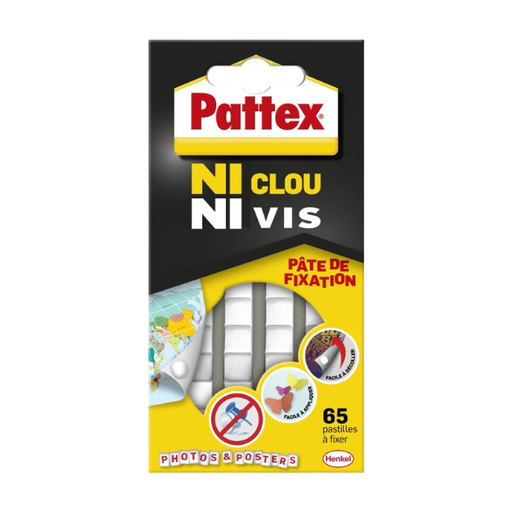
Why this choice suits this profile: The 65 pre-cut squares are ideal for posters, photos, cards and small decorations. No tools or cutting required.
Its repositionable formula avoids using a permanent adhesive for temporary decoration. However, it is not designed for damp, rough or textured surfaces.
Pre-cut squares, simple removal and a use perfectly suited to paper and very lightweight objects.
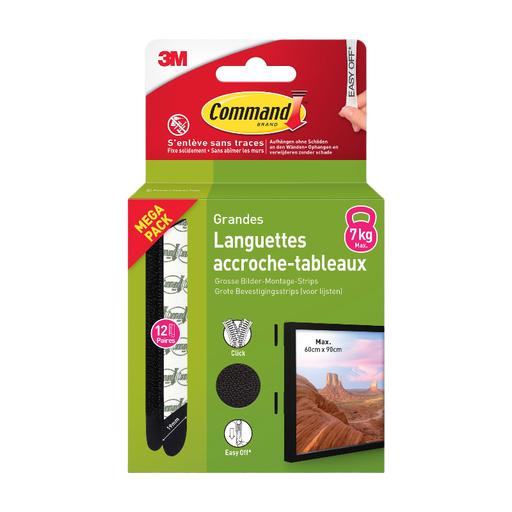
Why this choice suits this profile: This system is designed for those who regularly change their picture frames and want to protect their painted walls, tiles, glass or metal.
The stated load is limited to 7 kg and removal must follow the specified method. So there's no risk of confusing hanging a picture frame with fixing a heavy object.
An interlocking hanging system, the ability to reposition the strips and removal promised without holes or residue.
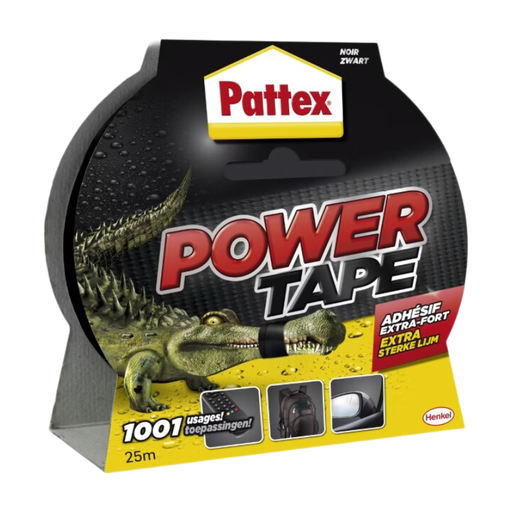
Why this choice suits this profile: This waterproof repair tape is suitable for household tasks, the garden, camping and jobs that require a quick fix.
Its three-layer construction and stated waterproofing make it intended for repair work, not removable wall decoration.
A 25 m roll, hand-tearable and a stated capacity of up to 17 kg according to the product listing.
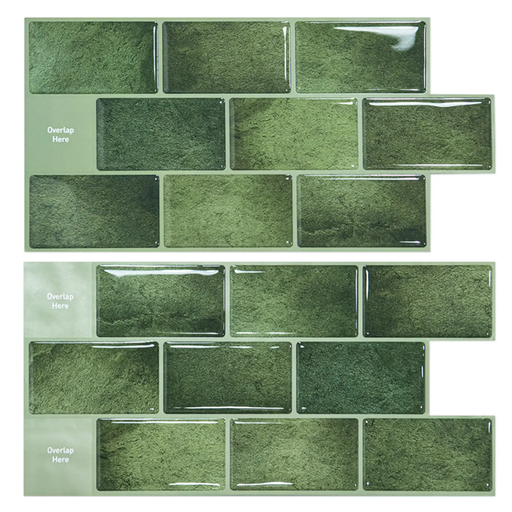
Why this choice suits this profile: These 30 × 30 cm panels let you revamp a splashback or a section of wall without any special tools.
The listing specifies its limitations with running water. Application must be on a flat, clean, dry surface, with 48 hours of bonding time before heavy cleaning.
3D embossed vinyl, a washable surface and a format that minimises the number of joins.
We've put together a comprehensive, real-time updated selection of products that meet these strict criteria as well as European safety requirements.
For a poster or photo, a repositionable fixing paste or adhesive pads are generally more suitable. For a picture frame, opt for hanging strips if its weight remains below the stated limit. On fragile paint, always test in a discreet spot.
The duration depends on the product, the load, temperature, humidity and the surface. A high-hold adhesive can stay in place for a long time, while a repositionable system is designed to be removed or moved. Surface preparation also plays a key role.
Yes, some tapes are moisture-resistant. However, this doesn't mean they can withstand immersion or continuous water flow. Check the product listing and avoid areas directly exposed to water, unless explicitly stated by the manufacturer.