What should you check before choosing?
Make a list of the tasks you do regularly, then compare it with the accessories included, the quantities you need to process and the space available.
Compact food processor
Worth considering: if you prepare smaller quantities and need to put the appliance away after use.
Trade-off: a compact design doesn’t guarantee a bowl suited to larger preparations or all the accessories you want.
Food processor with a large bowl
Worth considering: if you regularly prepare food for several people or knead large quantities.
Trade-off: check the usable capacity and how much space you’ll need to store and move the whole appliance.
Specialist appliance
Worth considering: if one or two tasks, such as blending or chopping small quantities, make up most of your use.
Trade-off: a mini chopper, for example, won’t replace the slicing discs or dough tool of a food processor that includes them.
| What to consider | What to check | My needs |
|---|
| Accessories |
Check which discs, blades, bowls or dough tools are actually included. Match each accessory to the tasks you do. |
I often grate and slice vegetables; the accessories for those tasks matter more to me than a long list of advertised functions. |
| Storage |
Measure the space for the appliance and allow room for its accessories. Check which accessories can be stored inside the bowl. |
My worktop space is limited, so I need somewhere to store the discs, blades and bowls too. |
| Quantities |
Distinguish between total and usable capacity. For kneading, look for the maximum dough quantity specified for the model. |
For family meals, I want to avoid having to make several batches. For smaller portions, I’ll also look at options with a small bowl or mini chopper. |
| Care and maintenance |
Check the cleaning instructions for each part, then look for information about spare parts and after-sales service for the model. |
If I use the appliance often, I want to be able to clean the parts I use and check what repair options are available before replacing it. |
Which branded models should you compare?
These examples show different configurations. The features listed apply to the specific models named, not to the brands’ entire ranges.
Kenwood
Kenwood France describes the MultiPro Go FDP23.140GY as an ultra-compact food processor.
- A model to consider when storage space is a priority.
- Check the accessories and capacity of the configuration you choose before matching it to your recipes.
Moulinex
For the Double Force Compact FP546811, Moulinex France lists a 3 L bowl, reversible discs, a dough tool, a mini chopper and an emulsifying disc.
- This configuration lets you match several accessories to a varied list of food preparation tasks.
- Check the exact model, as the accessories included with other Double Force configurations may differ.
Bosch
Bosch Electroménager France lists a 2.3 L bowl and a dough capacity of up to 800 g for the MCM3100W, compared with a 3.9 L bowl and a dough capacity of up to 1.5 kg for the MC812M844.
- These figures help you compare the two models based on the amount of dough you plan to make.
- Bowl capacity is only part of the picture: check the included accessories and storage requirements too.
Magimix
Magimix France lists a total capacity of 3.6 L, a usable capacity of 1.8 L and a weight of 11 kg for the CS5200XL Premium.
- The distinction between total and usable capacity makes it easier to compare the bowl with the quantities you prepare.
- Its weight is worth considering if you need to take the appliance out and put it away every time you use it.
Food preparation options on Joybuy
This selection includes food processors without a cooking function, as well as mini choppers for more specific tasks. Compare their features with your recipes: mini choppers aren’t alternatives to food processors with large bowls.
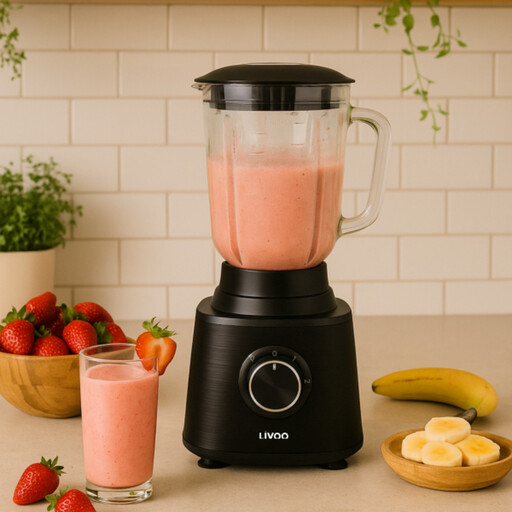 Image unavailable
Livoo DOP250N, 1.5 L food processor, 600 W, black
If you prepare smaller quantities, compare its 1.5 L bowl with the recipes you usually make. If you plan to grate, slice or knead, check which accessories come with the DOP250N and how much space you’ll need to store them.
View on Joybuy
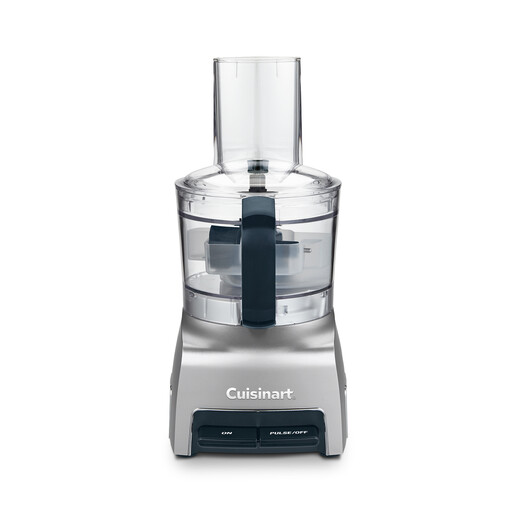 Image unavailable
Cuisinart FlexPrep FP5E, 1.1 L food processor
Compare the 1.1 L bowl with the size of your usual preparations, especially if you cook for several people. If you want to chop or grate, check the accessories included with this model; don’t assume it’s suitable for kneading too.
View on Joybuy
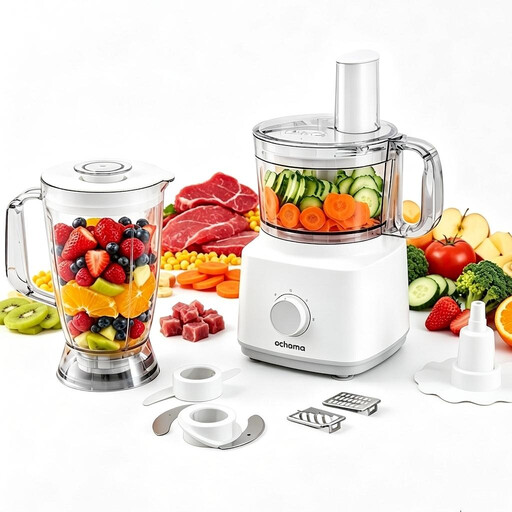 Image unavailable
ochama, 1.8 L food processor, 750 W
The product description mentions a blender, a chopper, and slicing and grating discs. If these are the tasks you have in mind, check the exact list of parts included, then make sure you have enough space to store the whole appliance.
View on Joybuy
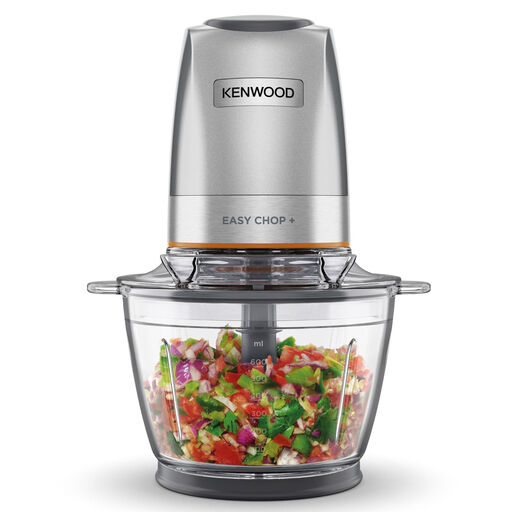 Image unavailable
Kenwood Easy Chop+ CHP62.400SI, silver mini chopper
Worth considering if chopping small quantities is your main task. Don’t choose this mini chopper instead of a food processor with discs or a dough tool if you mainly want to grate, slice or make large batches of dough.
View on Joybuy
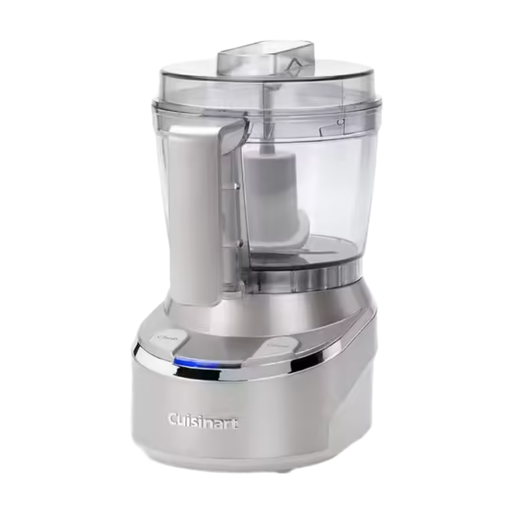 Image unavailable
Cuisinart RMC100E, silver cordless mini chopper
This cordless model is suited to occasional chopping rather than several different food preparation tasks. Check that its capacity and charging requirements suit how often you plan to use it.
View on Joybuy
Frequently asked questions
How do I choose the right bowl capacity?
Start with the quantities you prepare, and distinguish between total capacity, usable capacity and, if you knead, the maximum dough quantity. Magimix France lists a total capacity of 3.6 L but a usable capacity of 1.8 L for the CS5200XL Premium; Bosch Electroménager France lists a 3.9 L bowl and a dough capacity of up to 1.5 kg for the MC812M844. These figures don’t measure the same thing.
Does a compact food processor always take up little space when stored?
No: you also need to allow room for the accessories. UFC-Que Choisir points out that they take up space too, so measure the area you have available and check where the discs, blades and bowls for your chosen model will go.
Can all food processors make smoothies or juice?
No, it depends on which accessories are included. For example, UFC-Que Choisir’s testing protocol assesses smoothie-making when the food processor has a blender, and juice-making when it has the corresponding accessory. Check exactly what comes with the model before you buy.
What can I do with a food processor I no longer use?
According to ADEME, you could consider having it repaired, donating it or selling it, depending on its condition. If it needs to be thrown away, take it to a suitable collection point for small electrical appliances rather than putting it in your household rubbish.


