Older people and carers keeping an eye on added sugars
You want to avoid added sugar without assuming that sweetcorn contains no sugars at all. The ingredients list and the ‘of which sugars’ value answer two different questions.


If avoiding added sugar is your priority, choose sweetcorn whose ingredients list confirms this, then check the ‘of which sugars’ line: ‘no added sugar’ does not mean ‘sugar-free’. For an older person’s meals, compare the salt content and drained weight too, and check the storage instructions once opened. Sweetcorn is a side dish, not a complete meal.
You want to avoid added sugar without assuming that sweetcorn contains no sugars at all. The ingredients list and the ‘of which sugars’ value answer two different questions.
You compare the salt content of the sweetcorn with that of the other foods being served. If the person follows medical dietary advice, your choice of product should take this into account too.
You prefer a pack size that suits the portion you plan to serve, with clear instructions for storing any leftovers. Sweetcorn can be part of a varied meal, but it should not be the whole meal on its own.
Start with the ingredients list and nutrition information per 100 g, then choose a pack size that suits the amount you plan to serve.
| Criteria | What to check | Who it matters to |
|---|---|---|
| Added sugars and naturally occurring sugars | Check the ingredients and the ‘of which sugars’ line per 100 g. Don’t confuse ‘no added sugar’ with ‘sugar-free’. | I want to avoid added sugar while knowing how much naturally occurring sugar the sweetcorn contains. Around 46% of consumers might make this distinction a priority. |
| Salt | Compare the ‘salt’ value per 100 g and look for a no-added-salt option if this suits your needs. | If other foods in the meal contain salt, I want to take that into account when choosing. Salt would be the top priority for around 27% of consumers. |
| Pack size and serving | Check the drained weight and storage instructions once opened. If you’re comparing the meal’s nutritional content, check the fibre value too. | To serve a suitable portion without making leftovers difficult to manage, I check the pack size before choosing. Around 27% of consumers would prioritise this convenience. |
Sweetcorn can contain naturally occurring sugars. For example, Bonduelle lists 5.1 g of sugars per 100 g for its documented no-added-sugar product.
Check the ‘of which sugars’ line per 100 g as well as the ingredients list.
Two products can have different salt levels. The Bonduelle and Auchan Bio product information shown here lists 0.28 g and 0.46 g of salt per 100 g respectively.
Compare products on the same per-100 g basis and take the rest of the meal into account.
According to Manger Bouger, nutritional needs do not necessarily decrease after the age of 75. Sweetcorn on its own does not make a varied meal.
Serve it alongside other foods, taking the person’s preferences and needs into account. If their diet is medically supervised, ask their healthcare professional for advice.
Auchan notes that the composition of its organic sweetcorn can vary depending on the collection point and purchase date.
Check the ingredients, nutrition information and storage instructions once opened on the jar or tin you actually buy.
Bonduelle offers a no-added-sugar tinned sweetcorn product, available in a tin containing 340 g net weight and 285 g drained weight.
The range includes no-added-sugar sweetcorn, including a tin with a drained weight of 285 g.
E.Leclerc sells crunchy, no-added-sugar sweetcorn under the Notre Jardin brand, including a 285 g pack.
Auchan offers no-added-sugar organic sweetcorn in a jar with a drained weight of 230 g.
These tinned sweetcorn products let you choose between sweetcorn kernels and baby corn, as well as different pack sizes. If ‘no added sugar’ is a priority, check this claim on the exact product you’re buying: you can’t tell from the amount of sugars shown alone.
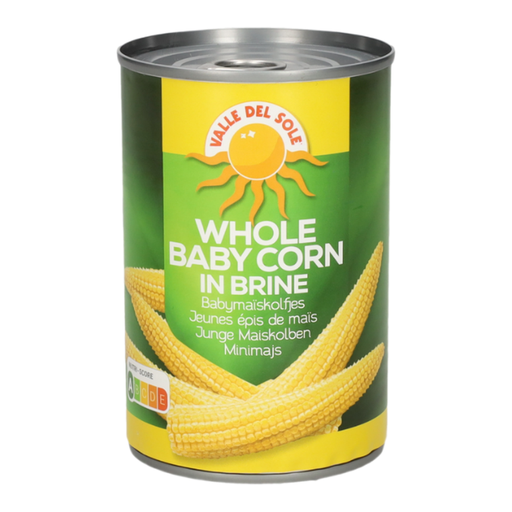 Image unavailable
For a dish that uses baby corn rather than sweetcorn kernels. The stated pack size is 400 g. Check the drained weight, ingredients and storage instructions once opened before planning your portions.
 Image unavailable
For serving sweetcorn kernels as a side, in a stated 285 g pack. Check the claims about sugars and the storage instructions once opened on this specific product.
 Image unavailable
For planning a serving of sweetcorn kernels from a stated 570 g pack. If you don’t use the whole tin at once, follow the storage instructions once opened. The name ‘Supersweet’ doesn’t, by itself, tell you whether sugar has been added.
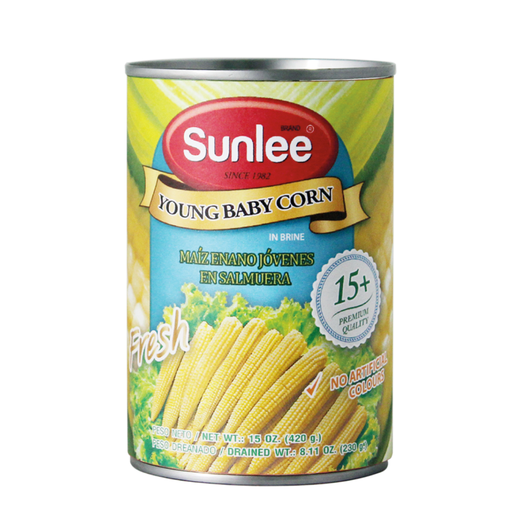 Image unavailable
For adding baby corn to a dish instead of sweetcorn kernels. The stated pack size is 420 g. Check the ingredients, nutrition information and preparation instructions on the tin.
 Image unavailable
For splitting sweetcorn kernels between two 140 g tins instead of opening a larger pack. The product name identifies it as organic; check the sugars, salt and storage instructions once opened separately.
No. This claim doesn’t rule out naturally occurring sugars in sweetcorn. Bonduelle lists 5.1 g of sugars per 100 g for its documented no-added-sugar product. Check the ‘of which sugars’ line for the product you’re thinking of buying.
No. It only tells you about one aspect of the product. Manger Bouger points out that nutritional needs do not necessarily decrease after the age of 75. Choose sweetcorn as part of a varied meal and, if the person’s diet is medically supervised, follow advice tailored to their needs.
Yes, especially if other parts of the meal already contain salt. Compare the ‘salt’ line per 100 g across products. Anses notes that excessive salt consumption is a risk factor for high blood pressure.
Follow the storage instructions on the tin or jar you bought. The Bonduelle and Auchan Bio product information referred to here recommends keeping the products in the fridge and using them within 48 hours or two days. Check the instructions on the container you actually opened.