People comparing sugar figures
You’re looking for sweetcorn with no added sugar, but also want to check the sugar content per 100 g to distinguish between no added sugar and the product’s overall sugar content.


When choosing tinned sweetcorn for lactose-free shopping, check the ingredients list and milk-related statements on the exact product packaging, then compare the ‘of which sugars’ figure per 100 g. ‘No added sugar’ does not mean the sweetcorn contains no sugars. The pack size and storage instructions after opening also matter if you won’t use the whole tin.
You’re looking for sweetcorn with no added sugar, but also want to check the sugar content per 100 g to distinguish between no added sugar and the product’s overall sugar content.
You prefer a simple recipe and check the ingredients and milk-related statements on the product you’re buying, rather than assuming its ingredients are the same as those of another variant.
You might add it to a salad or serve it as a side from time to time. In that case, the pack size and storage instructions after opening may influence your choice.
Start with the ingredients in the specific product, then compare its nutritional information with that of sweetcorn of the same type, using the same 100 g basis. Tinned sweetcorn kernels and baby corn are two different products, so their figures alone don’t make them like-for-like alternatives.
| Criteria | What to check | Who it matters to |
|---|---|---|
| Sugars listed | The ‘no added sugar’ statement and the ‘of which sugars’ figure per 100 g, comparing like-for-like products. | I want to avoid confusing a recipe with no added sugar with a product that contains no sugars. Around 42% of consumers would reportedly rank this distinction as their main concern. |
| Ingredients and milk | The ingredients list and milk-related statements on the packaging of the product you’ve chosen. | For my lactose-free shopping, I can’t rely on the ingredients of another variant from the same brand. This check would be the priority for around 33% of consumers. |
| Pack size and leftovers | The quantity, salt per 100 g if that matters to you, and the instructions for after opening. | If I only use a little sweetcorn at a time, I look for a pack size I can finish while following the storage instructions. Around 25% of consumers would reportedly prioritise these practical considerations. |
This statement doesn’t remove the sugars naturally present. The product pages for the Bonduelle and Auchan sweetcorn variants considered here list between 4.9 g and 5.2 g of sugars per 100 g.
Check the ‘of which sugars’ figure per 100 g and compare products of the same type, rather than relying on the statement on the front of the pack.
Ingredients and precautionary statements can vary. A Joybuy product page for a different Bonduelle Maïs Supersweet product mentions facilities that handle milk; this information doesn’t apply to all Bonduelle products.
Check the ingredients and allergen information on the exact product every time you buy it. The absence of a milk ingredient from the list alone doesn’t guarantee that a product is safe for someone with a milk allergy.
The Auchan Bio and d’Aucy product pages for the pack sizes considered here say to transfer the sweetcorn to a suitable container after opening, refrigerate it and eat it within two days.
If you only use sweetcorn occasionally, compare smaller pack sizes. If you choose a larger amount, plan when you’ll use the rest and follow the storage instructions on the packaging.
The information below applies to the specific products described, not to every product from each brand.
The no-added-sugar sweetcorn product described by Bonduelle contains sweetcorn, water and salt. Auchan describes another version in a 2 × 285 g pack.
The no-added-sugar tinned sweetcorn kernels described by Auchan come in a 2 × 140 g pack.
The no-added-sugar organic sweetcorn described by Auchan is available in a 2 × 140 g pack.
Carrefour sells sweetcorn products labelled ‘no added sugar’ under both brands, including an organic variant.
Both of these products are tinned baby corn. They may suit recipes that call for corn, but they shouldn’t be confused with the ‘no added sugar’ tinned sweetcorn kernels discussed above. For lactose-free shopping, check the ingredients and milk-related statements on the packaging you buy.
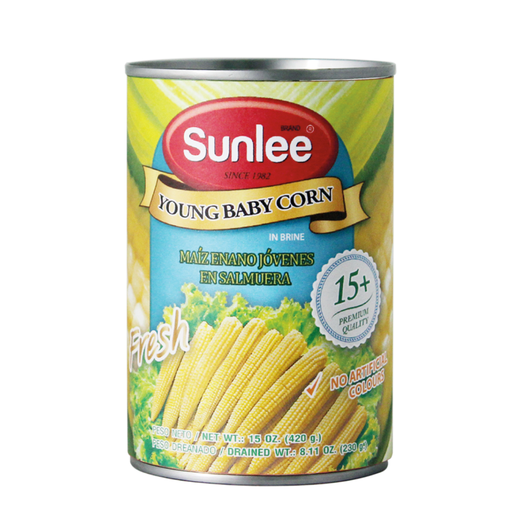 Image unavailable
Worth considering if you’re looking for baby corn rather than sweetcorn kernels. The stated pack size is 420 g; if you don’t use it all, check the storage instructions on the packaging.
For lactose-free shopping, check the ingredients list and milk-related statements for this product before buying.
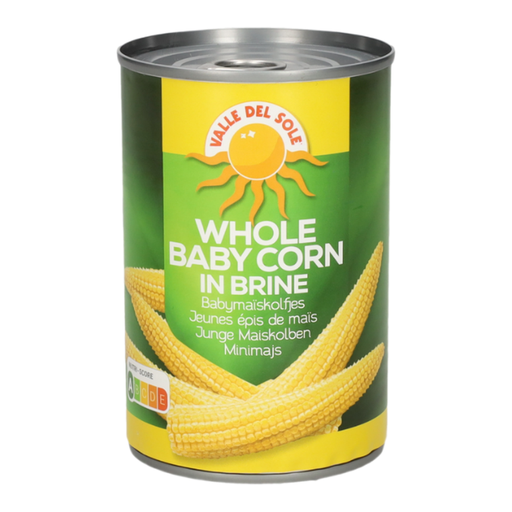 Image unavailable
Another baby corn option if it suits your recipes. The stated pack size is 400 g, so consider how much you’ll use and check the instructions for after opening.
Before adding it to your lactose-free shopping, check the ingredients and milk-related statements on the exact product packaging.
No. This statement doesn’t mean the sweetcorn contains no naturally occurring sugars. Bonduelle lists 5.1 g of sugars per 100 g for the product considered. To compare products of the same type, check the ‘of which sugars’ figure per 100 g.
Read the ingredients and milk-related statements on the specific product and pack size you plan to buy. The sweetcorn recipes considered from Bonduelle, Auchan Bio and d’Aucy list sweetcorn, water and salt, but this doesn’t apply to every variant and isn’t a guarantee for someone with a milk allergy.
For the Auchan Bio and d’Aucy products described here, transfer the contents to a suitable container, refrigerate and eat within two days. If you buy a different product, follow the instructions on its packaging.