People avoiding added sugar
For a salad, side dish or Easter buffet, you’re looking for a recipe with no added sugar while bearing in mind that sweetcorn naturally contains sugars.


For Easter meals, look for a recipe with no added sugar, then compare the ‘of which sugars’ figure per 100 g: ‘no added sugars’ does not mean the sweetcorn contains no sugars at all. If salt, organic certification or serving size matter too, check each of these details for the product you choose.
For a salad, side dish or Easter buffet, you’re looking for a recipe with no added sugar while bearing in mind that sweetcorn naturally contains sugars.
You check the ‘of which sugars’ figure per 100 g, as two products labelled ‘no added sugars’ can still have different total sugar contents.
You want an organic product and check separately whether it contains salt, rather than assuming anything about its ingredients based only on the sugar claim.
When preparing an Easter salad or buffet, first distinguish between no added sugar and total sugar content. Then check the salt and drained weight to suit your meal.
| Criteria | What to check | Who it matters to |
|---|---|---|
| Added sugars | Read the exact claim and the ingredients list for the product you choose. | For my Easter salad, I want to avoid a recipe with added sugar without assuming that sweetcorn contains no sugars at all; around 40% of consumers would put this criterion first. |
| Total sugars | Compare the ‘of which sugars’ figure per 100 g on the labels of the products you’re considering. | Even if two tins are labelled ‘no added sugars’, I want to know their total sugar content; this would be the priority for around 30% of consumers. |
| Organic and salt | Check for an organic claim and, if needed, the ‘no salt’ claim and the salt content. | If I’m looking for organic sweetcorn while avoiding added salt, these two features matter more than the pack size; they would be the main requirement for around 20% of consumers. |
| Pack size | Choose a drained weight that suits the meal and read the storage instructions after opening. | For a buffet, I want to plan how much sweetcorn will actually be served once drained; pack size would come first for around 10% of consumers. |
Sweetcorn can contain naturally occurring sugars. Bonduelle states that its standard no-added-sugar product contains 5.1 g of sugars per 100 g.
Read both the ingredients list and the ‘of which sugars’ figure per 100 g.
Pack size affects how much you can serve: the products reviewed include a drained weight of 285 g for standard Bonduelle and 230 g for the Auchan Bio jar.
Compare the sugars per 100 g, then choose a drained weight to suit the meal you’re planning.
These are two separate features. The Carrefour product page for the Géant Vert organic product reviewed explicitly states ‘no salt’ and ‘no added sugars’.
If salt matters to your choice, check the claim and salt content on the packaging for the product in question.
Auchan notes that the ingredients in its organic sweetcorn jar may vary depending on the drive and purchase date.
When you collect your order or have it delivered, check the ingredients and nutritional information on the product you receive.
The range reviewed includes standard and organic sweetcorn, both labelled ‘no added sugars’.
One organic product reviewed carries both the ‘no salt’ and ‘no added sugars’ claims.
The product reviewed is a 230 g-drained-weight jar of organic sweetcorn labelled ‘no added sugars’.
These sweetcorn products could work well in Easter salads and as side dishes. To choose based on added sugars or salt, check the claims and ingredients for the variant you buy.
 Image unavailable
A pack of sweetcorn kernels to consider for an Easter salad or side dish. Check the tin for the sugar claim and whether it contains salt.
 Image unavailable
The two tins let you open the sweetcorn in two batches for planned meals. If you’re also looking for no added sugars, check this claim and the ‘of which sugars’ figure on the packaging.
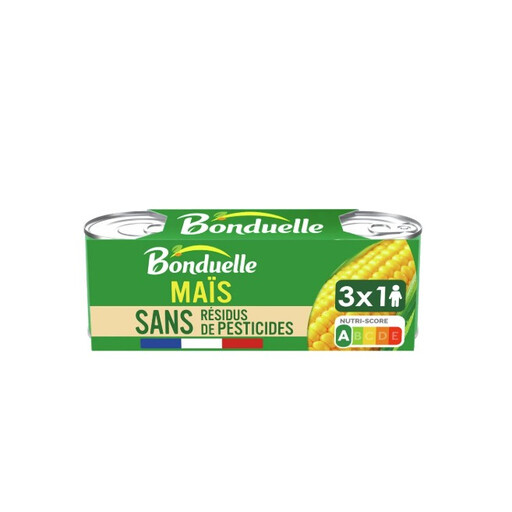 Image unavailable
This pack could suit you if you’re planning several sweetcorn-based dishes. For this variant, check the tins for the ‘no added sugars’ claim and drained weight before deciding how much you’ll need for the meal.
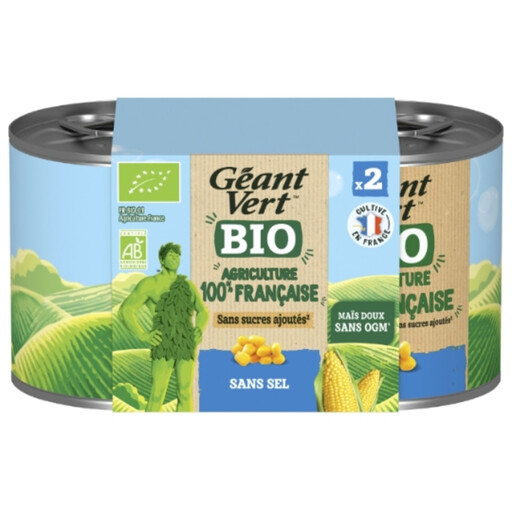 Image unavailable
An option to consider if you’re looking for organic tinned sweetcorn to serve as a side dish. If avoiding salt is essential, check the ingredients and salt content on the tins: the information provided for this variant doesn’t match.
 Image unavailable
This 400 g pack could work well for a dish to share. If your choice depends on added sugars, read the exact claim and ingredients on the packaging, then compare the ‘of which sugars’ figure per 100 g.
No. The standard Bonduelle product reviewed is labelled ‘no added sugars’, but Bonduelle states that it contains 5.1 g of naturally occurring sugars per 100 g. Check the ‘of which sugars’ figure if total sugar content matters to your choice.
Compare their nutritional values per 100 g, then check the drained weight separately to work out how much to serve. The DGCCRF states that the nutrition declaration for the relevant food products is given per 100 g or 100 ml.
No, these are separate claims. The DGCCRF notes that nutrition claims are governed by Regulation (EC) No 1924/2006. When choosing your sweetcorn, check the exact claim, ingredients and nutritional values for the product you buy.
Follow the instructions for the product you buy. For the standard product reviewed, Bonduelle recommends storing it at no more than 4 °C and consuming it within 48 hours of opening. The product page for the Auchan Bio jar reviewed says to refrigerate it in its juice and consume it within two days.