Households avoiding added sugars
You’re looking for a spread to keep in the cupboard and are happy for a no added sugar recipe to contain naturally occurring sugars.


A “no added sugar” spread is not necessarily “sugar-free”: the products reviewed still contain sugars, and some use maltitol. When choosing a jar, compare the “of which sugars” figure per 100 g, then check the ingredients, any polyols and the allergens. If you need a product with no sugars, don’t rely on the claim on the front of the pack alone.
You’re looking for a spread to keep in the cupboard and are happy for a no added sugar recipe to contain naturally occurring sugars.
You want to tell maltitol recipes apart from those whose ingredients list does not declare a sweetener, and check the warnings on the jar you choose.
You check sugars, fat, energy and allergens per 100 g rather than deciding based on a single claim on the packaging.
Before stocking your cupboard, first decide what you mean by “sugar-free”, then compare recipes that meet your requirements.
| Criteria | What to check | Who is it for? |
|---|---|---|
| Added or naturally occurring sugars | Read the ingredients list and the “of which sugars” figure per 100 g: “no added sugars” does not mean “sugar-free”. | When choosing a jar for breakfast toast, I first want to know whether the recipe contains sugars, even if none have been added. Around 42% of consumers rank this distinction as their top priority. |
| Maltitol and polyols | Look for maltitol, the amount of polyols stated and any warning about excessive consumption. | Before stocking up on several jars, I want to know whether the recipe uses a sweetener and whether I’m happy with the warning. This is the top concern for around 33% of consumers. |
| Nutrition information and allergens | Compare energy, fat and sugars per 100 g; check declared allergens separately. | A claim about sugars isn’t enough to help me choose: I also need to compare the nutrition information and check for ingredients that matter to me. Around 25% of consumers make this their priority. |
Auchan’s product pages list 8.2 g and 8.1 g of sugars per 100 g for Gerblé and Karéléa spreads respectively, despite the “no added sugars” claim.
If sugar content is important to you, check the “of which sugars” figure for the exact product before choosing.
Auchan’s product pages list 36 g of polyols per 100 g for Gerblé and 44 g for Karéléa. The Karéléa product page also carries a warning about the possible laxative effects of excessive consumption.
Check the ingredients, nutrition information and warnings before buying several jars of the same recipe.
Carrefour and Auchan’s product pages show 433 kcal per 100 g for Lucien Georgelin spread, 507 kcal for Gerblé and 476 kcal for Karéléa.
To compare these products, check the energy and fat content per 100 g too.
A Nutri-Score rating on its own doesn’t tell you how much sugar is in the jar. The DGCCRF reminds shoppers that prepacked foods must carry a nutrition declaration.
Check the “of which sugars” figure and the ingredients list, even if the packaging displays a Nutri-Score.
These examples relate to specific spreads: the details of one recipe do not apply to every product from the same brand.
Carrefour’s product page features a 400 g jar of French cocoa and hazelnut spread with no added sugars.
Auchan’s product page describes a 200 g jar of no added sugar hazelnut and cocoa spread containing maltitol.
Auchan’s product page features a 400 g pack of no added sugar roasted hazelnut spread containing maltitol.
These two Joybuy products are no added sugar fruit spreads, not cocoa and hazelnut spreads. They may suit you if you’re looking for a fruity topping for toast, but not if you need a sugar-free product.
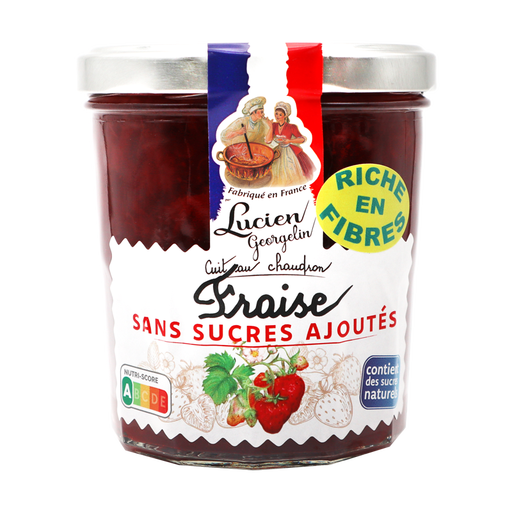 Image unavailable
A fruity topping for bread and toast. It contains sugars despite having no added sugars, so don’t choose it as a “sugar-free” product. Once opened, keep it in the fridge and use within 10 days.
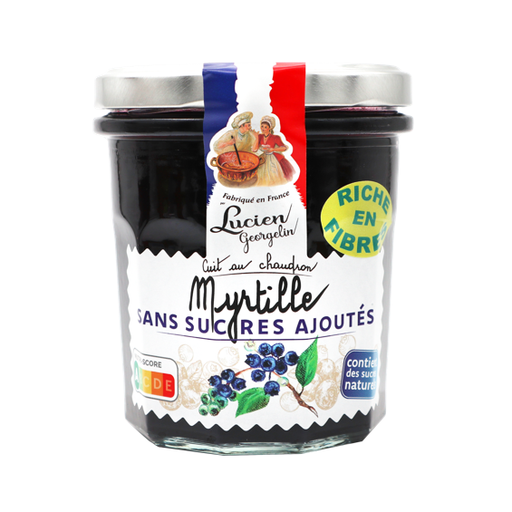 Image unavailable
A fruity spread for bread or toast. It contains naturally occurring sugars, so it isn’t suitable if you’re looking for a “sugar-free” product. Once opened, keep it in the fridge and use within 10 days.
No. A no added sugar spread may contain naturally occurring sugars. To find out how much is in the jar you’re considering, check the “of which sugars” figure per 100 g.
Maltitol is a sweetener from the polyol family, found in the Gerblé and Karéléa spreads reviewed. Its presence does not mean these recipes are sugar-free; the Karéléa label also warns that excessive consumption may have a laxative effect.
No. A Nutri-Score rating does not replace the “of which sugars” figure per 100 g or the ingredients list. The DGCCRF reminds shoppers that prepacked foods must carry a nutrition declaration.
Follow the instructions on the jar you choose, as they vary by recipe. Auchan’s product pages say to store Gerblé at room temperature, between 17 and 23 °C, and recommend keeping Karéléa away from heat and moisture, ideally between 18 and 22 °C, without refrigeration.