Hosts avoiding added sugars
You’d like to serve a sweet spread without choosing a recipe with added sugars. The wording on the jar doesn’t tell you its total sugar content, so check the nutritional information per 100 g and the ingredients list too.


For drinks on the terrace, a spread labelled ‘no added sugar’ is a good choice if your priority is avoiding added sugars, but not if you want a product with no sugars at all: the hazelnut and cocoa spreads checked at Auchan still contain 8.1 to 8.5 g of sugars per 100 g. Then compare the recipes based on whether they contain maltitol, your guests’ allergens and the storage instructions for the jar you choose.
You’d like to serve a sweet spread without choosing a recipe with added sugars. The wording on the jar doesn’t tell you its total sugar content, so check the nutritional information per 100 g and the ingredients list too.
A recipe containing maltitol may suit you, provided you check the amount of polyols listed and any product-specific warnings. The Gerblé and Karéléa product pages at Auchan illustrate this trade-off.
Before sharing the jar, check its ingredients and any precautionary allergen information. Depending on the recipes reviewed, you may need to check for hazelnuts, milk, peanuts, soya or gluten. This information varies from one product to another.
To compare products for sharing on the terrace, start with your main priority: the wording about sugars, sweeteners, or the needs of your guests and how you plan to serve it.
| What matters to you | What to check | Who is it for? |
|---|---|---|
| Added sugars or no sugars | Compare the exact wording with the ‘of which sugars’ line per 100 g. A recipe with no added sugars may still contain sugars. | If you want to avoid added sugars in your spreads, make sure you distinguish this claim from having no sugars at all. This is the main concern for around 42% of consumers in this group. |
| Sweeteners and polyols | Look for maltitol in the ingredients, then check the amount of polyols and any warning on the jar. | If you’re sharing a spread, check whether your guests are happy with polyols before choosing a maltitol recipe; around 33% of consumers prioritise this trade-off. |
| Allergens and serving | Check the allergens and any possible traces for the specific product, as well as its storage instructions. | When you have several guests around the table, you need to be able to serve a product that suits their dietary restrictions and store it according to its label. This is a priority for around 25% of consumers. |
This distinction matters if you’re looking for a product with no sugars at all. The Auchan product pages checked show 8.5 g of sugars per 100 g for one Lucien Georgelin product, 8.2 g for Gerblé and 8.1 g for Karéléa, despite their ‘no added sugar’ claims.
Before you buy, compare the claim on the jar with the ‘of which sugars’ line in its nutritional information.
The Auchan product pages list 36 g of polyols per 100 g for Gerblé and 44 g for Karéléa. The latter also carries a warning about the possible laxative effects of excessive consumption.
Check the ingredients and warning on the specific product. If any of your guests avoid polyols, have another spread ready to share.
In France, Nutri-Score is still voluntary, according to the Ministry of the Economy. Whether it appears on a product or not, it doesn’t replace checking the sugars, ingredients and allergens.
If it appears on the product, consider it alongside the other label information, particularly the nutritional declaration per 100 g.
The instructions for the Karéléa product checked at Auchan say to store it away from heat and moisture, ideally between 18 and 22 °C. These instructions apply to this product only.
When serving on the terrace, follow the instructions on the jar you’ve bought and keep it in the shade if the label says to.
These products offer a way to compare specific recipes; a brand name alone doesn’t tell you what all its products contain.
The hazelnut and cocoa products labelled ‘no added sugar’ and checked at Carrefour and Auchan offer a useful comparison if you prefer an ingredients list without declared sweeteners.
The hazelnut and cocoa spread labelled ‘no added sugar’ and checked at Auchan contains maltitol.
The roasted hazelnut spread checked at Auchan is labelled ‘no added sugar’ and contains maltitol.
The 400 g hazelnut and cocoa spread checked at Carrefour offers a comparison with recipes labelled ‘no added sugar’.
For toast served with drinks, this selection brings together fruit spreads and a peanut butter. Their flavours and ingredients differ from hazelnut and cocoa spreads. Don’t confuse a ‘no added sugar’ claim with having no sugars at all.
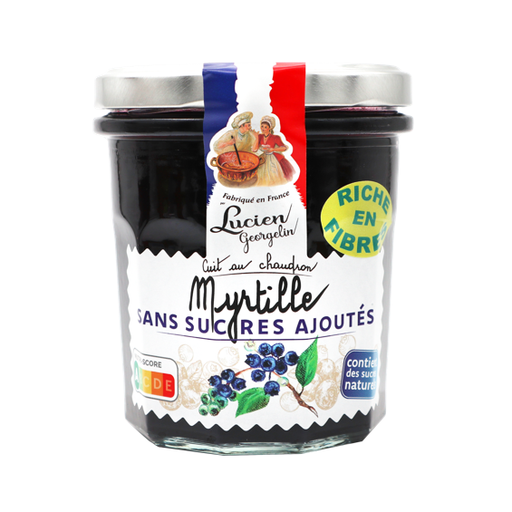 Image unavailable
Consider this for fruity toast rather than as an alternative to hazelnut and cocoa spread. ‘No added sugar’ doesn’t mean this spread contains no sugars. If you’re serving it after opening, follow the product’s instructions to store it in the fridge.
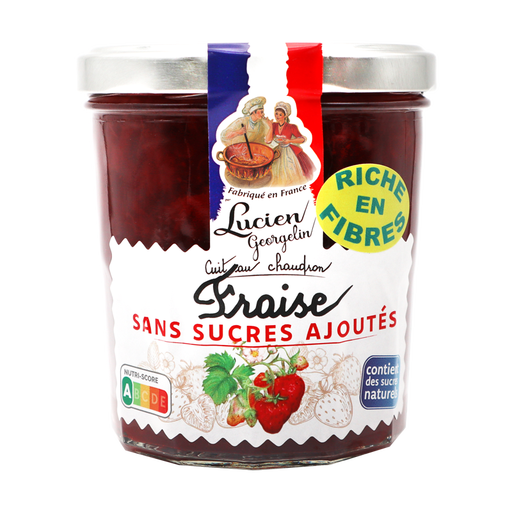 Image unavailable
This spread is a good choice if you’re looking for a fruity topping and want to serve strawberries. It still contains sugars, though, and should be kept in the fridge after opening.
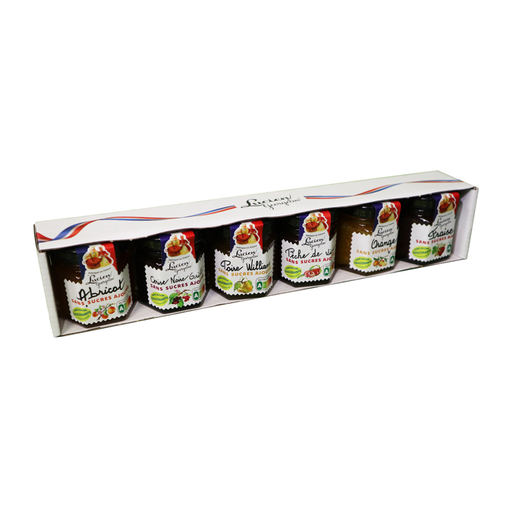 Image unavailable
The six small jars let you offer a choice of fruit spread flavours. Sugar content varies by flavour, so check each label before comparing them, particularly the figures for the strawberry spread. Remember to follow the storage instructions after opening too.
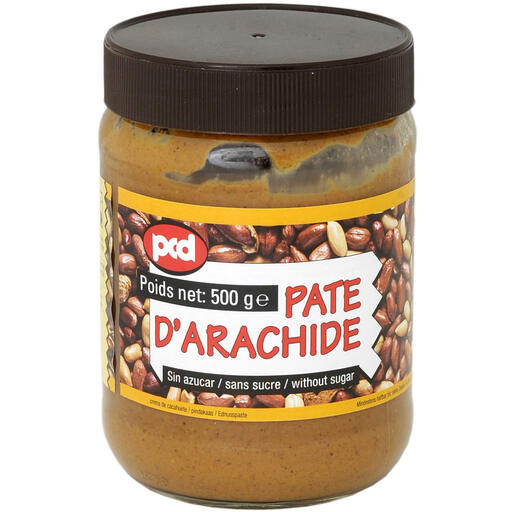 Image unavailable
Consider this if you’d prefer peanut butter on your toast to fruit or hazelnut and cocoa spreads. The description says it has no added sugars, but that doesn’t mean it contains no sugars at all, so check the ‘of which sugars’ line on the jar. Its peanut content is also important if you’re sharing it.
No. The Ministry of the Economy says that displaying it is still voluntary in France. For most prepacked foods, the nutritional declaration lets you check sugars and fat per 100 g, among other things. A Nutri-Score on the packaging doesn’t replace these figures or the ingredients list.
Yes. The claim doesn’t mean ‘sugar-free’: sugars may be present in the ingredients. The Lucien Georgelin, Gerblé and Karéléa hazelnut and cocoa products checked at Auchan list 8.5 g, 8.2 g and 8.1 g of sugars per 100 g respectively.
Don’t assume so when you’re sharing food with guests. The Gerblé and Karéléa products checked contain maltitol, and Karéléa warns that excessive consumption may have a laxative effect. Check the allergens and any traces listed on each jar separately.
Follow the storage instructions for the product you’re serving, particularly after opening. The Auchan product page for Karéléa says to store it away from heat and moisture, ideally between 18 and 22 °C. This guidance doesn’t automatically apply to other products.