Shoppers keeping an eye on added sugars
You’re choosing a jar for the week’s breakfasts and want to tell the difference between a no-added-sugar recipe and one that simply contains less sugar.


For your weekly shop, choose a spread with no added sugars or sweeteners if you want to avoid both: Lucien Georgelin makes a recipe of this kind. If you’re happy with maltitol, Karéléa and Gerblé offer other no-added-sugar options. In either case, this claim doesn’t mean ‘sugar-free’: compare the ‘of which sugars’ figure per 100 g and check the allergens.
You’re choosing a jar for the week’s breakfasts and want to tell the difference between a no-added-sugar recipe and one that simply contains less sugar.
You want to check the ingredients list, as a spread with no added sugars may still contain maltitol.
You compare pack sizes and ingredients, then check that your chosen jar is available at your store or for your collection slot.
Start with the sugar claim and ingredients list, then check the allergens and choose a size that suits your shop.
| What matters | What to check | Who it matters to |
|---|---|---|
| Sugar content | Tell the difference between ‘no added sugars’ and ‘sugar-free’, then compare the ‘of which sugars’ figure per 100 g. | For my breakfasts, I want to know the declared sugar content rather than relying only on the claim on the front of the jar. Around 40% of shoppers make this their top priority. |
| Sweeteners | Read the ingredients list to spot maltitol, and check the ‘polyols’ figure in the nutrition information if it’s provided. | A no-added-sugar recipe isn’t right for me if it contains a sweetener I want to avoid. Around 30% of shoppers would make the absence of sweeteners their top priority. |
| Allergens | Check the allergens listed on the jar and any recipe-specific warnings. | Before adding a jar to the family shop, I need to make sure its ingredients are suitable for everyone who’ll eat it. Around 20% of shoppers put this first. |
| Weekly shop | Compare the pack size, availability at your chosen store and storage instructions after opening. | I want a size that suits how we use it and a jar that’s available for my collection slot. For around 10% of shoppers, getting the logistics right comes before everything else. |
A spread with no added sugars may still contain sugars that occur naturally in its ingredients.
Check the exact claim and the ‘of which sugars’ figure per 100 g before comparing two jars.
According to the product information available, Karéléa and Gerblé recipes contain maltitol. Gerblé’s Auchan listing also gives 36 g of polyols per 100 g.
If you want to avoid sweeteners, check the ingredients list for every no-added-sugar recipe.
In France, the decree published by Légifrance describes Nutri-Score as a nutrition labelling scheme recommended by the government, rather than a general requirement. If it appears on the jar, it doesn’t replace checking the ingredients and allergens.
Use it as an additional guide, then check the sugar claim and nutrition information.
A product listed on a retailer’s website may not be available at your selected collection store.
Check that it’s available at your store and for your collection slot before completing your shop.
A hazelnut recipe described by the brand as having no added sugars or sweeteners.
A no-added-sugar spread made with roasted hazelnuts, for shoppers who are happy with a recipe containing sweeteners.
A no-added-sugar hazelnut and cocoa spread, available in a 200 g jar.
For breakfast toast, this selection features peanut butter. Its ingredients differ from the cocoa and hazelnut spreads mentioned above.
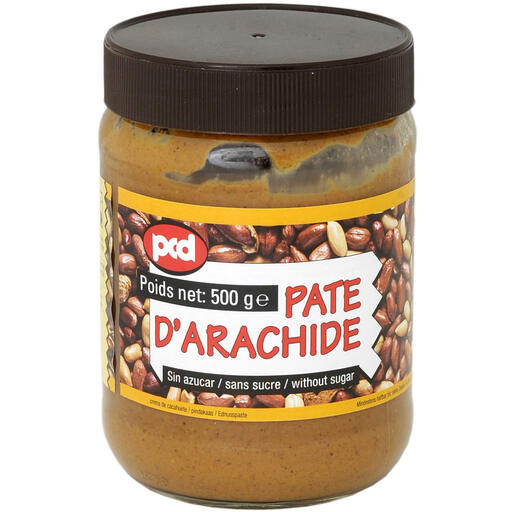 Image unavailable
Another option for toast if you’re looking for a peanut-based spread rather than a cocoa and hazelnut recipe. The product description lists roasted peanuts as the only ingredient and says it has no added sugars. The jar contains peanuts, so check the label if you need to avoid an allergen, and refer to the ‘of which sugars’ figure per 100 g if it’s relevant to your goals.
No. A recipe with no added sugars may contain sugars that occur naturally in its ingredients, as Carrefour explains on its Lucien Georgelin product page. When comparing jars, also check the ‘of which sugars’ figure per 100 g.
No. The French decree published by Légifrance describes it as a nutrition labelling scheme recommended by the government, rather than a general requirement for every jar. If it’s displayed, use it alongside the ingredients list and nutrition information.
Read the ingredients list: the product information for Karéléa and Gerblé recipes lists maltitol. Lucien Georgelin describes its no-added-sugar recipe as also containing no sweeteners.
Follow the instructions for the product you’ve bought. For Lucien Georgelin spread, Auchan notes that separation can occur; simply stir the contents to bring them back together.