Parents keeping an eye on added sugars
You make sandwiches for your child to take to school and want to distinguish between no added sugar and the amount of sugars shown in the nutritional information.


For a school lunchbox, distinguish between ‘no added sugar’ and ‘sugar-free’: the former does not rule out naturally occurring sugars. Compare the ‘of which sugars’ figure per 100 g, the ingredients and the allergens on the exact jar you’re considering. Nutri-Score, which Santé publique France says is voluntary, does not replace these checks.
You make sandwiches for your child to take to school and want to distinguish between no added sugar and the amount of sugars shown in the nutritional information.
You need to check the ingredients on the exact jar and the school’s guidelines. The French Ministry of National Education explains that an individual care plan (PAI) can make arrangements for a pupil’s meals when a medically diagnosed food allergy or intolerance requires a special diet.
You want to know whether a recipe contains maltitol, for example, before choosing between two products with a sugar-related claim.
For a sandwich destined for school, first check any allergen requirements, then compare the sugar claim with the ingredients and nutritional information.
| Criteria | What to check | Who is it for? |
|---|---|---|
| Sugars | Distinguish between ‘no added sugar’ and ‘sugar-free’, then compare the ‘of which sugars’ figure per 100 g. | If I’m looking to limit added sugars in a sandwich, I also want to know how much sugar the product contains. Around 30% of shoppers rank this distinction as their top criterion. |
| Allergens and school | Check the allergens and any ‘may contain’ statements on the exact jar, and confirm the school’s guidelines. | When an allergen needs to be avoided, the sandwich ingredients and arrangements for school meals take priority over other criteria. Compatibility is the top priority for around 40% of shoppers. |
| Sweeteners | Look for maltitol or other sweeteners in the ingredients list, and read any warnings. | I’d rather know whether the recipe contains polyols before choosing it for my child. Around 20% of shoppers make this their main consideration when it comes to ingredients. |
| Everyday use | Check the storage instructions after opening and make sure you’re looking at the right product when you shop. | To make sandwiches on school mornings, I need a product that keeps well in line with how quickly I use it. This is the top criterion for around 10% of shoppers. |
A recipe can contain naturally occurring sugars. For example, manufacturer Lucien Georgelin states that its no-added-sugar cocoa and hazelnut spread contains 8.5 g of sugars per 100 g.
Compare the ‘of which sugars’ figure per 100 g across similar products, then consider how much you’ll actually spread on the bread.
Santé publique France says that displaying Nutri-Score is voluntary. The logo doesn’t tell you which allergens to avoid or what the school’s guidelines are.
Use it as an additional point of comparison between similar products, and check the ingredients, allergens and nutritional information too.
Ingredients vary from one product to another. Lucien Georgelin’s published ingredients list for its no-added-sugar cocoa and hazelnut recipe includes hazelnuts and milk, but no gluten-containing cereals. You should still check the jar you buy.
Check the allergens and any ‘may contain’ statements on the packaging. If your child’s school meals are covered by a PAI, also check the arrangements agreed with the school.
Auchan’s product information for Karéléa’s no-added-sugar roasted hazelnut spread lists maltitol. So two products with a similar claim can have different ingredients.
Read the ingredients list and any warnings on the packaging before choosing the product that best meets your criteria.
Its no-added-sugar cocoa and hazelnut spread lets you compare a recipe described as containing no sweeteners with other formulations.
The range includes spreads with different sugar claims and ingredients, depending on the product.
Auchan’s product listing for Dukanella carries the ‘no added sugar’ claim and displays a Nutri-Score of A.
Carrefour stocks Nutella among its spreads, but its presence on the shelf doesn’t in itself meet the requirement for a no-added-sugar product.
This selection features a blueberry fruit preparation to spread on bread, rather than a cocoa and hazelnut spread. If you’re comparing these two types of product for school, check their ingredients and storage instructions separately.
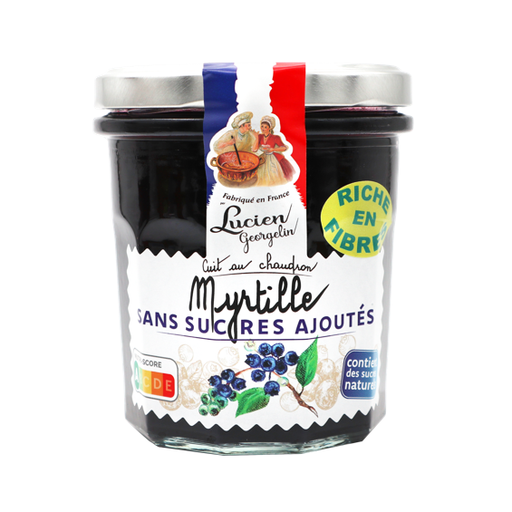 Image unavailable
A fruit preparation to consider if you’re looking to spread something on bread rather than choosing a cocoa and hazelnut recipe. ‘No added sugar’ doesn’t mean ‘sugar-free’: check the ‘of which sugars’ figure per 100 g, the storage instructions after opening, the allergens on the exact jar and the school’s rules.
No. A spread with no added sugar can contain naturally occurring sugars. For example, Lucien Georgelin states that the relevant cocoa and hazelnut product contains 8.5 g of sugars per 100 g. Compare the ‘of which sugars’ figure per 100 g on the products you’re considering.
No. Santé publique France says that producers display Nutri-Score voluntarily. The DGCCRF explains that a nutritional declaration, which is generally compulsory for prepacked foods, includes values per 100 g or 100 ml, among other information. Check the ingredients and allergens too when choosing a product.
Not automatically. Check the packaging of the exact product and the school’s guidelines. The no-added-sugar cocoa and hazelnut recipe described by Lucien Georgelin includes hazelnuts and milk, among other ingredients. The French Ministry of National Education explains that a PAI can make arrangements for school meals when a medically diagnosed food allergy or intolerance requires a special diet.
No. Ingredients vary from one product to another. Lucien Georgelin describes its no-added-sugar cocoa and hazelnut spread as containing no sweeteners, while Auchan’s product information for the Karéléa roasted hazelnut spread lists maltitol. The ingredients list on the product you choose will help you tell the difference.