Parents keeping an eye on added sugars
When shopping for the new school year, you want to find a bottle with no added sugar, while knowing that the juice still contains sugars naturally present in oranges.


For the new school year, choose a product whose description, ingredients and ‘no added sugar’ claim match what you’re looking for. This claim doesn’t mean the juice contains no naturally occurring sugars. Then compare recipes and pack sizes according to your preference for pulp and how much your household can drink within the storage period stated on the pack.
When shopping for the new school year, you want to find a bottle with no added sugar, while knowing that the juice still contains sugars naturally present in oranges.
You’re looking for a size that provides several servings, without opening a bottle that’s too large to finish within the stated storage period.
You want to distinguish between not-from-concentrate juice, juice from concentrate and nectar, then choose with or without pulp to suit your household’s preferences.
First, check for the ‘no added sugar’ claim on the exact product you’re considering, then read the ‘of which sugars’ line in the nutritional information. Next, choose a recipe and pack size that suit how much you’ll drink after opening.
| What to consider | What to check | Who it matters to |
|---|---|---|
| Added sugars and sugars present | The claim on the pack, the ingredients list and the ‘of which sugars’ line per 100 ml. | I want to avoid added sugars without mistaking the bottle for a sugar-free drink. This distinction would be the top priority for around 42% of consumers. |
| Pack size and storage | The bottle size and the instructions for refrigeration and drinking after opening. | If several people have a glass in the morning, I’m looking for a size my household can finish in time. Around 33% of consumers would prioritise managing the pack size in this way. |
| Recipe and texture | The product description — not-from-concentrate juice, juice from concentrate or nectar — and whether it contains pulp. | I’d like to know what kind of drink and texture I’ll be serving at home before choosing a product. For around 25% of consumers, this would be the main consideration. |
Orange juice can contain sugars naturally present in the fruit, even when no sugar has been added.
Check the ingredients list and the ‘of which sugars’ line in the nutritional information. The DGCCRF states that the wording ‘contains naturally occurring sugars’ is reserved for fruit juices.
The ‘no added sugar’ claim doesn’t make these recipes interchangeable. For example, Carrefour describes a Carrefour Bio product as a nectar containing at least 85% fruit.
First choose the type of drink that suits you, then check the claim and ingredients for the exact product.
A large bottle can be difficult to finish if your household doesn’t drink much juice. Storage instructions vary from product to product.
Choose a size that matches how much you usually drink, and follow the instructions on the bottle after opening.
Some of the juice may go to waste if you don’t finish the bottle within the stated period.
A listing describing a bottle’s recipe doesn’t, by itself, confirm that the product is currently available in your store.
Before choosing, check local availability and read the claims on the packaging of the product being sold.
Auchan and Carrefour listings include no-added-sugar orange juice with no pulp.
Carrefour offers a 2 L bottle of no-added-sugar orange juice with no pulp.
A Carrefour listing describes a 1.5 L bottle of not-from-concentrate orange juice with no pulp. POMONA EpiSaveurs describes a separate 10 L product for professional use as having no added sugar.
The Jafaden range includes a 1 L bottle of not-from-concentrate orange juice with no pulp, listed by E.Leclerc.
A Houra listing describes a 1 L bottle of Pampryl not-from-concentrate orange juice.
The retailer offers products including Joker and Andros varieties bearing the ‘no added sugar’ claim.
These two 1 L bottles give you the chance to consider different recipes and usage requirements for the new school year. Before deciding, check the description and the ‘no added sugar’ claim on each product’s packaging.
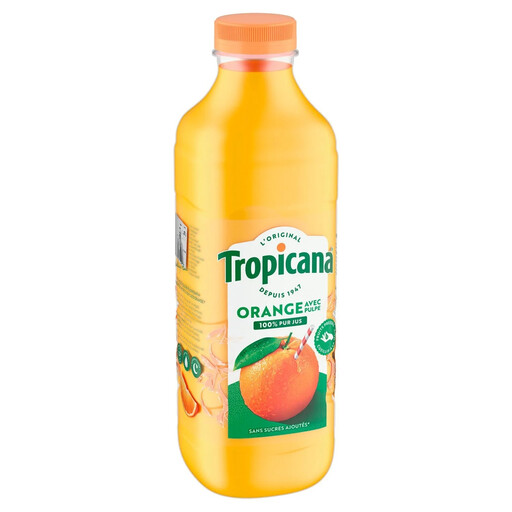 Image unavailable
Consider this if you’re looking for a bottle with pulp and are happy to take account of a short date. Check the date on the unit being sold, as well as the description and the ‘no added sugar’ claim on its packaging.
After opening, follow the refrigeration and drinking instructions for this product.
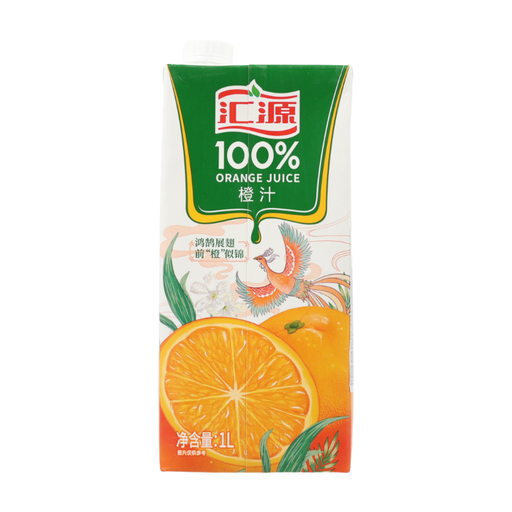 Image unavailable
If a juice made from concentrate suits you, check the description and ingredients list for this bottle. Its ‘fruit and vegetable juice’ title means it shouldn’t be treated as not-from-concentrate orange juice. Also check the packaging for the ‘no added sugar’ claim.
If you’ll be drinking it over several servings, take note of the refrigeration and drinking instructions after opening.
No. Sugars naturally present in oranges may still be in the juice. Read the ‘of which sugars’ line in the nutritional information to see the amount stated for the product you’re considering.
Choose according to the recipe you prefer, but don’t assume the category alone tells you how much naturally occurring sugar it contains. For the new school year, check the ‘no added sugar’ claim separately on each bottle.
Yes, if the product carries this claim and you’d prefer nectar to juice. For example, Carrefour describes a Carrefour Bio product as a nectar containing at least 85% fruit. Check the category and ingredients of the one you buy.
Follow the storage conditions and time period stated on the bottle you choose. An Auchan listing says a chilled Andros product can be kept in the fridge for five days after opening. This period doesn’t automatically apply to other products.