Hosts serving several glasses
When you’re serving drinks to a group, choose a bottle size that matches the number of glasses you’re planning to pour, while leaving room in the fridge for any leftovers.


For drinks with friends, first choose a bottle size that suits the number of glasses you plan to serve and the space you have in the fridge. Then decide whether your guests prefer juice with or without pulp. ‘No added sugar’ does not mean ‘sugar-free’: compare the ‘of which sugars’ figures per 100 ml, and check the product description if you want to distinguish pure juice from juice made from concentrate.
When you’re serving drinks to a group, choose a bottle size that matches the number of glasses you’re planning to pour, while leaving room in the fridge for any leftovers.
If your guests can’t agree about pulp, choosing the texture before comparing brands helps you avoid opening a bottle that not everyone will enjoy.
‘No added sugar’ matters to you, but you also want to check the amount of sugar on the label and take account of how much you pour into each glass.
For drinks with friends, start with the glasses you plan to serve, then check the texture, the type of juice and the sugar content per 100 ml.
| What to consider | What to check | Who is it for? |
|---|---|---|
| Pack size and leftovers | Compare the bottle size with the number of glasses you plan to serve, and read the storage instructions for after opening. | When I’m serving several friends, I want enough juice without opening more bottles than necessary. Around 40% of consumers would put this serving need first. |
| Texture and how it’s made | Check whether it contains pulp, whether it’s described as ‘pure juice’ or ‘made from concentrate’, and then read the ingredients list. | If not all my guests like pulp, I want to choose a texture they’ll enjoy and know what type of juice I’m serving. This would be the top priority for around 30% of consumers. |
| Sugar per glass | Read the ‘of which sugars’ figure per 100 ml and relate it to the amount you plan to serve. | I’m looking for a recipe labelled no added sugar, but I also want to know how much sugar is in my glass. Around 30% of consumers would make this distinction their main consideration. |
The sugars naturally present in oranges still count. According to its label, the Auchan 20 cl bottle contains 17 g of sugar.
Compare the ‘of which sugars’ figures per 100 ml, then take into account how much you actually pour into each glass.
These descriptions refer to different ingredients or production methods. UFC-Que Choisir, for example, distinguishes pure juice, obtained by pressing with nothing added, from juice reconstituted from concentrate.
Check the product description and ingredients before you choose: a claim about added sugars alone won’t tell you how the juice was made.
The chilled Andros products listed on Auchan product pages should be kept in the fridge and consumed within five days of opening.
Estimate how many glasses you’ll need, and check the storage instructions on the bottle you buy.
The Carrefour product page describes a 2 L bottle of orange juice with no pulp and no added sugar, suitable for serving several glasses.
A Joker product described by Carrefour comes without pulp in a pack of 2 × 1 L. Its ingredients list includes orange juice made from concentrate and vitamin C.
The Auchan product page describes a 20 cl bottle of pure orange juice, an individual size for drinks.
The E.Leclerc product page features a 1 L bottle of organic pure orange juice with no pulp. The listed ingredient is orange juice from organic farming.
These two 1 L bottles could be suitable for sharing. The TROPICANA bottle is labelled as containing pulp. For the Hui yuan drink, check the product description, ingredients and label before deciding whether it meets your needs for orange juice with no added sugar.
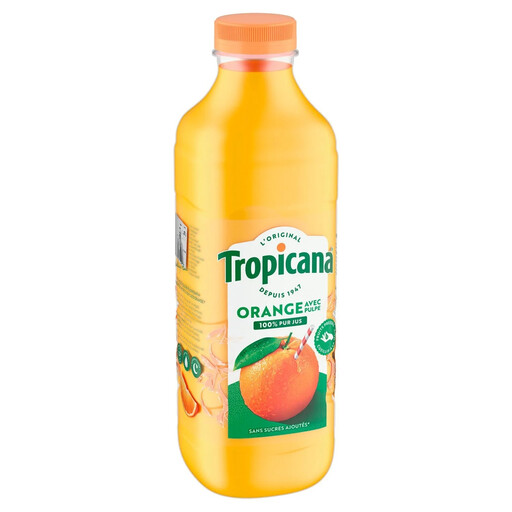 Image unavailable
Worth considering for sharing if your guests enjoy pulp.
The bottle shown is 1 L. As it’s labelled ‘Near Expiry’, it’s especially important to check the date on the product before buying. Also follow the label’s instructions for storing any leftovers after opening.
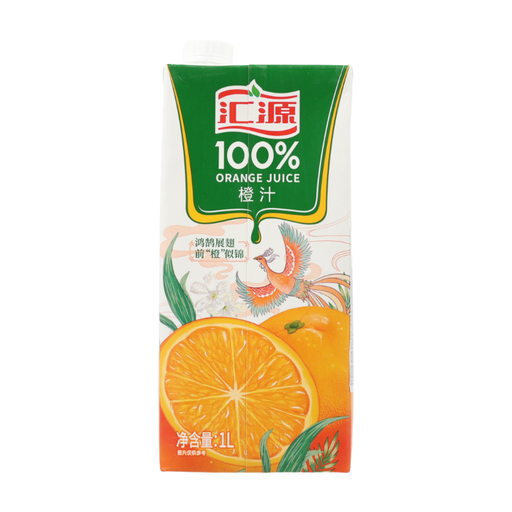 Image unavailable
The 1 L size could be shared, provided the drink is the right kind for your occasion.
The name combines ‘Fruit & Vegetable Juice’ and ‘Orange Juice’. Check the pack for the exact product description, ingredients, sugar per 100 ml and whether it contains pulp before comparing it with pure orange juice.
No. Orange juice can contain sugars naturally present in the fruit even if no sugar has been added. To compare two bottles or work out how much to serve, check the ‘of which sugars’ figure per 100 ml on each one.
Pure juice and juice made from concentrate are produced differently. UFC-Que Choisir describes pure juice as being obtained by pressing with nothing added, while juice made from concentrate is reconstituted with water. The product description and ingredients list can help you choose the process you prefer, regardless of texture.
Follow the time and temperature instructions on the bottle you buy. The chilled Andros juices featured on Auchan product pages should be kept in the fridge and consumed within five days of opening. Don’t automatically apply this advice to other products.
Compare the bottle size, product description, ingredients and sugar per 100 ml, then check the instructions for after opening. The DGCCRF says that nutrition information given per 100 ml makes it easier to compare drinks; the size of your glasses will then determine how much you actually serve.