People keeping an eye on added sugars
You’re looking for a clear “no added sugars” claim, while still wanting to compare the sugars in the drink. The nutrition declaration shows the amount of sugars per 100 ml.


To go with a quick lunch at the office, first choose between juice and nectar, then check that the product you buy is labelled “no added sugars”. This doesn’t mean the drink contains no sugars. Compare the nutrition information per 100 ml and choose a pack size you can finish in line with the storage instructions after opening. Manger Bouger recommends choosing water as your everyday drink and limiting fruit juice to a maximum of one glass a day.
You’re looking for a clear “no added sugars” claim, while still wanting to compare the sugars in the drink. The nutrition declaration shows the amount of sugars per 100 ml.
You’d like to add juice to your meal now and then, without choosing a bottle that’s too large for the portions you have in mind or difficult to store once opened.
You want to know which category you’re buying. The product name, ingredients list and, for nectar, fruit content matter just as much as the “no added sugars” claim.
Start with the product name and the claim on the packaging, then compare the information per 100 ml. Next, choose a pack size that suits the number of glasses you plan to have and follow the storage instructions.
| What to consider | What to check | Who is it for? |
|---|---|---|
| Added sugars and sugars present | Check the claim on the packaging, then look at the “of which sugars” line per 100 ml. If the information doesn’t match up, ask for confirmation before buying. | I want to avoid added sugars without mistaking the claim for a complete absence of sugars; around 50% of consumers would prioritise this check. |
| Pack size and storage | Choose a volume that matches the number of portions you have in mind, and read the storage instructions for that particular bottle. | If I only drink juice with certain lunches, I want to be able to finish the bottle within the stated time; this would be the main consideration for around 33% of consumers. |
| The place of juice at lunch | Decide how much you’ll pour and plan to drink water as your usual choice. | I’d rather keep juice for the occasional glass than make it my main drink; around 17% of consumers would prioritise this consideration. |
Pure juice and nectar are different categories. For nectar, check the fruit content and ingredients rather than assuming it’s the same as pure juice. According to the DGCCRF, nutrition information given per 100 ml makes it possible to compare drinks on a like-for-like basis.
Sugars naturally present in fruit still count. The claim alone therefore isn’t enough to compare the total sugar content of two drinks.
Check the “of which sugars” figure per 100 ml and factor in how much you plan to pour.
These names refer to different categories: a nectar with no added sugars doesn’t automatically have the same characteristics as pure juice.
Check the product name, ingredients list and fruit content before choosing between two recipes.
If a bottle is intended for several portions, you need to be able to store it and finish it within the time stated in the instructions after opening. Auchan’s listing for Tropicana Pur jus multifruits tropical 1,5 L says to store it at a maximum of 7 °C and consume it within five days.
Choose a volume that suits your planned portions, or consider sharing the bottle.
A bottle that isn’t finished within the stated time may go to waste.
Carrefour’s listing for Classic’ mixed fruit nectar shows the claim “no added sugars” alongside a line stating 0,5256 g of added sugars per 100 g. This contradiction means you can’t make a decision based on the listing alone.
Check the packaging or ask the retailer to clarify before choosing this product on the basis of its claim.
A brand may offer different categories and recipes, so always check the specific product rather than assuming its characteristics from the brand name.
The Tropicana Pur jus multifruits tropical 1,5 L listed by Auchan is worth considering if you’re looking for pure juice to share over several servings.
Carrefour Bio offers a mixed fruit pure juice described as having no added sugars; Carrefour Classic’ offers a mixed fruit nectar with the same claim. These are two different categories.
Jafaden no-added-sugar mixed fruit nectar is an option for anyone considering nectar rather than pure juice.
Lidl lists a Solevita mixed fruit pure juice, which may be worth a look if you usually shop there.
The Pampryl mixed fruit drink described by Business France Marketplace is a tropical nectar, not a product to assume is the same as pure juice.
This selection includes Joker mixed fruit juices and Don Simon nectars made with several fruits. For an office lunch, first compare their category and pack size; check the “no added sugars” claim on the packaging of the bottle you choose.
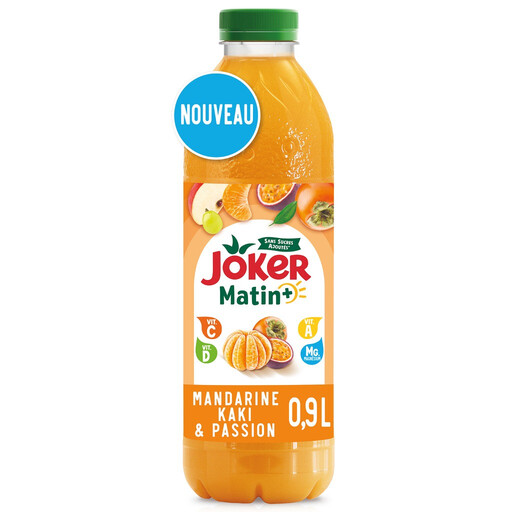 Image unavailable
A 900 ml pack is worth considering if you’re planning to have several glasses rather than a single serving at the office. Check the packaging for the “no added sugars” claim and storage instructions after opening.
 Image unavailable
The 1 L pack is a good choice if you’re buying juice for several servings. The product name states that it has no added sugars; check this claim, the sugars per 100 ml and the storage instructions after opening on the bottle.
 Image unavailable
This 1,5 L pack calls for several servings or sharing the bottle. The product name states that it has no added sugars; check the claim and the time limit for consuming it after opening on the packaging.
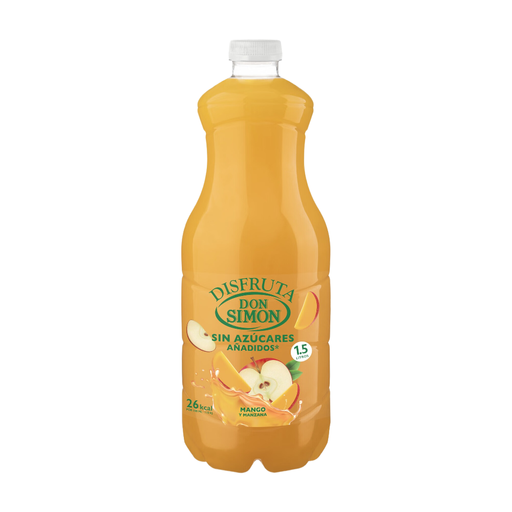 Image unavailable
Worth considering if you’re looking for a mango and apple nectar to serve over several portions, rather than pure juice. The product name states that it has no added sugars; check the claim, ingredients and nutrition information per 100 ml on the packaging.
 Image unavailable
This 1,5 L mixed fruit nectar is better suited to several servings than a single glass at the office. Confirm the “no added sugars” claim, ingredients list and storage instructions after opening on the packaging.
No. This claim doesn’t remove the sugars naturally present in fruit. To compare two mixed fruit drinks, check the “of which sugars” line per 100 ml on their labels.
Choose according to the category and recipe you’re looking for, rather than relying on the “no added sugars” claim alone. The DGCCRF distinguishes juice from nectar; if you’re considering nectar, check its fruit content and ingredients list in particular.
Follow the instructions for the product you buy. For example, Auchan says to store Tropicana Pur jus multifruits tropical 1,5 L at a maximum of 7 °C after opening and consume it within five days. This time limit doesn’t automatically apply to other bottles.
For your everyday drink, Manger Bouger recommends choosing water. Its guidelines advise limiting fruit juice, including juice with no added sugars, to a maximum of one glass a day and choosing whole fruit instead.