People keeping an eye on total sugars
You look beyond the ‘no added sugar’ claim and compare the grams of sugar per 100 ml too. A reduced-sugar recipe may be worth considering alongside mixed fruit juices and nectars.


For weekday breakfasts, start by deciding what matters most to you: the recipe, the total sugar content shown on the label or a format that’s easy to serve. ‘No added sugar’ doesn’t mean ‘sugar-free’: compare the ‘of which sugars’ figure per 100 ml, then check whether it’s a not-from-concentrate juice, juice from concentrate or a nectar, and read the instructions for after opening. Manger Bouger recommends choosing whole fruit over juice, particularly because of its fibre.
You look beyond the ‘no added sugar’ claim and compare the grams of sugar per 100 ml too. A reduced-sugar recipe may be worth considering alongside mixed fruit juices and nectars.
You want to distinguish between not-from-concentrate juice, juice from concentrate and nectar when choosing what to serve regularly at breakfast. The ingredients list and stated fruit content can help you compare products.
You want a container that’s easy to serve, whether it’s an individual portion or something to share. The size should also suit the number of glasses you’ll pour and the storage instructions after opening.
Start with what matters most to you at breakfast, then compare the labels on a like-for-like basis, particularly the sugar content per 100 ml. The recipe type and format suit different needs, and neither replaces the other criteria.
| Criteria | What to check | Who is it for? |
|---|---|---|
| Total sugars | Compare the ‘of which sugars’ figure per 100 ml. If reducing this figure is your priority, also look for recipes labelled ‘reduced sugar’. | I want to avoid confusing ‘no added sugar’ with a low total sugar content. Around 42% of consumers would prioritise this comparison. |
| Ingredients | Read the product description, ingredients, stated fruit content and, where relevant, the ‘from concentrate’ claim. | For family breakfasts, I’d like to know whether I’m serving a not-from-concentrate juice, a juice or a nectar. This distinction would be a priority for around 33% of consumers. |
| Size and storage | Choose a size that suits the number of glasses you’ll serve, and check the refrigeration and after-opening instructions. | On busy mornings, I want a format we can finish while following the instructions on the packaging. Around 25% of consumers would put this need first. |
The sugars naturally found in fruit are still included in the nutritional information. So a claim on the front of the pack doesn’t tell you, on its own, how much sugar the drink contains.
Compare the ‘of which sugars’ figure per 100 ml. If this figure guides your choice, also look for recipes explicitly labelled ‘reduced sugar’.
These descriptions refer to different recipes. Carrefour lists a 100% not-from-concentrate mixed fruit juice, while Auchan’s organic mixed fruit nectar contains at least 81.5% fruit.
Check the product description, ingredients and stated fruit content for each product. Don’t assume that what applies to one product applies to another.
How long a product lasts after opening depends on the product. The guidance given for Auchan’s 20 cl organic nectar and its 1 L orange and mixed fruit juice is different.
Estimate how many glasses you’ll serve and follow the refrigeration and consumption instructions on the packaging you buy.
A container that’s too large for your household’s needs could leave some of the product unused by the end of the stated period.
Manger Bouger recommends choosing whole fruit over juice and highlights the difference in fibre in particular.
If you serve juice at breakfast, don’t assume it automatically replaces whole fruit.
The details below relate to the specific products mentioned, not every product from each brand. When choosing, always compare the product description and nutritional information on the bottle or carton you’re considering.
Carrefour lists a 100% not-from-concentrate mixed fruit juice with no added sugar, as well as Carrefour Classic’ mixed fruit nectar with no added sugar.
The 1 L Le Fruit product is described as a mixed fruit and vegetable juice with no added sugar, made from juice and purée concentrates.
The products reviewed include a 20 cl carton of organic mixed fruit nectar with no added sugar and a 1 L orange and mixed fruit juice with no added sugar.
E.Leclerc’s product details distinguish between a mixed fruit nectar with no added sugar and a desugared Jafaden mixed fruit juice labelled ‘reduced sugar’.
This selection includes a nectar and several mixed fruit juices in sharing sizes for breakfast. To compare them, start with the type of drink and size you want, then check the packaging for sugars per 100 ml, ingredients and storage instructions after opening.
 Image unavailable
This 1.5 L bottle of nectar may suit you if you serve several glasses at breakfast. If you want to avoid sweeteners, bear in mind that this recipe is listed as containing sucralose E-955. Also check the sugars and after-opening instructions on the packaging.
 Image unavailable
The 1.5 L size is suited to households serving several glasses, as long as you follow the instructions after opening. To compare this recipe with a nectar or a not-from-concentrate juice, check its product description and sugar content per 100 ml on the packaging.
 Image unavailable
This 1 L size may suit you if you’d like to share a mixed fruit juice at breakfast. The ‘no added sugar’ claim doesn’t tell you the total sugar content on its own, so check the nutritional information and refrigeration instructions for this product.
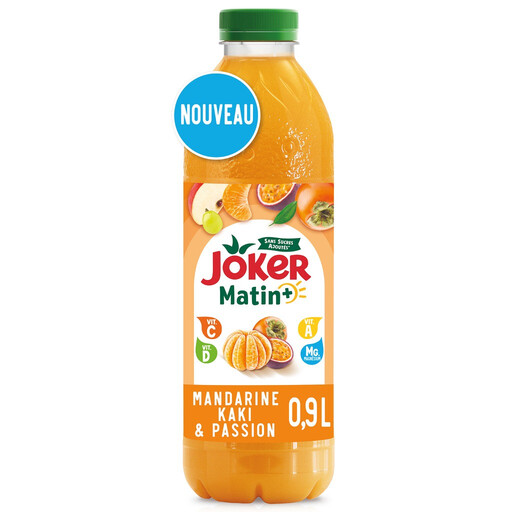 Image unavailable
This 900 ml mixed fruit juice is marketed for breakfast. If no added sugar is important to you, check the claim on the packaging and compare the ‘of which sugars’ figure. Also follow the stated storage period after opening.
No. The sugars naturally found in fruit remain in the drink. To find out how much it contains, read the ‘of which sugars’ figure per 100 ml rather than relying solely on the claim on the front of the pack.
Choose according to the recipe you’re looking for, rather than treating these two descriptions as equivalent. Carrefour and Auchan’s product details illustrate the difference: Carrefour’s mixed fruit juice is described as 100% not-from-concentrate juice, while Auchan’s organic nectar is stated to contain at least 81.5% fruit. Then compare the ingredients and sugar content of each product.
No, you shouldn’t automatically treat them as equivalent. Manger Bouger recommends choosing whole fruit over juice and highlights, in particular, that juices are low in fibre.
Follow the time limit and storage instructions on the packaging for the product you buy, as these vary between products. The Auchan guidance cited for the 20 cl organic nectar and 1 L orange and mixed fruit juice gives different time limits, so their sizes alone don’t provide a single rule.