Hosts mindful of added sugars
You’re looking for a recipe with no added sugar, while recognising that fruit contains natural sugars. The packaging claim, ingredients list and “of which sugars” line can all help you choose.


For match night, first choose a mixed fruit juice whose “no added sugar” claim is consistent with its ingredients and nutritional information. Then compare pure juice, juice made from concentrate and nectar, depending on the recipe and texture you’re after: no added sugar doesn’t mean sugar-free. Remember to have water available for your guests, too.
You’re looking for a recipe with no added sugar, while recognising that fruit contains natural sugars. The packaging claim, ingredients list and “of which sugars” line can all help you choose.
You want to serve juice for everyone to share during the match and are particularly looking for a pulp-free option. Check that this is stated for the product you choose rather than assuming it from the name “mixed fruit”.
You’re comparing product descriptions and ingredients to find pure juice or an organic recipe. These claims don’t replace checking the sugar content per 100 ml.
For match night, start by confirming that no sugar has been added. The product description, texture and pack size can then help you choose between recipes that meet this first requirement.
| What to check | Look for | Who is it for? |
|---|---|---|
| Added sugars | Compare the “no added sugar” claim with the ingredients and the “of which sugars” line per 100 ml. | If I want to avoid added sugar, I need to be able to distinguish this claim from having no sugars at all. Around 36% of consumers would make this their top priority. |
| Type of recipe | Read the product description — pure juice, juice made from concentrate or nectar — then check the ingredients, particularly for water. | If I want a specific type of recipe rather than simply a mixed fruit flavour, I want to know what’s in my glass. The type of product would be the top priority for around 29% of consumers. |
| Sharing and texture | Compare pack sizes, the “pulp-free” claim and storage instructions after opening. | When several people are helping themselves during the match, I look for a convenient size and a texture that suits the group. Around 21% of consumers would put this need first. |
| Organic recipe | Check the organic claim, then look separately at the product description and sugar content per 100 ml. | If I’m primarily looking for organic ingredients, I still want to choose between pure juice and nectar. This would be the main criterion for around 14% of consumers. |
Fruit contains natural sugars, which remain in the juice. So the claim on the front of the pack doesn’t tell you how much sugar is in your glass.
Check the “of which sugars” line per 100 ml when comparing products. And remember to have water available for match night: Manger Bouger recommends limiting fruit juice.
The description “mixed fruit” doesn’t tell you the product category or what’s on the ingredients list. Nectar, for example, may contain water, as does the Pressade product described by Auchan.
If you specifically want pure juice, check that description on the packaging. If texture matters more, look for a clear indication about pulp.
Carrefour Classic’s product listing, titled “No-Added-Sugar Mixed Fruit Nectar”, also states that it contains 0.5256 g of added sugars per 100 g in its nutritional information. This contradiction matters if no added sugar is an essential requirement for you.
If so, check the information on the packaging before choosing the product.
Auchan’s listings feature two 1 L mixed fruit options with no added sugar: Le Fruit, made from concentrate, and Pur Jus Engagé, made from juices and purées.
Carrefour offers a 1 L organic mixed fruit juice with no added sugar, described as 100% pure juice.
Auchan offers a 1 L carton of orange and mixed fruit juice made from concentrate, with no added sugar and no pulp.
Auchan’s listing describes a 1 L organic mixed fruit option with no added sugar and no pulp. It’s a nectar.
This selection includes mixed fruit juices and nectars labelled as having no added sugar, in 1 L or 1.5 L sizes. Choose the category and pack size to suit what you want to serve, then check the label on your chosen product.
 Image unavailable
A 1 L option to consider if you’re planning to serve mixed fruit juice to your guests. The “no added sugar” claim doesn’t mean you can skip checking the sugar content on the packaging.
 Image unavailable
The 1.5 L size may suit you if several guests will be helping themselves. If you specifically want pure juice, check the product description: this one is described as juice made from concentrate.
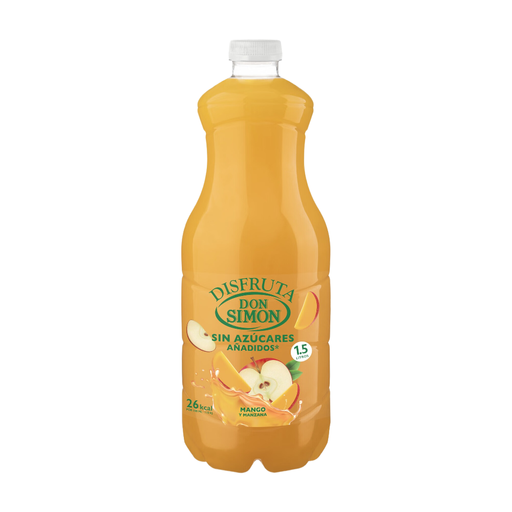 Image unavailable
This 1.5 L PET bottle is an option if you’re looking for mango and apple nectar to share. Nectar isn’t the same as pure juice, so check the ingredients if the recipe is important to your choice.
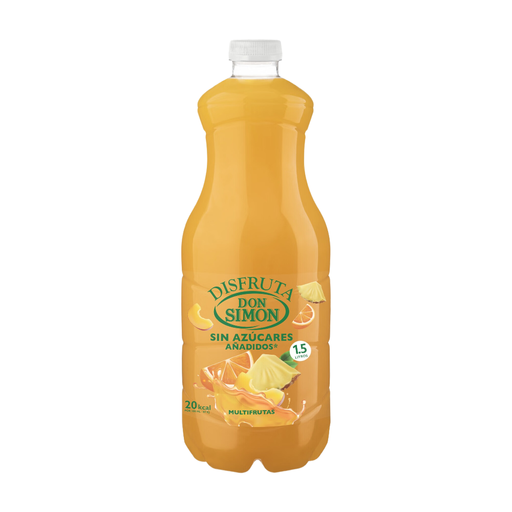 Image unavailable
This 1.5 L PET bottle of nectar is another option for serving several people. Compare its ingredients with those of a juice if you have a preference for a particular type of recipe.
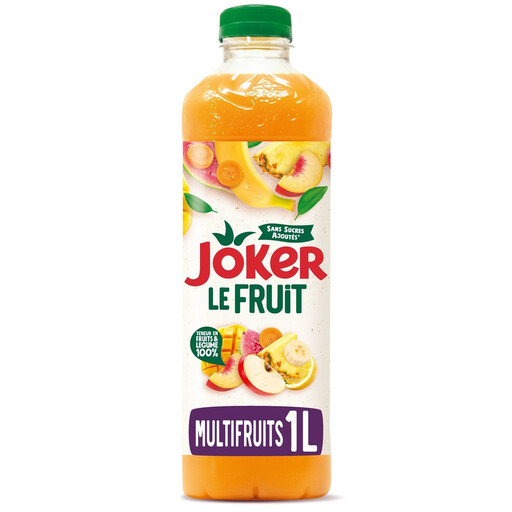 Image unavailable
This 1 L size may suit you if you’d rather open a smaller bottle during the match. Before deciding what to keep after the evening, check the storage instructions on the packaging.
No. Juice with no added sugar can still contain the sugars naturally present in fruit. To find out how much sugar is in the product you’ve chosen, read the “of which sugars” line per 100 ml.
No, they’re different types of recipe. Carrefour describes its Bio product as pure juice, while the Pressade nectar recipe featured by Auchan contains water, concentrated juices and purées.
Have water as the main drink, even if you’re also offering mixed fruit juice for its flavour. Manger Bouger recommends limiting fruit juice and advises having no more than one glass a day.
Follow the instructions for the opened bottle or carton. For its organic mixed fruit Pressade product, Auchan’s listing says to refrigerate at between +4 °C and +6 °C and consume within 5 days of opening.