Long-distance cyclists
If you ride for more than an hour, the carbohydrates in a portion should be part of your plan. Just don’t make juice your only drink for the ride.


When choosing a mixed fruit juice to have around a bike ride, start by thinking about when you plan to drink it and how many carbohydrates your portion will provide. According to Anses, ‘no added sugars’ does not mean ‘sugar-free’. On a long ride, consider juice alongside your other food and drink, including water, rather than relying on it as your only source of fuel.
If you ride for more than an hour, the carbohydrates in a portion should be part of your plan. Just don’t make juice your only drink for the ride.
You want to avoid added sugars while comparing the carbohydrates and naturally occurring sugars per 100 ml and in the amount you’ll drink.
If you’ll be drinking it before or after a ride, the pack size, texture and storage instructions may matter more when choosing.
First, distinguish between juice and nectar, then compare the portion you plan to drink and the storage instructions. These categories alone won’t tell you how many carbohydrates are right for a ride.
Worth considering: if you’re looking for a juice to have as a snack before or after cycling.
Keep in mind: no added sugars doesn’t mean there are no naturally occurring sugars; portion size still matters.
Worth considering: if you prefer juice made from concentrate, including a variety without bits.
Keep in mind: compare the ingredients and nutritional information for the specific product, rather than assuming its sugar content from the category alone.
Worth considering: if you like the texture of a drink made with a blend of fruit juices and purées.
Keep in mind: nectar isn’t the same as pure juice. Check the ingredients list before comparing it with a juice.
| Factor | What to check | Who it matters to |
|---|---|---|
| Carbohydrates and ride duration | Compare the carbohydrates per 100 ml and in the amount you plan to drink, taking into account any other food and water you’ll bring. | For a long ride, I want to know how my portion of juice fits in with my other fuel. Around 45% of consumers would put this fuelling need first. |
| Added sugars and labelling | Check the product description, ingredients, and the ‘carbohydrates’ and ‘of which sugars’ lines in the nutritional information. | If I avoid added sugars, I also want to know how much sugar is in the amount I drink; this would be a priority for around 33% of consumers. |
| Pack size and storage | Check the volume, whether it contains bits, and the storage instructions after opening. | When I mainly drink juice before or after my rides, I prefer a container I can finish within the stated time. Around 22% of consumers would prioritise this convenience. |
According to Anses, not adding sugars doesn’t mean that the ingredients contain no naturally occurring sugars. Relying on the claim alone could therefore give you the wrong idea about how much sugar is in your portion.
Also check the carbohydrates, the ‘of which sugars’ line and the amount you plan to drink.
Pure juice, juice from concentrate and nectar can all have different ingredients. The words ‘mixed fruit’ aren’t enough to compare them.
Start with the product description and ingredients list, then compare the nutritional information on the same basis.
World Athletics sets out different carbohydrate intake guidance for endurance efforts depending on their duration. The amount of juice you drink won’t tell you, on its own, what other fuel you’ve planned or how much water you have available.
Before setting off, consider the planned duration, the carbohydrates in your different foods and drinks, and the water you’ll bring.
A large container may be convenient at home, but the time it can be kept after opening may limit how many portions you can actually use.
Choose a size that suits how much you’ll drink and follow the instructions on the bottle you buy.
If you don’t finish the bottle within the stated time, you may have to throw the rest away.
A single brand may offer several types of drink, so always check the product description and nutritional information for the specific one you choose.
The range includes no-added-sugar mixed fruit juices in different pack sizes.
The retailer offers mixed fruit juices and nectars. Carrefour Extra’s multivitamin variety is described as a juice with no added sugars.
One of Auchan’s 1 L products is described as an orange and mixed fruit juice from concentrate, with no bits and no added sugars.
The organic, no-added-sugar mixed fruit nectar featured by Auchan combines fruit juices and purées.
Auchan lists Tropicana mixed fruit and multivitamin varieties in its juice aisle.
This selection includes mixed fruit juices and nectars to consider for before or after cycling. To compare them, start with the product category, then check the carbohydrates and sugars on the label for the variety you choose.
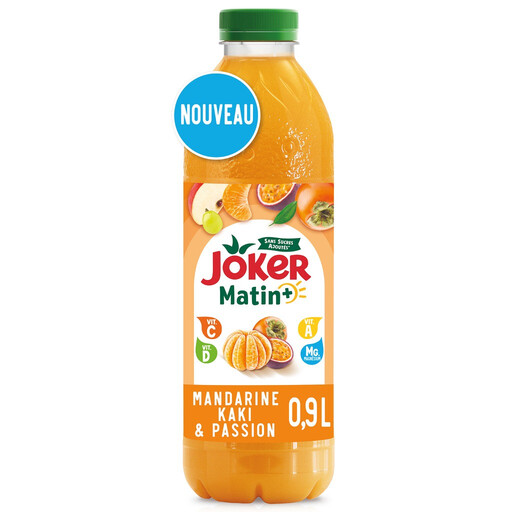 Image unavailable
If you’re having it as a snack around a ride, check the added-sugar claim and carbohydrates per 100 ml before choosing your portion.
 Image unavailable
If you want to keep track of the carbohydrates in a portion around your ride, compare the figures per 100 ml with the amount you plan to drink.
 Image unavailable
If you’ll be serving the juice more than once, check the instructions for after opening and choose a pack size that suits how much you plan to drink.
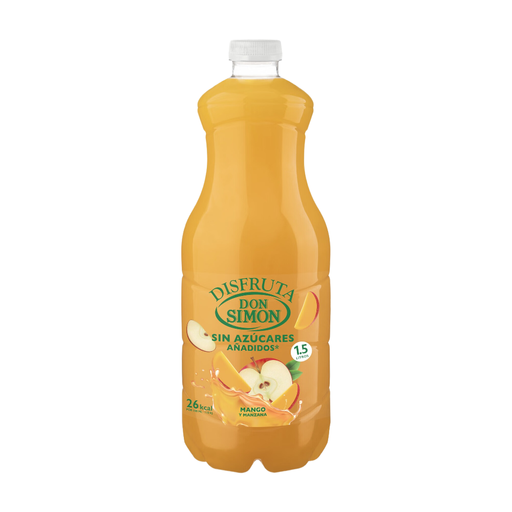 Image unavailable
If you’re considering nectar rather than juice around your rides, check its ingredients and carbohydrates per portion, and remember that the two categories aren’t the same.
 Image unavailable
If you’re choosing this nectar to drink before or after cycling, check its ingredients and sugars per portion, as well as the instructions for after opening.
Yes, it may contain sugars that occur naturally in its ingredients. According to Anses, the claim means that no sugars have been added. To find out how much sugar you’ll drink, check the ‘of which sugars’ line and take your portion size into account.
No. Juice alone won’t tell you everything you need to know about fuelling and hydration on a long ride. World Athletics sets out different carbohydrate intake guidance for endurance efforts depending on their duration. Also consider the other food and drink you’ve planned, the water available and how much juice you intend to drink.
They’re two distinct categories. The summary of the European framework published by EUR-Lex distinguishes fruit juice from concentrate from nectar. When comparing two bottles, check their product descriptions and ingredients rather than relying on the words ‘mixed fruit’ alone.
Follow the time limit stated on the bottle you buy. The Auchan listings for the Joker and Auchan products featured here advise keeping them refrigerated and consuming them within five days of opening. This guidance doesn’t automatically apply to other products.