Hosts who care about the recipe
For a Christmas buffet, they want to check the product name, ingredients and pack claims before choosing a drink presented as having no added sugar.


For a Christmas gathering, first choose between juice and nectar according to the recipe you want, then check the label for the words “no added sugar”, the ingredients and the sugars per 100 ml. This claim does not rule out naturally occurring sugars. If you’re serving several guests, also consider the volume, how long it will keep once opened and making room for water.
For a Christmas buffet, they want to check the product name, ingredients and pack claims before choosing a drink presented as having no added sugar.
They check the amount of sugars per 100 ml, including when a reduced-sugar mixed fruit juice is among their options.
They want to plan how much juice to serve and offer water during the meal. Manger Bouger recommends limiting juice, particularly for children.
When choosing a mixed fruit drink to serve at Christmas, start with its category and recipe, then compare the sugar content for the same volume and check the serving instructions.
Worth considering: if you’re looking for a drink described as juice and are happy with the sugars naturally present in fruit.
Bear in mind: the claim “no added sugar” doesn’t mean you can skip checking the sugars per 100 ml.
Worth considering: if a nectar recipe, which may include water, is what you’d like to serve.
Bear in mind: fruit content and other ingredients vary by product, so check any “no added sugar” claim on the packaging.
Worth considering: if your priority is comparing the total amount of sugars rather than simply checking that none have been added.
Bear in mind: this characteristic doesn’t replace checking the ingredients or making sure the flavour is right for your buffet.
| Criteria | What to check | Who is it for? |
|---|---|---|
| Recipe and claim | Check the product name, ingredients and “no added sugar” claim on the packaging, and look out for any conflicting information. | I want to confirm what’s in the drink before serving it. Around 42% of consumers rank checking the recipe as their top priority. |
| Total sugars | Compare the “of which sugars” line per 100 ml rather than assuming the sugar content from the product name alone. | If several bottles suit me, I want to compare their sugar content for the same volume. This is the top priority for around 33% of consumers. |
| Serving and storage | Check the net volume and instructions for storage after opening, and remember to provide water with the meal. | For a shared buffet, I’d rather plan how many glasses to serve without opening more drink than needed. This is the top priority for around 25% of consumers. |
Naturally occurring sugars still count. Auchan’s product page for Joker Le Fruit 1 L, for example, lists 10 g of sugars per 100 ml while describing it as having no added sugar.
Compare the “of which sugars” line per 100 ml and plan how much you intend to serve.
The product name tells you something about the recipe: Carrefour Classic’ and Pressade product pages describe nectars containing water, unlike drinks presented as juice.
Check the product name and ingredients before comparing bottles based on their mixed fruit flavour alone.
The Carrefour Classic’ nectar product page carries a “no added sugar” claim but also lists 0.5256 g of added sugars per 100 g.
If no added sugar is essential to your choice, check the packaging or ask for clarification before buying.
Pressade organic mixed fruit nectar advises keeping it in the fridge for 5 days after opening, at between +4 °C and +6 °C.
Choose a volume to suit the number of glasses you plan to serve, follow the label on the bottle you buy and make sure guests have water to hand.
Auchan’s product page describes Le Fruit 1 L as a mixed fruit and vegetable juice made from juice and purée concentrates.
Carrefour describes its 1 L mixed fruit product as a nectar containing at least 75% fruit.
E.Leclerc’s range includes a no-added-sugar mixed fruit nectar and a reduced-sugar mixed fruit juice, both in 1 L bottles.
The 1 L organic mixed fruit product is described in its recipe information as a nectar containing water, fruit juices and purées.
This selection includes mixed fruit juices and nectars to serve to a group. The mango and apple and pomegranate nectars are fruit blends whose names don’t say “mixed fruit”, so choose them only if their recipes suit what you’re looking for. For each bottle, check the product name and any “no added sugar” claim on the label before you decide.
 Image unavailable
The 1.5 L size is worth considering if you’re serving nectar to a group. This recipe contains sucralose, so bear that in mind and check the ingredients if you avoid sweeteners. Also check the “no added sugar” claim on the label.
 Image unavailable
This 1.5 L size is for those looking to serve mixed fruit juice to a group. Check the product name and “no added sugar” claim on this specific bottle, then compare its sugars per 100 ml. The claim doesn’t mean the juice is sugar-free.
 Image unavailable
The 1 L bottle could suit you if you’d prefer a smaller size for the table. The recipe combines fruit and vegetables, so check that it matches your guests’ tastes, as well as checking the product name and sugar claim on the label.
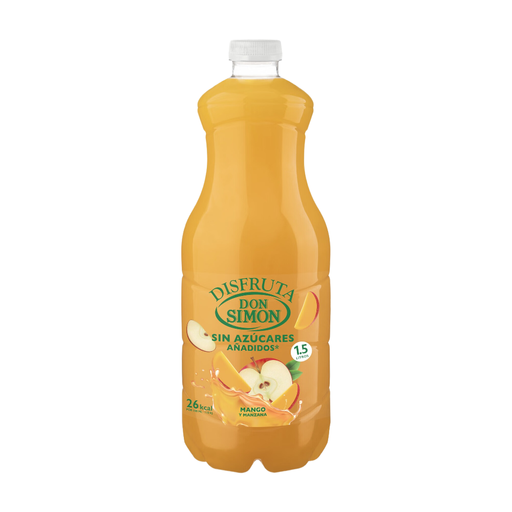 Image unavailable
This 1.5 L nectar combines mango and apple, so choose it for that specific blend rather than for a recipe described as mixed fruit. It contains sucralose, so check the ingredients and the sugar claim on the label.
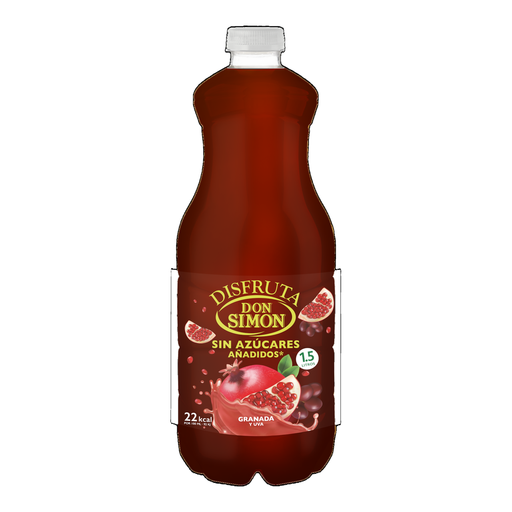 Image unavailable
This 1.5 L nectar is worth considering if you’re looking for a pomegranate recipe that also contains grapes, rather than a bottle explicitly described as “mixed fruit”. The recipe contains sucralose, so check the label if you avoid sweeteners or are looking for a specific claim about added sugars.
No. Naturally occurring sugars in fruit may still appear in the nutritional information. As well as checking the claim on the packaging, read the “of which sugars” line per 100 ml.
First check the product name, then the ingredients list: nectar may contain water as well as fruit juices or purées. Carrefour Classic’ and Pressade product pages list water in their recipes, so the word “mixed fruit” alone doesn’t tell you which category a drink belongs to.
Compare the sugars per 100 ml across products that match the recipe you want. As examples from their respective product pages, E.Leclerc lists 7.4 g per 100 ml for Jafaden reduced-sugar juice, while Auchan lists 8.1 g per 100 ml for Pressade and 10 g per 100 ml for Joker Le Fruit. These figures apply to those specific products.
Offer water too, and plan how much juice to serve rather than topping up without limit. Manger Bouger recommends no more than half a glass of juice a day for children under 11, followed by one glass a day.
Follow the storage time and temperature shown on the label of the bottle you’ve bought. For its organic mixed fruit product, Pressade’s product page advises keeping it in the fridge for 5 days after opening, at between +4 °C and +6 °C. This guidance doesn’t automatically apply to other bottles.