What criteria should you check?
When planning a canteen offering, first check what the drink contains, then make sure its pack size and storage requirements suit the planned service. Juice, juice made from concentrate and nectar should each be assessed according to their own product descriptions.
| Criterion |
What to check |
Consumers concerned |
| Understanding the sugar content |
Check the product name, ingredients and ‘of which sugars’ figure per 100 ml. Don’t assume that ‘no added sugar’ means ‘sugar-free’. |
If I need to describe the drinks on offer accurately to diners, I want to know how much sugar each recipe contains. Around 31% of consumers put this clarity first. |
| Storage and pack size |
Compare the required temperature before and after opening, the stated shelf life once opened and the volume to be served. |
When fridge space is limited, I need to choose containers that staff can use in line with the stated instructions. This is the top priority for around 25% of consumers. |
| Choice of recipes |
Check the drink category, the types of fruit and the ingredients, including water or juices made from concentrate. |
If I want to offer a choice of flavours, I need to know whether I’m comparing juices or nectars rather than relying on the flavour alone. Around 25% of consumers prioritise finding the right range. |
| Organic and sustainability criteria |
Check the credentials of the product being purchased and the supporting evidence required by your purchasing specification. |
If my purchases need to meet an organic or sustainability target, I need to be able to document the product actually delivered. This is a priority for around 19% of consumers. |
Joybuy products to consider
This selection includes apple and mixed-fruit juices, as well as two nectars in 1 L or 1.5 L formats. To choose between them, check their category, declared sugar content and the storage instructions on the packaging intended for your service.
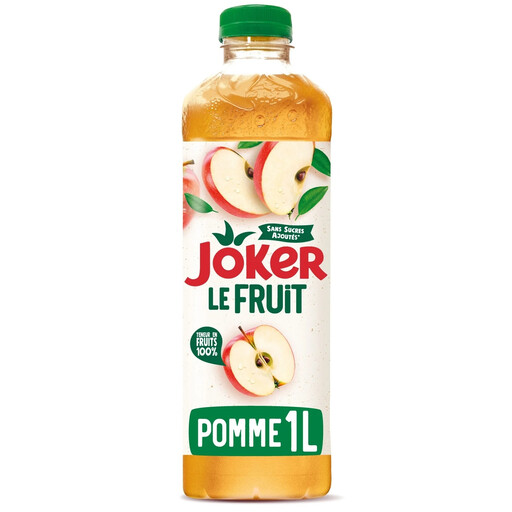 Image unavailable
JOKER no-added-sugar apple juice 1 L
Consider this if you want to offer apple juice in a 1 L pack. The description lists apple and lemon juices made from concentrate and states 11 g of sugars per 100 ml. Check the French product name and storage instructions after opening on the packaging before planning stock rotation for your service.
View on Joybuy
 Image unavailable
Joker Engagé no-added-sugar mixed-fruit juice 1 L
Consider this if your canteen is looking for a mixed-fruit recipe with a detailed ingredients list. This 1 L product is described as containing pressed fruit and vegetables, with no added sugar; its product information states 11 g of sugars per 100 ml. Check the storage instructions before opening and the label on the product delivered.
View on Joybuy
 Image unavailable
JOKER no-added-sugar mixed-fruit juice 1.5 L
The 1.5 L pack is worth considering if your service uses larger containers. The product information describes a recipe made from concentrated juices and gives 9.2 g of sugars per 100 ml. It also says to refrigerate after opening and consume within three to four days. Check the product name on the French label before classifying it as a particular type of juice.
View on Joybuy
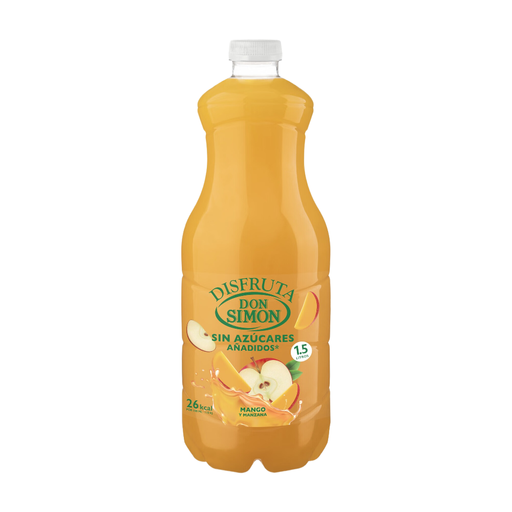 Image unavailable
DON SIMON DISFRUTA no-added-sugar mango and apple nectar 1.5 L
Compare this with juices if you’re also considering a nectar, but don’t present the two categories as equivalent. The product information for this 1.5 L PET bottle states that it contains 25% mango juice, 25% apple juice and 4.9 g of sugars per 100 ml. It also lists the sweetener E-955: check the wording and presentation of the claim on the French label before choosing this product.
View on Joybuy
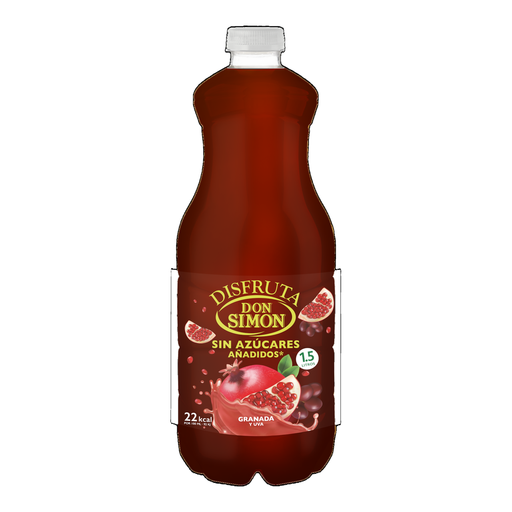 Image unavailable
DON SIMON DISFRUTA no-added-sugar pomegranate nectar 1.5 L
Consider this for another nectar recipe in a 1.5 L pack. The product information lists pomegranate and grape juices, 4.7 g of sugars per 100 ml and the sweetener E-955. Before adding it to your range, check the French label and how the ‘no added sugar’ claim is presented.
View on Joybuy
Frequently asked questions
Is juice with no added sugar sugar-free?
No. Fruit can contribute sugars that are naturally present in the juice. To describe the product you serve, check its ‘of which sugars’ figure per 100 ml. The DGCCRF states that the claim ‘contains naturally occurring sugars’ is reserved for fruit juices.
Can you compare no-added-sugar nectar with pure juice?
Yes, when deciding what to offer, but don’t present them as the same category. Check the product name and ingredients for each, then compare their nutritional values on a like-for-like basis.
Is chilled juice suitable for every workplace canteen?
It is if your delivery, storage and service arrangements allow you to maintain the temperature stated for the product. Carrefour, for example, says its Extra 3 Agrumes juice must be stored between 0 °C and +6 °C. If fridge space is limited, also consider products that can be stored at room temperature before opening.
How long can you keep juice stored at room temperature after opening?
Follow the storage temperature and time stated for the product you choose: being suitable for room-temperature storage before opening does not automatically mean the same applies once the bottle is open. For its apple juice made from concentrate, Auchan says to refrigerate after opening and consume within five days.


