People keeping an eye on added sugars
You want to avoid added sugars without confusing this claim with the total sugar content of the juice. The “of which sugars” value per 100 ml makes it easier to compare products.


For a break at work, first check the product description, then compare the “of which sugars” value per 100 ml: “no added sugars” does not mean “sugar-free”. 100% fruit juice and nectar suit different recipe preferences. If you’re sharing a bottle, check the storage instructions after opening too.
You want to avoid added sugars without confusing this claim with the total sugar content of the juice. The “of which sugars” value per 100 ml makes it easier to compare products.
You’re choosing a bottle for several colleagues. The size, price per litre at your chosen shop and storage instructions after opening are just as important as the recipe.
You want to tell pure juice, juice from concentrate and nectar apart by checking the product description, ingredients and, where stated, fruit content.
When choosing a drink to share at work, start with the product type and ingredients, then compare its sugar content and pack size with the break room’s usual needs.
| What to consider | What to check | Who is it for? |
|---|---|---|
| Sugars present | The “no added sugars” claim and the “of which sugars” value per 100 ml, using the same basis for comparison. | I want to avoid added sugars but still know how much sugar the drink actually contains. Around 33% of consumers are said to prioritise this distinction. |
| Type of recipe | The product description, ingredients and, for nectar, the fruit content where stated. | If I prefer a recipe made from juice rather than nectar, I need to be able to tell the two apart before choosing. Around 25% of consumers are said to put ingredients first. |
| Buying for a group | The pack size, price per litre at your chosen shop and storage instructions after opening. | A shared bottle should suit the number of colleagues and the facilities available for refrigeration. Around 25% of consumers are said to prioritise the practicalities of buying for a group. |
| Taste and variety | The fruits listed on the label, whether it contains pulp and the preferences of the people who’ll be drinking it. | To add variety to breaks, I look for flavours that colleagues will enjoy without considering one nutritionally superior to another. Taste is said to be a priority for around 17% of consumers. |
The sugars naturally present in fruit are still in the juice. Auchan’s product information for Tropicana apple juice states that it contains 10 g of sugars per 100 ml, despite the “no added sugars” claim.
Compare the “of which sugars” value per 100 ml across the bottles you’re considering, then decide how much to serve at break time.
These recipes aren’t interchangeable: according to E.Leclerc, Jafaden multifruit nectar combines juice and purées and contains at least 81% fruit. The Carrefour Classic' and Auchan apple juices mentioned in their product information, on the other hand, are made from concentrate.
Check the product description before the claims on the front of the pack, then compare the ingredients and nutritional information.
For the Tropicana and Auchan apple juice products featured in their product information, the bottle must be refrigerated after opening and consumed within five days.
Before buying a bottle to share, check the storage instructions and make sure you have access to a fridge.
If you can’t store an opened bottle as instructed or finish it in time, some of the juice could go to waste.
Manger Bouger reminds us that juice doesn’t count as a portion of fruit and recommends limiting all types of juice to one glass a day.
For the break room, provide water and whole fruit too, rather than making juice the only option.
Joker describes its Le Fruit range as 100% fruit juice, with varieties including apple and orange.
Auchan’s product information features a 1 L bottle of apple juice labelled “no added sugars”.
Carrefour offers 1 L bottles of apple juice made from concentrate with no added sugars.
Auchan’s product information features 1 L bottles of apple juice made from concentrate with no added sugars.
E.Leclerc offers Jafaden multifruit nectar with no added sugars, which is different from 100% fruit juice.
These juice and nectar bottles offer a choice of flavours and pack sizes for a break at work. For each product, check the product description, sugar content per 100 ml and storage instructions before planning to share it.
 Image unavailable
This 1 L bottle could be a good choice for sharing at break time. Before putting it out, check the “of which sugars” value and the storage instructions after opening.
 Image unavailable
The 1.5 L size is suited to sharing at break time if colleagues can store the bottle after opening. Check the label to see whether it’s juice or nectar: this distinction matters when comparing recipes.
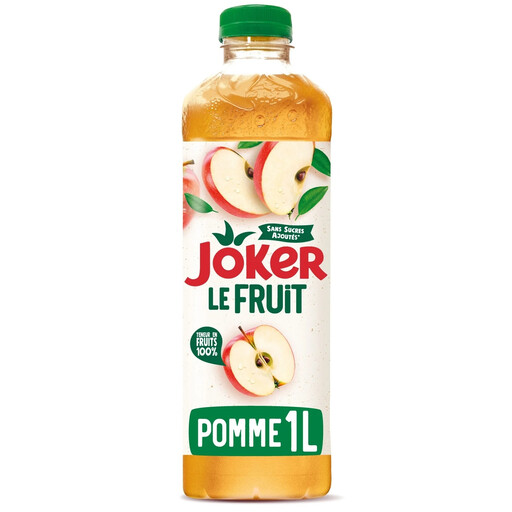 Image unavailable
This bottle is a good option if you’re looking for apple flavour in a 1 L size. If you’re planning to share it, read the storage instructions after opening on the pack.
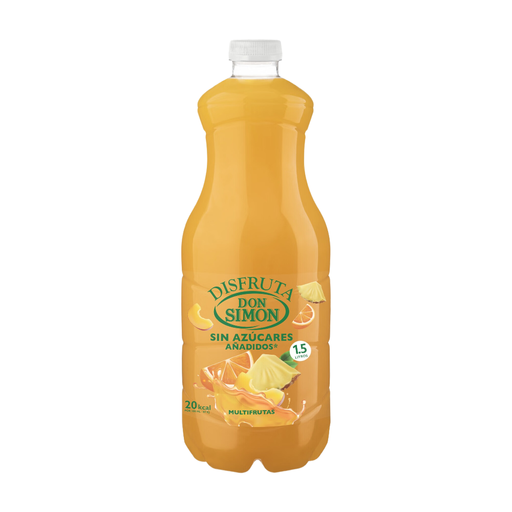 Image unavailable
Compare this 1.5 L nectar with other nectars rather than treating it as 100% fruit juice. Read the ingredients list, checking in particular for water and sweetener, and check the fruit content on the label.
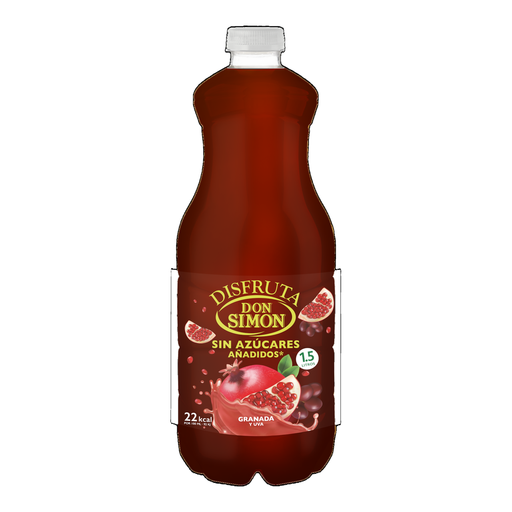 Image unavailable
For this 1.5 L nectar, check the fruits listed in the ingredients before choosing a flavour for the office. Also check the “of which sugars” value and storage instructions after opening.
No. Sugars naturally present in fruit remain in the drink: Auchan’s product information for Tropicana apple juice with no added sugars states that it contains 10 g of sugars per 100 ml. Compare this value across the products you’re interested in.
No. Manger Bouger explains that juice doesn’t count as a portion of fruit and is low in fibre. Make sure whole fruit is also available at break time.
Manger Bouger recommends limiting all types of fruit juice to one glass a day. Make sure there’s water in the break room too, rather than relying on a large bottle as the only drink.
Compare their nutritional values per 100 ml, especially the “of which sugars” value, then check their product descriptions and ingredients. France’s Directorate General for Competition Policy, Consumer Affairs and Fraud Control says that presenting values per 100 ml makes it easier to compare pre-packed drinks.
Follow the instructions for the product you’ve bought. The product information for the Tropicana and Auchan apple juices mentioned advises refrigerating them after opening and consuming them within five days. Check that you can meet these conditions in your break room.