Shoppers keeping an eye on added sugars
You want a fruity drink with your meal without confusing ‘no added sugar’ with ‘sugar-free’. The ‘of which sugars’ figure takes naturally occurring fruit sugars into account.


To go with dinner in front of the telly, start by checking the product name and ingredients when choosing a mixed fruit juice: pure juice, juice from concentrate and nectar are made differently. ‘No added sugar’ does not mean ‘sugar-free’, so check the ‘of which sugars’ figure per 100 ml and how much you plan to serve.
You want a fruity drink with your meal without confusing ‘no added sugar’ with ‘sugar-free’. The ‘of which sugars’ figure takes naturally occurring fruit sugars into account.
You want to know whether the bottle contains pure juice, juice from concentrate or nectar. The product name and ingredients list can help you decide, as can the fruit content for nectar.
You’re looking for an option to go with your meal and want to check it’s available at the store or through the online grocery service where you plan to shop.
First, identify the type of drink and check the wording about sugars. Then narrow down your choice based on the fruit, texture and pack size that suit your meal.
Worth considering: if you’re looking for a product labelled ‘fruit juice’. The EUR-Lex European summary explains that this category contains no added sugars.
Bear in mind: pure juice still contains sugars naturally present in the fruit. Check the recipe and the ‘of which sugars’ figure.
Worth considering: if this recipe suits you and the bottle carries the ‘no added sugar’ claim you’re looking for.
Bear in mind: the claim doesn’t tell you the total amount of sugars in a glass. Check the nutrition information for this.
Worth considering: if the fruit content and other ingredients suit what you’re looking for, as well as the ‘no added sugar’ claim.
Bear in mind: nectar may contain water, so you can’t compare it with pure juice by looking at the front of the pack alone.
| Criterion | What to check | Who is it for? |
|---|---|---|
| Sugars present | Check the ‘no added sugar’ claim against the ‘of which sugars’ figure per 100 ml. | I don’t want to mistake no added sugar for no sugar at all in my glass. Around 33% of shoppers would make this distinction their priority. |
| Type of recipe | Read the product name and ingredients, and check the fruit content where it’s given. | If the ingredients matter more to me than the claim on the front of the pack, I want to distinguish between pure juice, juice from concentrate and nectar. This would be the priority for around 27% of shoppers. |
| Texture and fruit | Check which fruits are used and look for information about pulp or purées. | With my meal, I might prefer a drink without pulp or certain fruits rather than another blend. Around 20% of shoppers would put this preference first. |
| Pack size and availability | Choose a size that suits how you’ll use it, and check the product at your store or through its online grocery service. | When doing my evening food shop, I want to find a suitable pack size where I plan to buy it. This would come first for around 20% of shoppers. |
Fruit naturally contains sugars. To compare specific recipes, Auchan’s product pages for two Joker juices list 10 g and 11 g of sugars per 100 ml respectively, despite carrying this claim.
Read the claim alongside the ‘of which sugars’ figure, then take the amount you’ll actually serve into account.
The product name changes what you need to look at. For example, Carrefour and E.Leclerc product pages describe mixed fruit nectars that contain water and each state a minimum fruit content specific to their recipe.
Compare the product name, ingredients and fruit content rather than relying on the words ‘mixed fruit’ alone.
The Carrefour Classic’ Nectar Multifruits product page displays ‘no added sugar’ while also giving a figure for added sugars. This contradiction means you can’t reach a conclusion from the product page alone.
Check the claim and ingredients on the packaging before choosing this product. If you’re still unsure, compare it with another bottle.
A product may be listed online without being stocked at every store. E.Leclerc’s purchasing options depend, among other things, on the store or click-and-collect service selected.
Check the product at your store or through its online grocery service before planning your shop.
These examples are for comparing specific recipes, not for assuming every product from a brand has the same features.
Auchan lists two mixed fruit options that let you compare juice from concentrate with pure juice. Both are described as having no added sugar.
Its mixed fruit nectar is listed with a minimum fruit content of 75%.
The retailer describes one orange and mixed fruit juice from concentrate as having no added sugar and no pulp.
E.Leclerc lists a mixed fruit nectar with no added sugar separately from a mixed fruit juice from concentrate.
Lidl lists a product called ‘Pur jus multifruits’ (‘mixed fruit pure juice’).
These bottles offer a choice of mixed fruit juices and a mango and apple nectar to go with dinner. Before comparing recipes, check the product name, sugars per 100 ml and ingredients on each pack.
 Image unavailable
Worth considering if you’re looking for this type of juice to go with your meal. To find out how much sugar is in a glass, check the ‘of which sugars’ figure per 100 ml on the packaging.
 Image unavailable
The 1.5 L size may suit you if you’re planning to pour several glasses. Check the ingredients and sugars per 100 ml: no added sugar doesn’t tell you the total amount of sugars on its own.
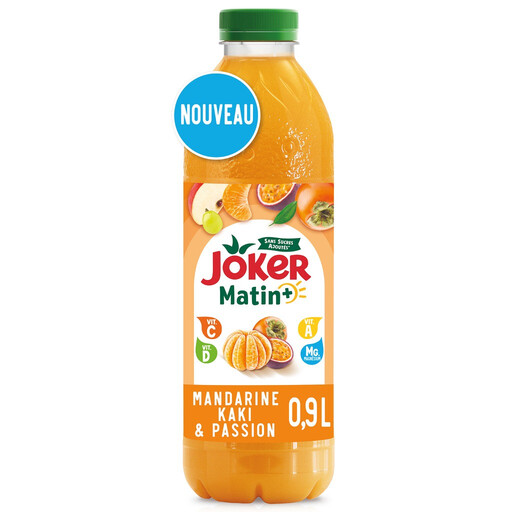 Image unavailable
If the fruit is an important part of your choice of drink for dinner, this variety features mandarin, persimmon and passion fruit. Check the sugar claim and the ‘of which sugars’ figure on the packaging.
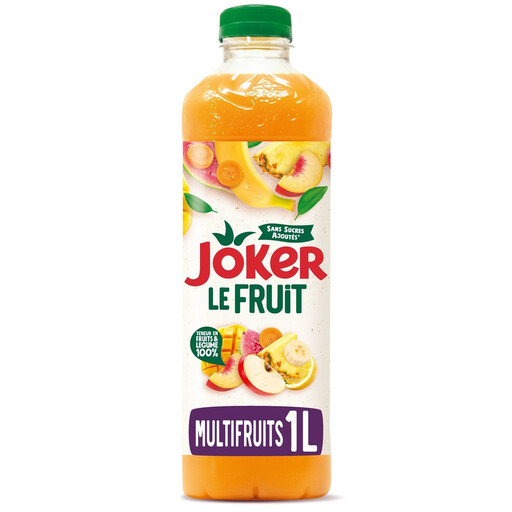 Image unavailable
This 1 L juice is another recipe to consider with your meal. Read the product name, ingredients and nutrition information rather than judging its sugar content by the word ‘Unsweetened’ alone.
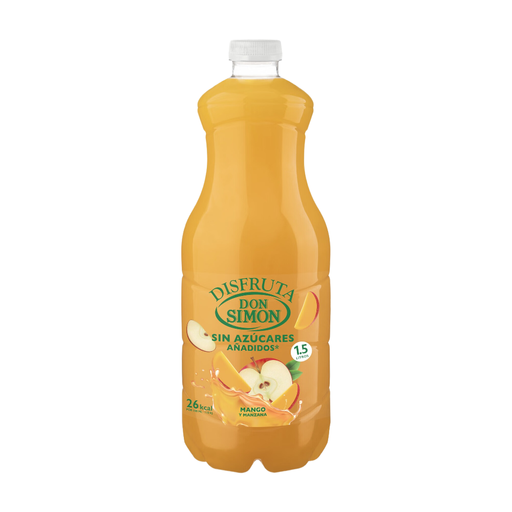 Image unavailable
Worth considering if you’re happy to choose a nectar rather than a juice to go with your meal. Check the ingredients and the ‘of which sugars’ figure: ‘no added sugar’ doesn’t make the two categories interchangeable.
No. Sugars naturally present in fruit still count. Check the ‘of which sugars’ figure per 100 ml and relate it to the amount you’ll serve, even if the bottle says ‘no added sugar’.
According to the EUR-Lex summary of fruit juices under European rules, the ‘fruit juice’ category contains no added sugars. Pure juice can still contain sugars naturally present in the fruit, so check its ingredients and nutrition information.
No. They are different product types made to different recipes: nectar may contain water, for example. The Carrefour Classic’ and Jafaden listings state fruit contents of at least 75% and 81% respectively for the nectars in question. Check the fruit content and ingredients of the bottle you choose.
Pour the amount you plan to drink into a glass, then check the sugars listed per 100 ml to understand what’s in that serving. For sugary drinks, a category that includes juices and nectars, among other things, Anses recommends having no more than one glass a day.