Organisers keeping an eye on added sugars
You want to check what the label says without confusing ‘no added sugars’ with ‘sugar-free’.


For a street fair, first choose a product whose description and label match your needs for a drink with no added sugars. A juice or nectar labelled this way still contains naturally occurring sugars. Then compare the ‘of which sugars’ value per 100 ml, the serving size and storage instructions. If you’re selling in a public place, also check the permit requirements with your local council.
You want to check what the label says without confusing ‘no added sugars’ with ‘sugar-free’.
You need to choose sizes that suit the number of servings, your storage space and how quickly you’ll be opening bottles.
You want to compare different recipes by their sugar content per 100 ml, then take the serving size into account.
First, distinguish between fruit juice and nectar, then check that the product you choose is labelled ‘no added sugars’. ‘Made from concentrate’ describes the product, while ‘sugar-reduced’ does not, by itself, meet the same criterion.
| Criterion | What to check | Who is it for? |
|---|---|---|
| No added sugars | The product description, the information on the packaging and the ingredients list, especially for nectar. | If I promise a drink with no added sugars at my stall, I want to be able to confirm this for every product. Around 50% of consumers would prioritise this check. |
| Serving and storage | The size of the containers and their storage instructions, both before and after opening. | When I’m preparing several rounds of drinks throughout the day, I need to be able to store the bottles and open them at the right time. Logistics would be the priority for around 30% of consumers. |
| Sugars in the drink | The ‘of which sugars’ line per 100 ml and the amount actually served. | To choose between two recipes, I want to know their sugar content for the same volume rather than relying on the product name alone. Around 20% of consumers would put this comparison first. |
The DGCCRF states that nutritional information for pre-packed foods is given per 100 ml for drinks, making it easier to compare bottles of different sizes. The DGCCRF also explains that selling in a public place requires a permit issued by the local council. Check the requirements for your location before placing an order.
The sugars naturally present in fruit still need to be taken into account when you compare two drinks.
Check the packaging and the ‘of which sugars’ line per 100 ml, then consider the amount you’ll be serving.
Nectar does not automatically mean no added sugars. If you’re considering nectar, check that this specific product meets your requirements.
Check the packaging for the ‘no added sugars’ label and the ingredients list.
A product that needs to be kept chilled can make storage and serving at a stall more difficult. Carrefour, for example, gives this instruction for its Tropicana pure clementine juice.
Check the storage instructions for each bottle, especially after opening, before deciding how much to buy.
Depending on the products you choose, you may need a cool box and ice packs.
The DGCCRF states that selling in a public place requires a permit from the relevant local council. This is separate from your choice of products.
Before buying, check the requirements for your stall with the council and the event organiser.
Carrefour lists Tropicana products with no added sugars, including pure clementine juice and a mixed-fruit juice.
Auchan lists Joker apple, grapefruit and mixed-fruit juices, with product descriptions that vary depending on the recipe.
Carrefour lists, among other products, a 2 L carton of Carrefour Classic’ apple juice with no added sugars.
E.Leclerc lists a mixed-fruit nectar with no added sugars, as well as a separate sugar-reduced mixed-fruit juice.
Auchan’s product pages for some Joker products provide access to their ingredients and nutritional information.
These products include two types of drink to consider for a street fair: Joker mixed-fruit juices and Don Simon nectars. If you’re specifically looking for fruit juice, don’t substitute nectar without checking that this other category suits your needs. For every bottle, also check the label on the product you receive and its storage instructions.
 Image unavailable
If you’re serving several glasses from a 1.5 L bottle, check the product description, ingredients and information about added sugars on the label. Follow the stated storage instructions after opening.
 Image unavailable
If a 1 L size better suits your serving schedule, compare its product description and ‘of which sugars’ line with those of the other recipes you’re considering. Check the storage instructions after opening.
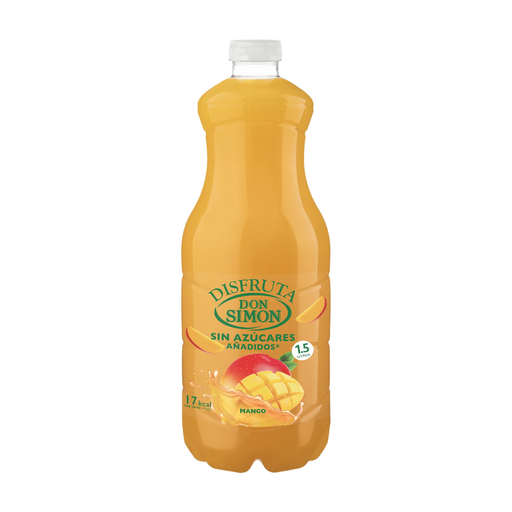 Image unavailable
Consider this if mango nectar suits your range better than fruit juice. For this 1.5 L PET bottle, check the label, including the information about added sugars and the presence of the sweetener E-955 in the ingredients.
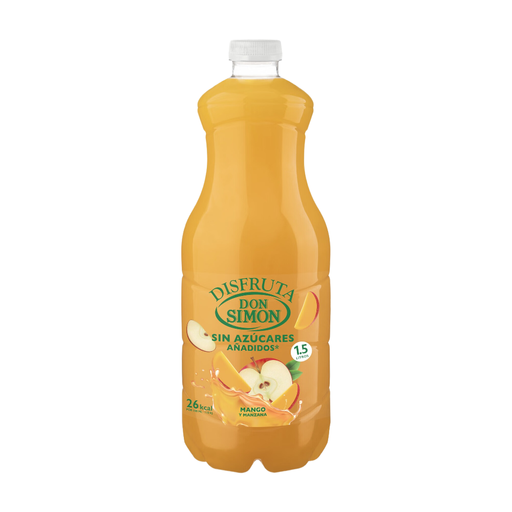 Image unavailable
If you’d like to offer a mango and apple recipe, choose this 1.5 L PET bottle only if nectar suits your selection. Check the ingredients, including the sweetener E-955 listed for this product, as well as the storage instructions after opening.
 Image unavailable
If you’re happy to offer mixed-fruit nectar rather than juice, the 1.5 L PET size may work for your serving calculations. Check the ingredients, including the sweetener E-955 listed for this product, and the instructions for after opening.
No. Juice with no added sugars still contains sugars that occur naturally in fruit. To compare two recipes, check the ‘of which sugars’ line per 100 ml.
Yes, if you’re happy to offer nectar rather than fruit juice and the packaging for that product confirms that it contains no added sugars. Don’t assume this from the word ‘nectar’ alone.
Compare their nutritional information on the same basis by checking the ‘of which sugars’ value per 100 ml. Then take into account how much you plan to serve in each glass.
As the DGCCRF explains, selling in a public place requires a permit from the local council. Check the requirements for your location with the council and the event organiser. This advice applies to selling, not private consumption.